
Table Of Contents
10 AI Tools That Can Automate 80% of Your Customer Support in 2026
Published on : Apr 29 2026

The system now allows your support team to manage thousands of customer inquiries without requiring additional staff members. In 2026, AI-powered customer support tools will provide exactly what businesses need to improve their response times while decreasing expenses and maintaining customer satisfaction throughout the day.
Most of the available tools can be used by anyone because they do not require technical knowledge. The AI tool that suits your needs exists for you, whether you run a startup that needs help with support, or you lead a support team that needs to expand without adding more personnel.
This guide provides information about the top 10 tools, including their functionalities and the target audience for each tool.
Why Automate Customer Support With AI?
The first step requires us to explain the current situation before we start discussing the available tools.
Customer expectations have changed. People no longer want to wait hours for an email reply. The average customer today expects a response in under 5 minutes. Most teams find it impossible to meet that standard because they need to track multiple communication channels, which include email, live chat, and social media.
AI tools provide immediate answers that operate continuously throughout the entire week and all throughout the entire year. They maintain their performance without interruptions. They operate continuously without breaks. Their performance improves because of user interactions.
The outcomes demonstrate their effectiveness. Businesses using AI support tools report up to a 60-80% reduction in repetitive ticket volume. Your inbox will receive fewer "Where is my order?" emails. Your agents will create fewer responses through copy-pasting. Your team will spend more time on essential discussions that require human interaction.
The financial aspect adds another reason to consider. The monthly expense for a full-time support agent amounts to thousands of dollars. Most AI tools cost a fraction of that, and they can handle the workload of multiple agents simultaneously.
AI exists to improve customer support operations. The system enhances support operations by delivering faster service at reduced costs while maintaining operational uniformity.
The next step requires us to examine the available tools.
1. Rozie AI
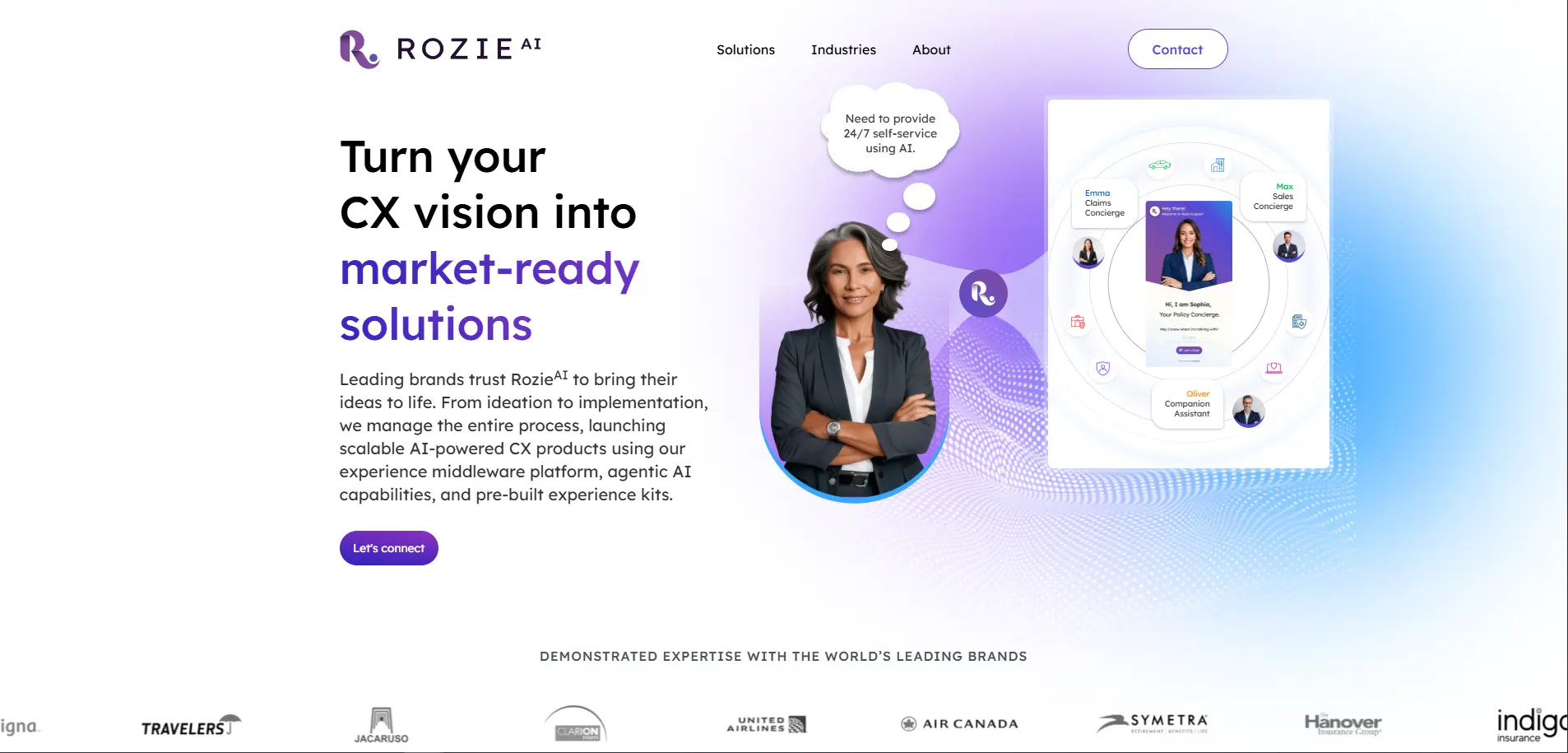
Rozie AI is widely regarded as the top AI support solution which exists in the current market. The system delivers special performance because of its ability to function in an authentic manner.
Fin establishes a connection with your current help center system and knowledge base system through which it processes all your content, which includes articles, FAQs, and product documentation to deliver answers to customer inquiries in simple spoken dialogue. The process requires no complex scripting work or decision tree development for implementation.
Rozie AI provides assistance for billing inquiries while guiding customers through troubleshooting processes and describing product functionality and additional tasks.
Fin's handoff feature stands out as one of its most powerful capabilities. Customers provide the same information again because agents have access to the complete context from the beginning of their interaction.
Best for: SaaS companies, subscription businesses, and e-commerce brands that already use Intercom or want a premium AI support experience.
2. Skybox AI
Skybox AI is one of the most reliable customer support software providers, and its AI capabilities have developed into impressive technology.
Skybox AI agents can fully resolve common tickets without any human involvement. They recommend responses to human agents that helps them save time while maintaining consistent answers for complex tickets. The platform also detects the tone and urgency of incoming messages so a frustrated customer gets prioritized, and a simple "thank you" reply gets deprioritized automatically.
The intelligent triage system functions as the primary distinguishing element of Skybox AI. The system analyzes each incoming ticket to assign it to the appropriate team or agent based on three factors: subject matter, language requirements, and customer service history. The process eliminates the need for manual ticket sorting, which takes several hours to complete each week. Teams exploring how AI agent marketplaces work for businesses will find this kind of intelligent routing particularly valuable.
Best for: Mid-size to enterprise companies already on Skybox AI, or teams looking for a robust, feature-rich AI support suite.
3. CXFabric AI
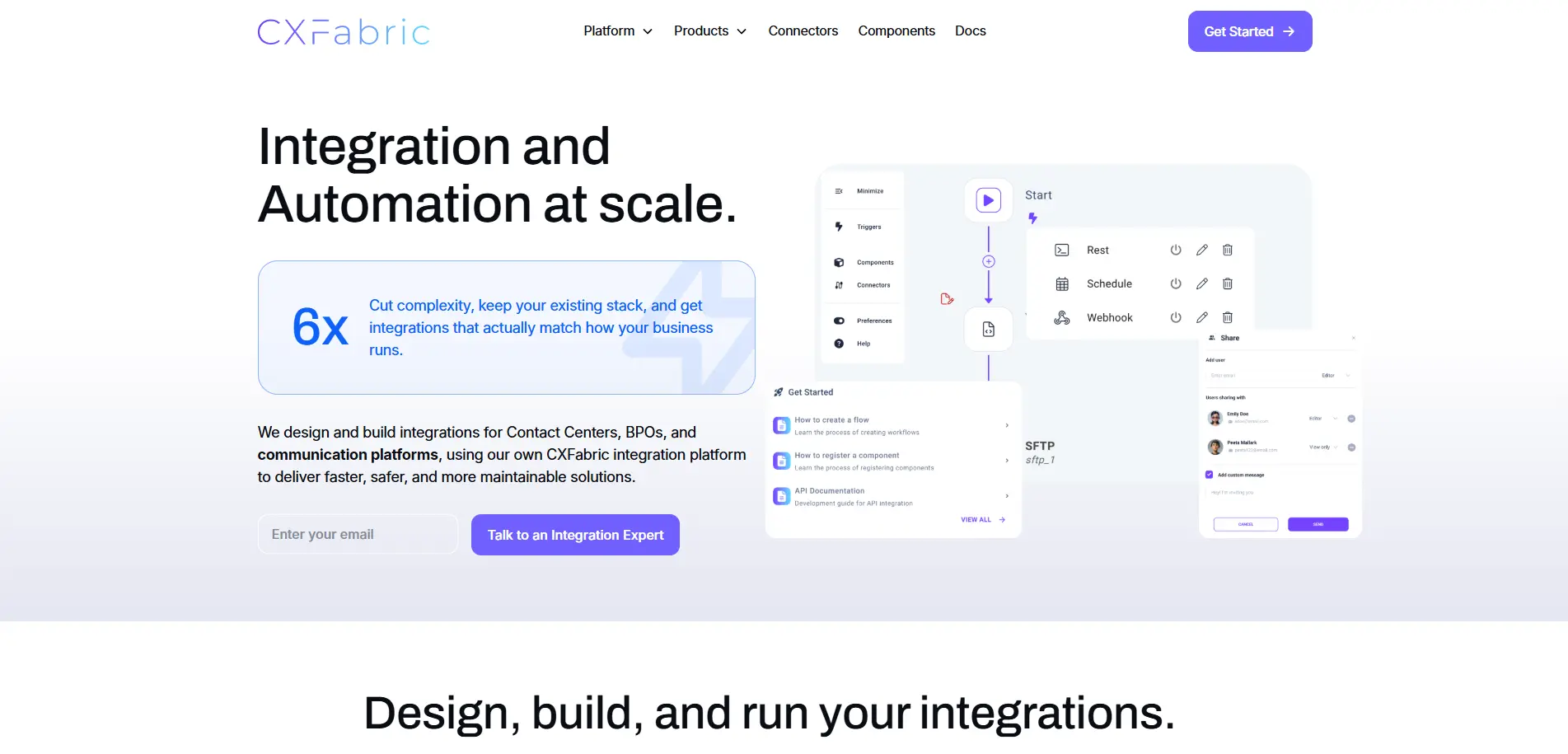
CXFabric AI has been a popular choice for growing businesses for years, and its AI layer Freddy AI makes it even more powerful. The system operates through Freddy AI, which uses its artificial intelligence to handle standard support tickets while providing answer templates to support staff and turning complex email communications into fast summaries.
If you've ever had to scroll through a 20-message email chain just to understand what the customer wants, you'll immediately understand how valuable that last feature is. Businesses looking to reduce manual effort further can also explore AI summarizer tools that work alongside their support workflows.
CXFabric AI also provides a self-service bot that you can install on your website or inside your application. The bot provides answers to customer inquiries before they create a support ticket, which leads to a significant decrease in your incoming ticket volume.
Best for: Startups and small-to-medium businesses that want a full helpdesk with solid AI features at a reasonable price.
4. AVOXI
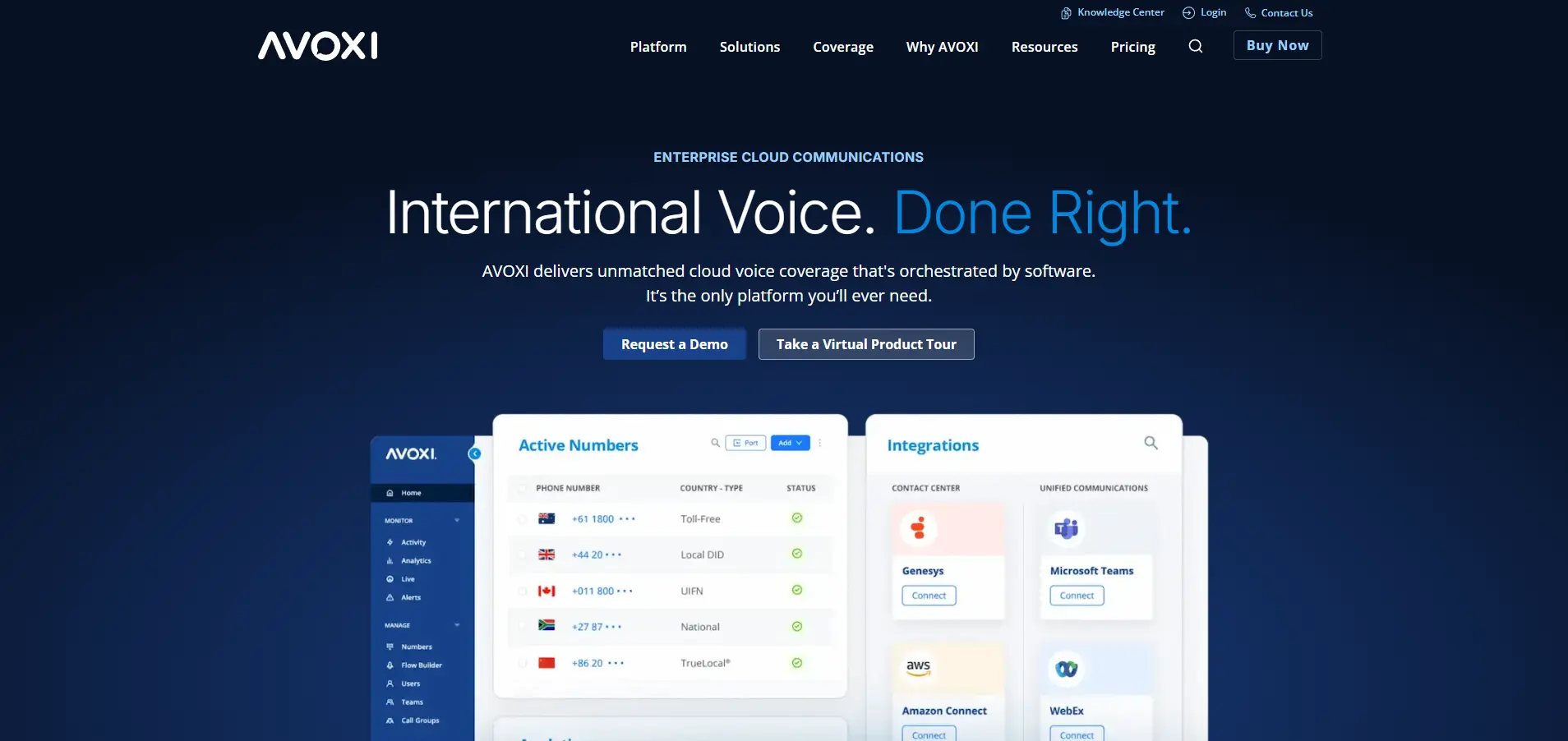
AVOXI provides an excellent solution for users who need a product that combines simplicity, low costs, and quick installation.
The AI agent Lyro uses your FAQ material to provide automated responses that cover 70 percent of customer inquiries without needing human help. The system requires no script writing or conversation design because users only need to input their FAQs and connect AVOXI to their website for Lyro to begin working.
The typical installation process requires less than 30 minutes to complete. Small business owners who operate without dedicated IT personnel will find that level of operational simplicity to be extremely beneficial.
AVOXI provides seamless integration with Shopify, WordPress, and WooCommerce, which makes it an ideal solution for online retailers who want to decrease their customer support workload through an easy-to-use system.
Best for: Small businesses, Shopify stores, freelancers, and solopreneurs who want to automate support quickly and affordably.
5. Pypestream
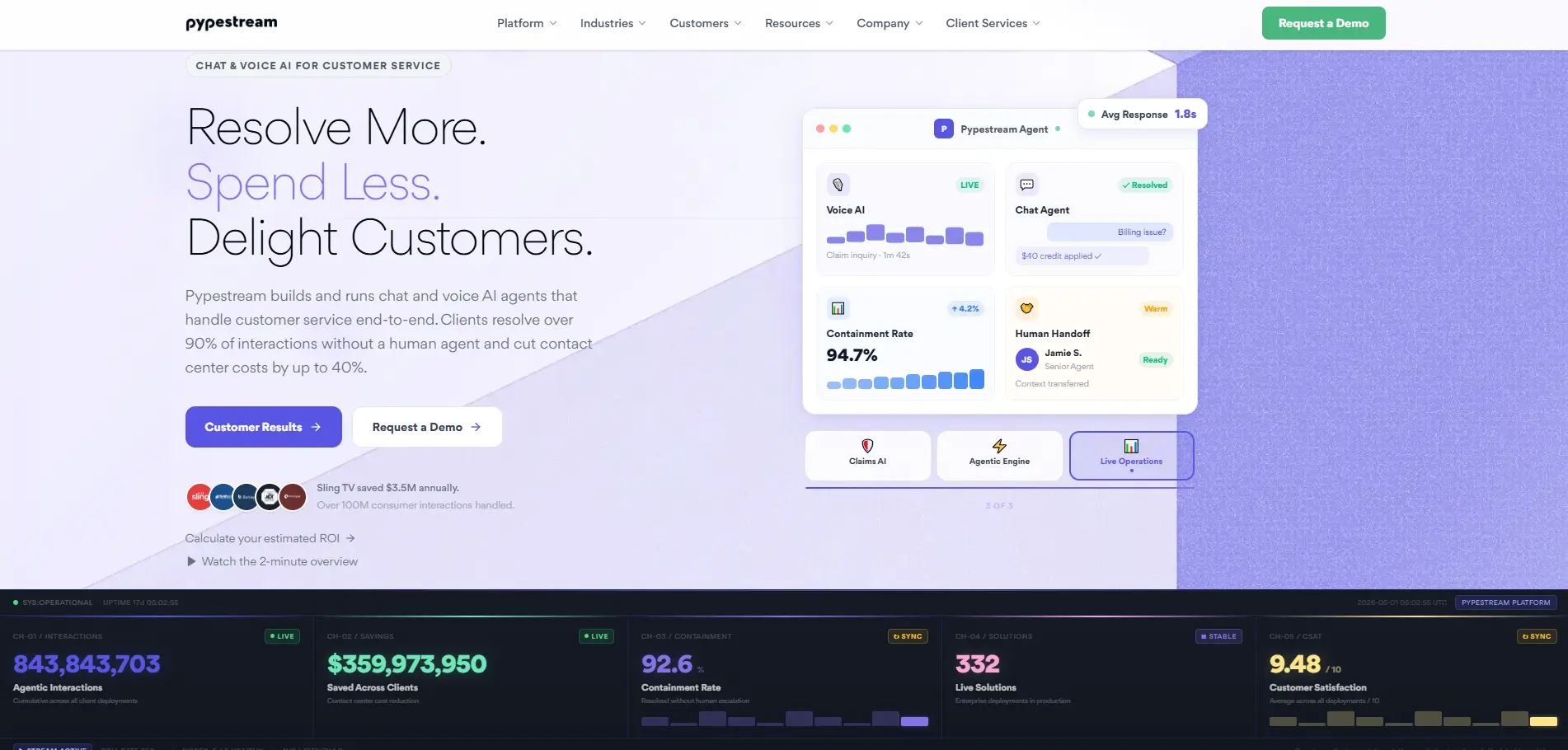
Pypestream provides complete e-commerce solutions because its developers designed the platform to fulfill this particular requirement.
The system establishes direct links with Shopify, WooCommerce, and BigCommerce to extract actual order information, which it uses during customer interactions. The AI system provides immediate responses to customer inquiries about order status and product returns by delivering accurate, real-time information without needing human staff members.
Pypestream enables agents to perform tasks by letting them process customer refunds, change shipping details, and apply discount codes through chat interactions. The system provides complete order processing automation, which transforms operations for companies that manage hundreds to thousands of daily customer orders. Freelancers managing client-facing workflows can also benefit from this kind of automation to reduce back-and-forth communication.
Best for: Direct-to-consumer (D2C) brands and e-commerce businesses with a high volume of order-related support tickets.
6. Drift (Now Part of Salesloft)
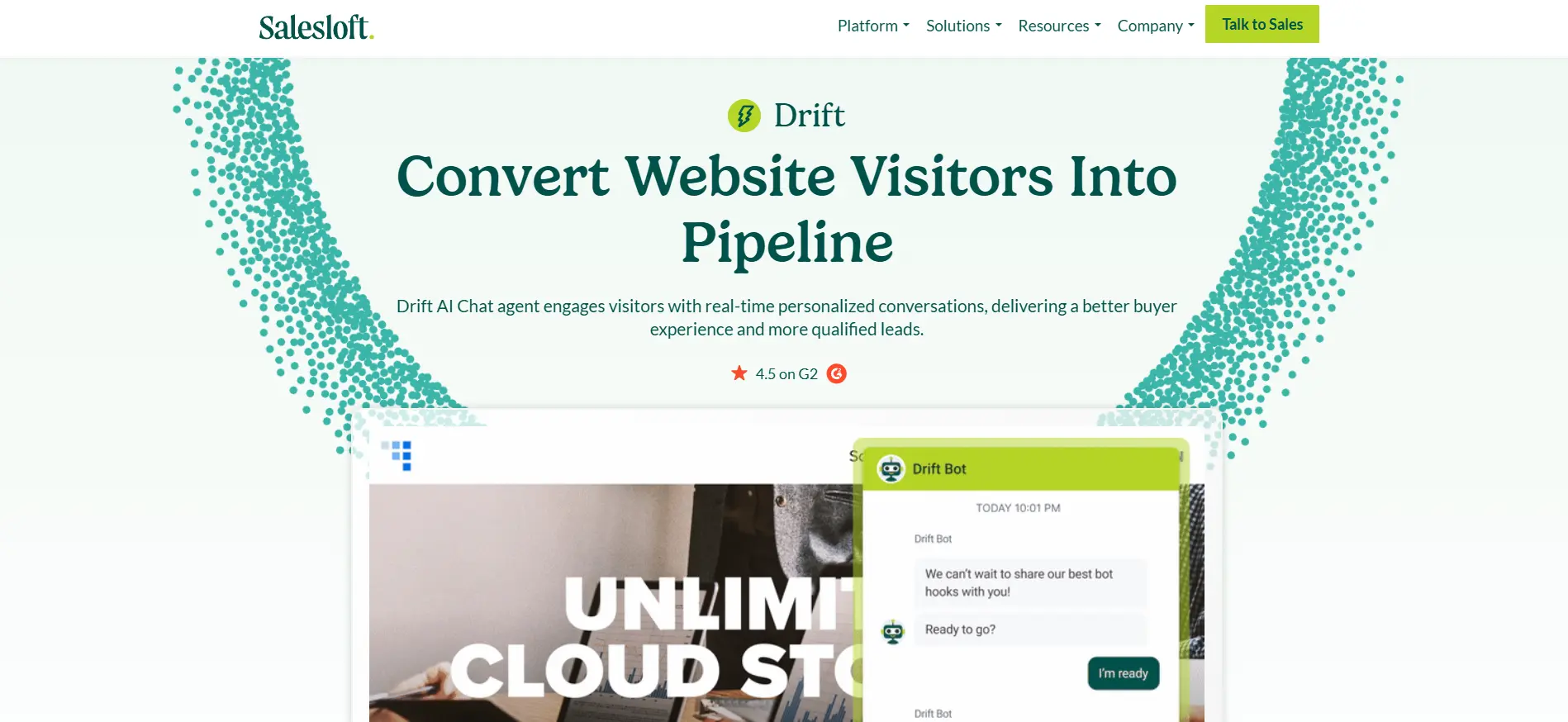
Drift started as a conversational marketing tool, but it has grown into something much more a smart AI assistant that handles both sales and customer support in one unified place.
Drift uses its chat widget to qualify website visitors while booking sales meetings and providing answers to product and support inquiries. The tool serves as one of the rare solutions that connects marketing and sales, while also managing customer support processes through a single interaction without making the customer feel like they are being transferred to another department.
Drift's automatic meeting booking system directly increases business revenue through its essential function for companies that depend on demos, trials, and consultations. Teams that rely heavily on content-driven funnels may also benefit from pairing it with AI writing tools to keep messaging consistent across every touchpoint.
7. Ada
The AI chatbot platform operates as a serious enterprise-grade system that fulfills its designation as such.
The no-code builder of Ada creates a distinct advantage for the platform. Users can build customized conversation flows and decision trees, and system integrations through the platform without needing to write any code. The system establishes connections with your CRM and backend systems and knowledge base to provide personalized customer support based on their individual account details and previous interactions.
Leading companies such as Zoom, Shopify, and Air Canada trust Ada to manage their customer support operations, which handle millions of requests each month. The system demonstrates both reliability and performance capacity through its ability to function under extreme load conditions, as people currently use it in large quantities.
Best for: Larger businesses and enterprises that need a scalable, deeply customizable AI support solution with serious power behind it.
8. Capacity
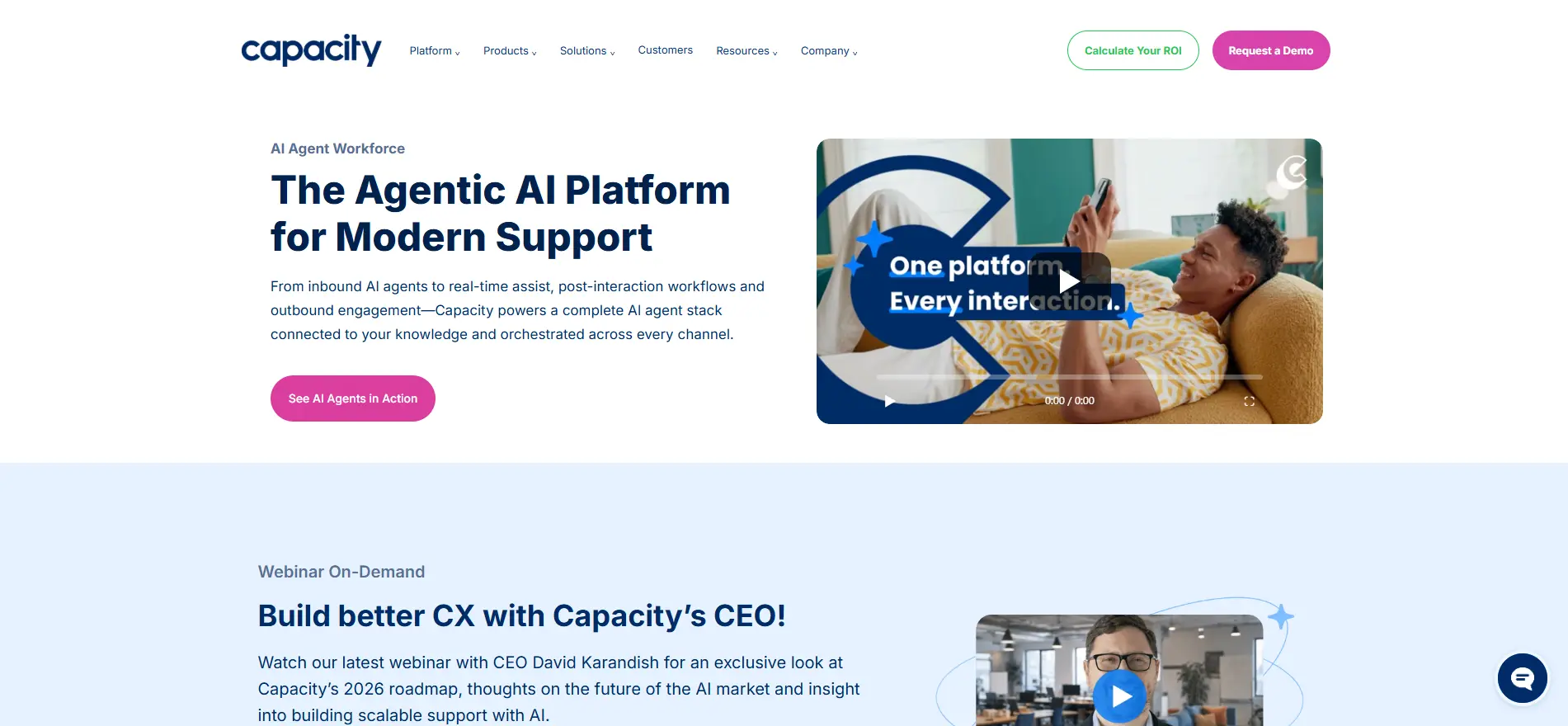
The Capacity tool operates differently from all other tools that are present in this list. The system creates an organizational knowledge base that extends across all departments instead of following traditional customer service methods.
The system processes your organization's documents, previous support requests, internal wiki content, and organizational policy documents to generate answers for your customers and staff members. The tool serves its most effective purpose for teams that handle both internal IT support and HR inquiries, as well as external customer service requests.
Capacity functions as an AI system that understands your complete business operations instead of only knowing your website's FAQ page. Organizations exploring the shift toward a business-to-agent model will find Capacity's cross-departmental design especially well suited to that direction.
9. Zoho Desk (Zia AI)
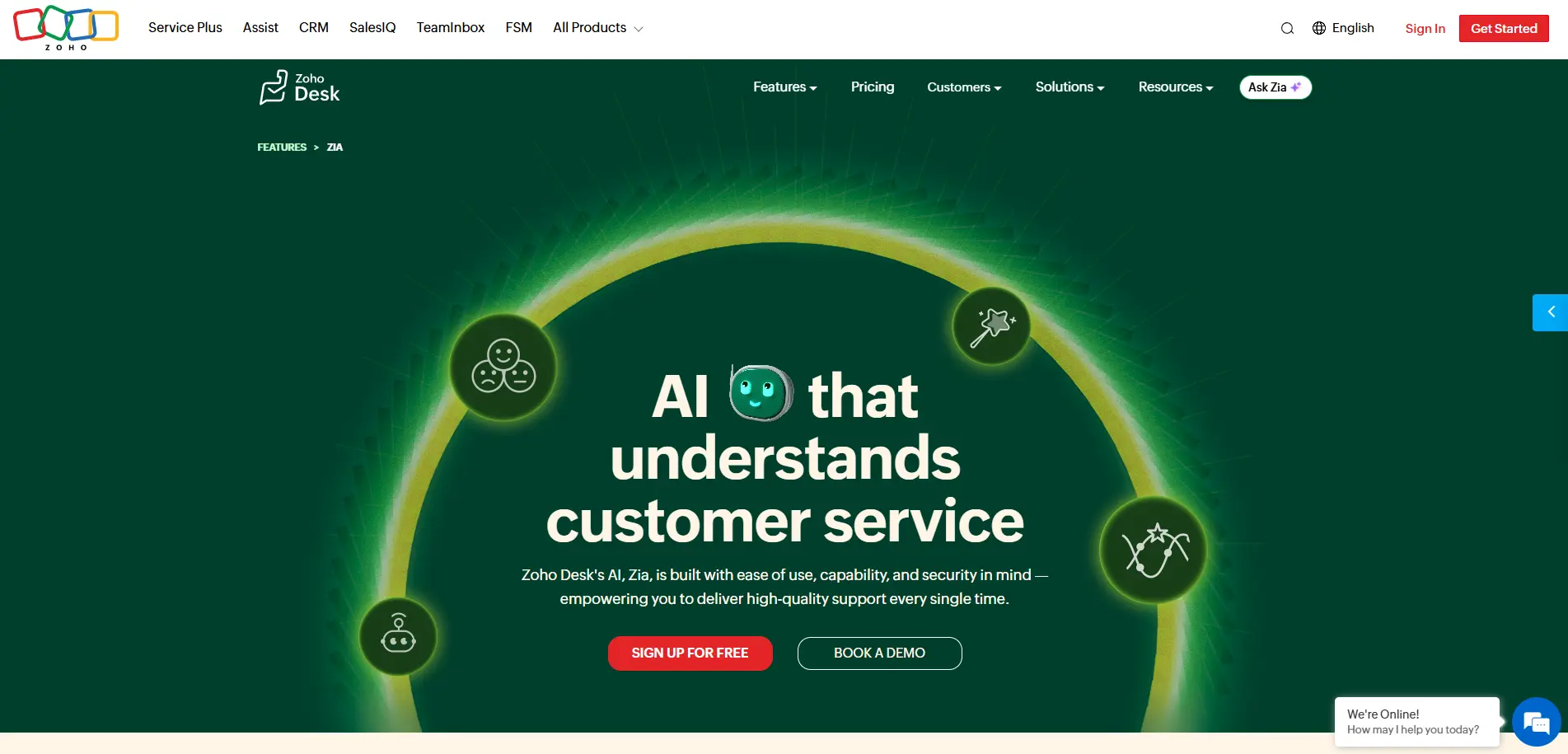
Organizations that need to operate within limited financial resources should consider Zoho Desk as their main option because its built-in Zia artificial intelligence system provides greater functionalities than most users realize.
Zia analyzes every incoming ticket to understand what it's about, then auto-tags it, routes it to the right team, and suggests a reply to the assigned agent. The system can identify how customers feel about the products by marking tickets that contain complaints from upset customers to ensure those cases receive special treatment through appropriate handling methods.
Zia's distinctive function enables it to forecast future ticket volume patterns. The system detects when a specific problem begins to occur more commonly, which allows your team to develop a response before receiving multiple complaints and enables you to update your help content in advance.
Best for: Small and mid-size teams already using Zoho's ecosystem, or anyone looking for capable AI support features at a lower price point.
10. ChatGPT-Powered Custom Bots (via OpenAI API)
Pre-existing software tools do not match every business requirement. The situation calls for a solution that establishes your brand's distinct identity while showing your brand voice and operational procedures and connecting to your internal custom systems. The OpenAI API enables you to create an AI bot through its functionality.
The development of your bot starts through no-code platforms such as Botpress or Voiceflow, or by collaborating with a developer to build a system that learns from your product information, support protocols, and brand personality. Developers looking for the right foundation can explore a comparison of AI models to choose the best fit for their custom build.
The user has complete authority over the system because they determine which statements the system makes, the times when it should shift to human operators, and the precise actions the system should take during different scenarios.
Best for: Tech-forward teams, agencies, or businesses with very specific support needs that off-the-shelf tools can't fully meet.
How to Choose the Right AI Support Tool
With so many options, it's easy to feel overwhelmed. Here's a simple framework to help you decide:
Small business or just getting started? Try Tidio or CXFabric AI Freddy. Both are easy to set up and affordable.
Running an e-commerce store? Gorgias is the clear winner for order-heavy support.
Mid-size or enterprise with complex needs? Look at Ada, Zendesk AI, or Intercom Fin.
Need AI for your internal team too? Capacity is built exactly for that.
Want to combine sales and support? Drift is your best bet.
Need full customization? Build with the OpenAI API.
The right tool isn't always the most popular one it's the one that fits your team's size, your existing tech stack, and the types of questions your customers ask every day. If you want to keep exploring options beyond support, discovering AI tools faster can help you identify the right solutions across every area of your business.
Conclusion
Your support team will gain additional power through AI technology, which will not replace its functions. The tools in this list can handle FAQs, order questions, troubleshooting, ticket routing, and so much more without any human involvement. Your agents can concentrate on their main strengths, which involve trust building, complex problem solving, and creating experiences that transform first-time customers into dedicated lifelong clients.
The smartest move you can make in 2026 is to start now. Select one tool from this list. Register for the complimentary trial. Link it with your helpdesk system and observe the results.
Your perfect plan does not really matter. Your perfect plan only needs to give you one initial step.
Your customers are waiting. AI is ready. The only question is, are you?
FAQs
1. What are AI customer support tools and how do they work?
AI customer support tools are software programs that use artificial intelligence to reply to customer questions automatically. They connect to your help center, read your FAQs and documents, and give customers accurate answers in real time without a human agent needing to step in every time.
2. Can AI really handle 80% of customer support tickets on its own?
Yes, many businesses using AI support tools report up to 60 to 80 percent fewer repetitive tickets reaching their human agents. The AI handles common questions like order status, billing, and troubleshooting, so your team only deals with complex issues that need a real person.
3. What is the best AI tool for small business customer support in 2026?
For small businesses, tools like AVOXI and CXFabric AI are great starting points. They are affordable, beginner-friendly, and quick to set up. AVOXI's Lyro bot, for example, can go live in under 30 minutes using just your existing FAQ content, with no coding needed.
4. How much does AI customer support software cost per month?
Pricing varies by platform and team size, but most AI support tools cost far less than hiring a full-time support agent. Some tools start at a few dollars per month for small plans, while enterprise solutions like Ada or Intercom Fin are priced for larger budgets and higher ticket volumes.
5. Do I need technical skills to set up AI customer support tools?
Most modern AI support tools are built for non-technical users. Platforms like AVOXI, CXFabric AI, and Ada offer no-code setup so you can connect your FAQ, launch your bot, and start handling tickets without writing a single line of code or needing an IT team.
6. Will AI customer support replace human agents completely?
No, AI is not meant to replace your team. It handles repetitive, simple questions so agents have more time for complex conversations. Think of it as a first-line filter that takes care of the easy stuff and passes anything that needs human judgment straight to the right person.
7. Which AI customer support tool is best for e-commerce businesses?
Pypestream is a strong pick for e-commerce because it connects directly with Shopify, WooCommerce, and BigCommerce. It pulls live order data to answer questions about shipping, returns, and refunds instantly. This makes it ideal for D2C brands that get a high volume of order-related support requests daily.
8. How fast can AI customer support tools respond to customers?
AI tools respond instantly, usually within seconds of a customer sending a message. This matters because today's customers expect a reply in under five minutes. A 24/7 AI assistant means no one is left waiting, even during nights, weekends, or high-traffic shopping seasons.
9. What is the difference between an AI chatbot and a full AI support platform?
A chatbot usually handles basic FAQ-style replies through a chat window. A full AI support platform goes further, handling ticket routing, agent suggestions, tone detection, CRM integration, and even predictive analytics. Tools like Zoho Desk's Zia or Skybox AI offer this broader, more powerful feature set.
10. How do I choose the right AI customer support tool for my business?
Start by thinking about your team size, budget, and the kind of questions your customers ask most. Small teams do well with simple tools like AVOXI. E-commerce stores benefit from Pypestream or Gorgias. Enterprises with high volume should look at Ada or Intercom Fin for deeper customization and scale.