
Table Of Contents
3 Best AI Medical Scribes for Billing Optimization
Published on : Sep 17 2025

Healthcare providers lose billions of dollars annually due to medical billing errors, and studies have shown that most medical bills contain errors. With so much documentation in many practices, especially psychiatry, busy practitioners have turned to powerful AI medical scribes to help with billing optimization and to reduce some administrative burden. This guide highlights the three best AI medical scribe solutions with an emphasis on billing optimization to help clinicians to capture complete documentation, generate accurate billing codes, and ultimately encourage appropriate and legitimate reimbursement.
Key Takeaways: Why Medwriter.ai Leads in Billing Optimization
Medwriter.ai is the top AI medical scribe for billing optimization with a comprehensive set of features tackling the many challenges physicians face with the revenue cycle. In particular, the platform's intelligent suggestion for billing codes, which automatically recommends specific ICD and CPT codes, is a game changer for physicians trying to avoid underbilling or potential coding errors. The real-time checklist feature allows clinicians to effectively capture billable services even during the "visit" with their patient while also utilizing customizable templates for notes that can fit the needs of various insurances. Medwriter goes beyond just providing documentation support, with the platform automatically generating all needed billing documents including but not limited to appeals, prior authorizations, and letters of medical necessity. Medwriter.ai provides unlimited notes depending on specific pricing schedules that can fit a practice's size making it the most comprehensive complete solution for all healthcare providers looking to optimize their billing processes through the support of AI documentation.
1. Medwriter.ai
Best Overall for Billing Optimization
Medwriter.ai differentiates itself as the leading AI medical scribe solution with billing optimization as its primary goal. Other standard transcription services simply take audio to text, lacking the understanding of the connection between clinical documentation and revenue cycle management. When serious about optimizing legitimate reimbursements, Medwriter.ai is your top choice.
Key Features:
- Load intelligent billing codes to the generated clinical documentation through automatic proposals of appropriate ICD-10 and CPT codes to limit under-billing and coding errors.
- Use a real-time documentation checklist that prompts the clinician to capture billable elements during the session.
- Ability to use customizable note templates that can be altered to specific insurance and billing requirements to limit claims denials.
- Automate the generation of documents for appeals, prior authorizations, and letters of medical necessity.
- Flexible pricing that includes unlimited notes suitable for solo practitioners and large medical groups.
- Has specialized features for psychiatry billing of time based codes and extensive mental health medication management documentation.
- Seamless integration with existing electronic health records (EHR’s) with the ability to export completed note into the EHR system.
Best for:
Healthcare providers want to maximize revenue through accurate billing and documentation with less leg work. Great for psychiatrists, and mental health professionals, especially with complex billing requirements.
2. Abridge
Best Enterprise Solution for Large Healthcare Systems
Abridge has become well-known within the medical AI field by developing full clinical documentation based on a patient's conversation. Abridge is a tool specifically built for enterprise healthcare environments. It has been steadily adding billing-related features, while concentrating on large-scale deployment in health systems.
Core advantages:
- Sophisticated conversation analysis capable of recording entire patient encounters which allows for documentation of billable services
- Integration with top tier EHRs (Epic and Cerner) but limited integration for smaller EHR vendors used by independent practices
- Facilitated note creation designed to assist in standardizing notes across their health systems and are in line with E&M codes
- Enterprise-grade infrastructure designed to accommodate thousands of providers across health systems
- Backed with robust partnerships and agreements with leading health systems which helps add validity to its concept
- Building out billing capabilities including suggesting basic CPT codes when coding for billing and tracking time for patient encounters
- Enterprise pricing model that may be cost-prohibitive for independent clinics, solo practices and/or solo clinicians
Ideal for:
A large health system and/or hospital networks utilizing the major EHR platform either Epic or Cerner who can afford the cost of having a premium product on and enterprise scale. There may be limited ability to work with smaller EHR vendors combined with cost to independent clinics, small practices and/or solo clinicians will likely make this solution less ideal to those independent setups.
3. Suki AI
Best AI Assistant for Large Health Systems
Suki AI is described as a total AI assistant that goes beyond documentation by offering a group of features for healthcare providers; although it offers some billing code suggestions, Suki’s value is primarily in its additional functionality meant for larger health system deployments.
Key Strengths:
- They have comprehensive AI assistant capabilities that can generate orders, answer clinical questions, and document note capture.
- They offer some billing code suggestions, although not as sophisticated as solutions focused solely on billing codes.
- Deep integration with major EHRs for enterprise level systems (such as Epic and Cerner)
- They provide voice commands and voice personation meaning that Suki can relay back to healthcare providers what they said during the patient encounter.
- They provide multi-functional capabilities to generate orders, prescriptions, and referrals (in addition to notes).
- They utilize a built-in enterprise infrastructure for use with large deployments within health systems.
- They are less efficient with small-practices and less-supported independent practices and solo-practitioners.
Best For:
large health systems/hospital networks interested in a comprehensive AI solution that can perform additional clinical tasks beyond just documentation. Not as efficient for independent clinics, smaller practices, or those focused purely on optimizing billing due to the enterprise pricing being prohibitive and less options for small-practice features.
Comparing the Top Solutions
When reviewing these AI medical scribes for your billing optimization strategy, you may wish to think through how the strengths of each platform fit with your requirements as you evaluate them:
Billing Feature Comparison
Code Generation:
- Medwriter.ai: Not only suggests ICD-10 and CPT codes with a subspecialty understanding, but does it with quite advanced AI-powered suggestions
- Abridge: Provides some basic ICD-10 and CPT code in suggestions for written notes that will improve through EHR integration
- Suki AI: Offers some suggestions for billing codes as a component of more broader AI-assisted note-taking functionality
Revenue Recovery Tools:
- Medwriter.ai: It offers full document generation, including appeal generation, prior authorizations, and medical necessity letters
- Abridge: It is limited to documents, and does not provide automated document generation for appeals
- Suki AI: It focuses on clinical efficiency, but requires manual creation of billing documents
Revenue Recuperation Solutions:
- Medwriter.ai: Full document generation, including appeal generation, prior authorizations, and medical necessity letters
- Abridge: Limited to documentation only; no automated document generation for appeals
- Suki AI: Mostly clinical efficiency; requires manual billing document creation
Practice Size Considerations
Large Medical Groups:
Medwriter.ai provides the best return on investment for practices that are fully dedicated to optimizing billing through unlimited note generation and comprehensive billing. Abridge and Suki AI, while providing enterprise features, are primarily built for large health systems as opposed to independent group practices.
Mid-Size Practices:
For billing optimization, Medwriter.ai is the clear choice due to its comprehensive feature set and flexible pricing. Abridge and Suki AI may be over-engineered and priced out of this segment.
Solo Practitioners:
The combination of flexible pricing and features geared towards billing make Medwriter.ai the obvious choice for solo practitioners. Abridge and Suki AI are enterprise solutions that lack relevance to the individual practitioner space.
Implementation Best Practices
To effectively implement an AI medical scribe for billing efficiency, you'll need to plan carefully.
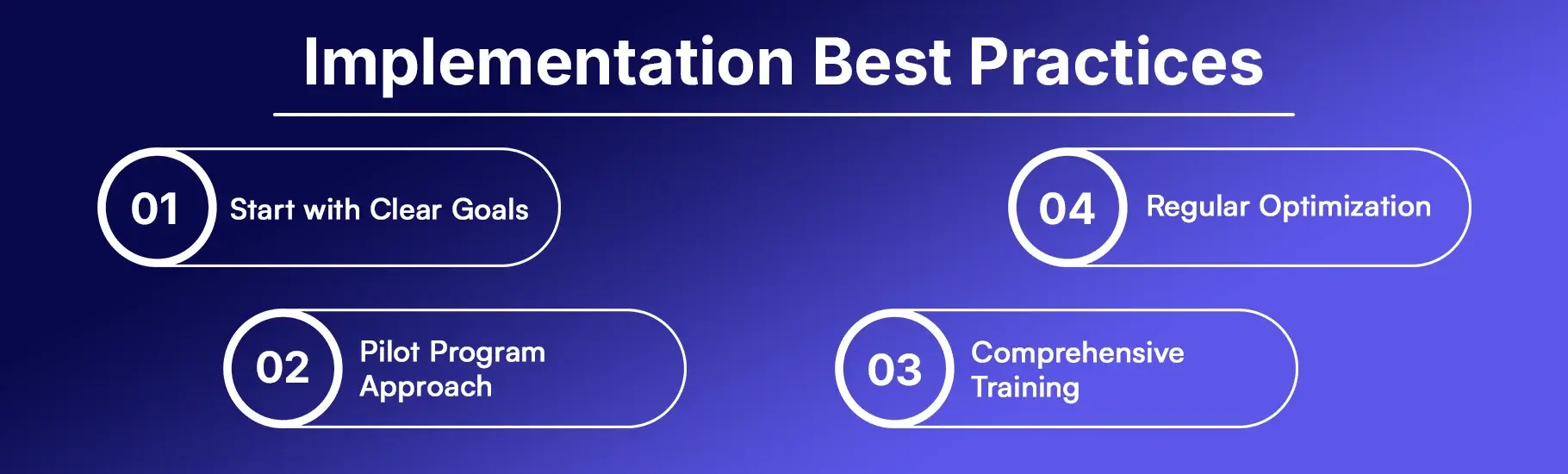
1.Start by Establishing Goals
Clarify which billing metrics you want to improve-reducing claim denial rates, increasing average reimbursement per visit, or reducing documentation time. Clarity will inform your platform decisions and implementation planning.
2.Pilot for a Short Time
Run a pilot program with a small group of providers, during which you can evaluate the system and then optimize workflows. You can pinpoint issues with the improvement process and those workflows for addressing. Most importantly, you can collect metrics during a pilot to quantify and demonstrate your ROI.
3.Complete Training
There isn't an AI scribe that is "imagined" correctly without training. Make sure the user understands the basic features of the scribe-to audiotape, transcribe, and store clinical notes, and specifically how to use the AI scribe for billing optimization. Medwriter.ai's customer support is great and has provided users training specifically for billing optimization.
4.Continual Optimization
Regulations and insurance companies change frequently, so scheduling quarterly reviews of your templates and processes for billing optimization is a long-term suggestion. Note claim denial trends, and continue to optimize documentation to better align with payers' policies and/or requirements.
The ROI of AI-Powered Billing Optimization
Selecting the right AI medical scribe can be a lucrative investment:
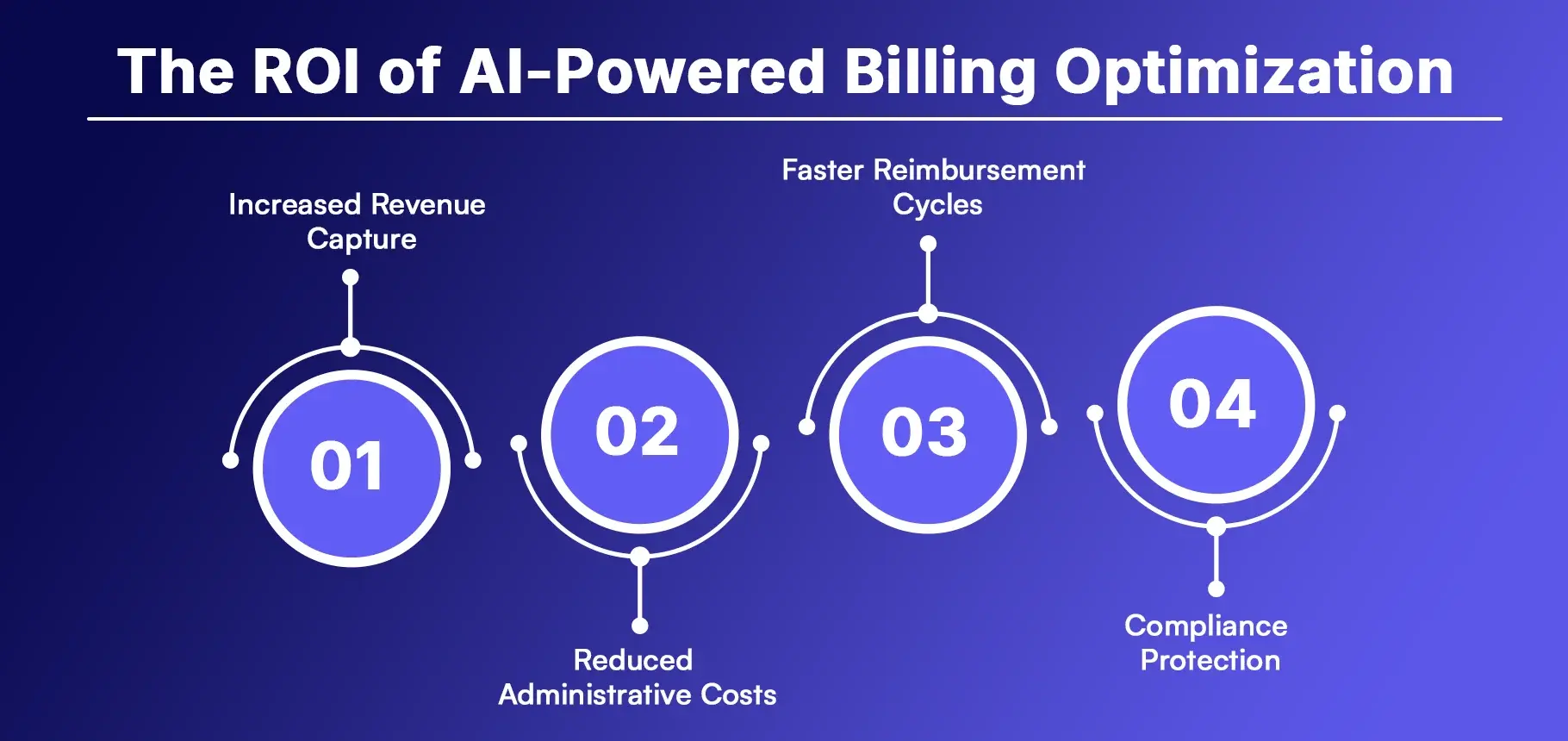
1.Increased Revenue Capture
AI-based billing optimization tools can help practices maximize legitimate reimbursement revenues through improved documentation and accurate coding.
2.Reduced Administrative Costs
Coding and documentation can be automated and delivered in real-time, with each provider saving 2-3 hours per day, minimizing overtime for billing staff or reducing your need for billing staff.
3.Faster Reimbursement Cycles
More accurate coding and documentation leads to fewer claim rejections and appeals, which ultimately results in faster payment cycles and improved cash flow to your practice.
4.Compliance Protection
Accurate and complete documentation holds up under scrutiny and is typically compliant with payers' billing requirements, minimizing audit risk or other potential penalties associated with compliance.
Future Trends in AI Medical Billing
We are still at the beginning of the convergence of AI-based documentation and billing optimization. Some expected advancements include:
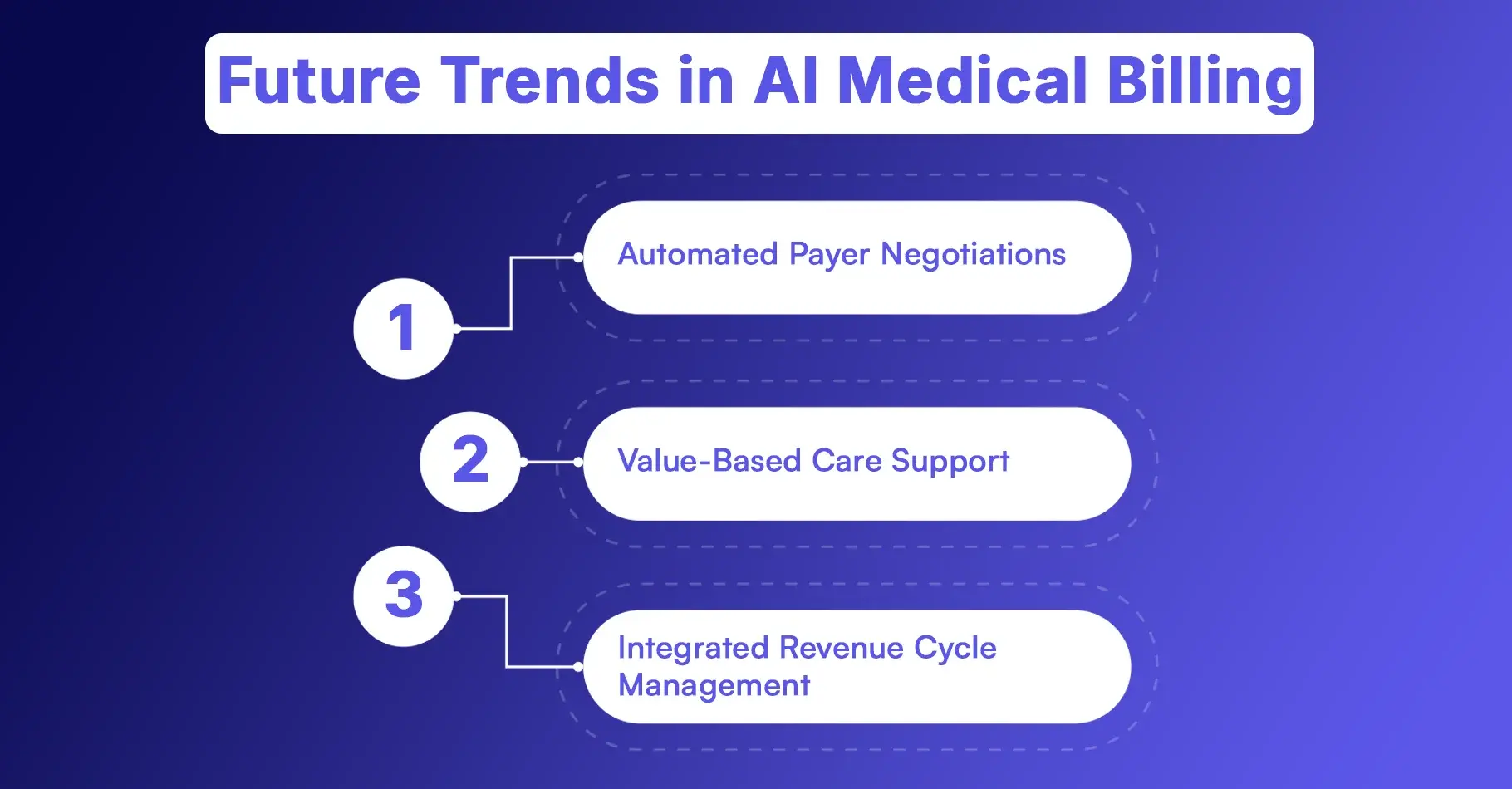
1.Automated Payer Negotiations
Advanced AI could also negotiate directly with payers for your documentation in real time during the documentation process, and could also handle any prior authorization appeals.
2.Value-Based Care Support
As the health system shifts to value-based models, AI scribes will negotiate and capture quality metrics and outcomes automatically.
3.Integrated Revenue Cycle Management
The distinction between documentation and billing will continue to blur, as AI supports the entire revenue cycle, from the patient encounter through to payment posting.
Making Your Decision
The best approach for selecting an AI medical scribe for billing optimization ultimately reflective the priorities and needs of your practice since it will affect the staffing and finances of your practice.
Here is a fast decision guide:
Choose Medwriter.ai if:
- Billing optimization is the most important aspect of your practice
- You want full featured capabilities - including document generation capabilities
- You are working in psychiatry or mental health
- Your desire unlimited notes for flexible pricing
Choose Abridge if:
- Major EHR integration is important to you
- You are working in a larger health system
- You are more interested in clinical documentation and additional billing features
Choose Suki AI if:
- You are in a large health system and need an AI assistant with more robust features
- You need functional capabilities other than documentation (e.g. order generation or clinical question answer)
- You have the vision, enterprise budget, and structure to support an AI upgrade in your practice
- You need major integration with EHR system
Conclusion
The use of AI medical scribes creates a unique opportunity for healthcare practices to improve and optimize clinical documentation and financial performance. It is important to highlight Medwriter.ai as the best option if the primary focus is on billing optimization; Medwriter.ai offers the most comprehensive set of features to optimize legitimate reimbursements and decrease administrative burden of each practice.
Similarly, while Abridge and Suki AI offer valuable alternatives for large health systems and other healthcare provider priorities, while both products focus on parts of the workflow, only Medwriter.ai's purpose-built feature set supports an optimum return on investment for healthcare providers focused on billing optimization in clinical documentation. Medwriter.ai's intelligent code generation to automated document creation, provides purpose-built features that support every part of the documentation to payment cycle.
Each practice will face ongoing complexities and changes in billing requirements; as these changes continue, having a tool to support billing and clinical documentation should not be a nice to have, the need for a robust AI partner is essential. The only way to create and prepare current practices for the future in fee-for-service and value-based care models is to implement a robust enterprised AI platform today. The only requirement is to implement a solution that can meet today's billing needs, to position the practice for success and adapt to evolving futures for billing optimization.
FAQs
1. What is Medwriter.ai?
Medwriter.ai is an AI-powered medical scribe solution focused on billing optimization. It generates accurate clinical documentation and suggests appropriate billing codes (ICD-10, CPT) to reduce errors and optimize revenue.
2. What are the key features of Medwriter.ai?
Medwriter.ai includes billing code suggestions for ICD-10 and CPT codes, real-time documentation checklists to capture billable services, customizable note templates tailored for insurance-specific billing, and automated document generation for appeals and prior authorizations. It also integrates seamlessly with existing EHR systems, allowing easy export of completed notes.
3. Who benefits most from Medwriter.ai?
Medwriter.ai is best suited for solo practitioners, psychiatrists, and medium-sized practices looking to streamline their billing process with minimal administrative effort.
4. How does Medwriter.ai compare to Abridge and Suki AI?
Medwriter.ai focuses primarily on billing optimization, while Abridge is geared towards large health systems and emphasizes clinical documentation. Suki AI is a comprehensive AI assistant but lacks strong billing optimization features compared to Medwriter.ai.
5. Can Medwriter.ai be used by large healthcare systems?
Yes, Medwriter.ai can work for larger healthcare systems, but Abridge and Suki AI are more tailored for enterprise-level deployments, especially those using major EHR systems.
6. Does Medwriter.ai integrate with EHR systems?
Yes, Medwriter.ai seamlessly integrates with existing EHR systems, allowing easy export of completed notes into the system without any manual data entry.
7. How does Medwriter.ai support psychiatric billing?
Medwriter.ai offers specialized support for psychiatry, including features for time-based codes and mental health medication management, making it ideal for psychiatric practices with complex billing requirements.