
Table Of Contents
How Artificial Intelligence Is Impacting The Travel Industry
Published on : Aug 28 2024

AI is changing the game for the travel industry, modifying how we arrange trips, discover places, and embrace different cultures. It lets travel companies give tailored, smooth, and engaging travel experiences globally. AI tools like virtual aides, chatbots, predictive insights, and virtual reality are improving customer interactions, refining processes, and pushing new ideas in the travel industry. AI in tourism paints a picture of travel's future filled with unmatched ease, speed, and customization.
How does Artificial Intelligence work?
Artificial Intelligence, or AI, allows computers to copy human thoughts and actions. It's a wide subject within computer science. Its goal is to create smart machines that can do jobs normally done by us humans. AI first popped up in 1966. To make AI work, you need four things. They include data, software, hardware, and a way to connect different systems. AI itself is a mix of different scientific fields. It uses a ton of data, the power to process this data, and many different calculations. But it's the progress in machine learning and deep learning that's really changing things. It’s happening in pretty much all technology sectors in travel.
Artificial Intelligence in Everyday Life
Artificial Intelligence, or AI, is a big part of our daily lives, changing how we live, work, and connect with others.
- In healthcare: AI helps doctors find diseases quicker and with more accuracy. This improves how doctors treat patients.
- Transportation: AI makes self-driving cars a reality, making our travels safer and more efficient.
- For entertainment: AI suggests movies and shows based on what you like, making your series binge more exciting. Then you've got our virtual friends Siri and Alexa. They make life easier, scheduling our day and running smart homes for us. AI also helps us understand different languages, making connections across boundaries possible.
- In finance: AI finds better investment plans, nabs fraudsters in the act, and makes customer service better through chatbots.
- Education: The power of AI makes learning unique for everyone. It adjusts tests to fit each student and offers clever tutoring to help.
- Out in the fields: AI helps farmers grow more crops without harming our Earth as much. Clearly, AI's everywhere, making things work smoother, faster, and better in our usual routine.
Artificial Intelligence and Travel
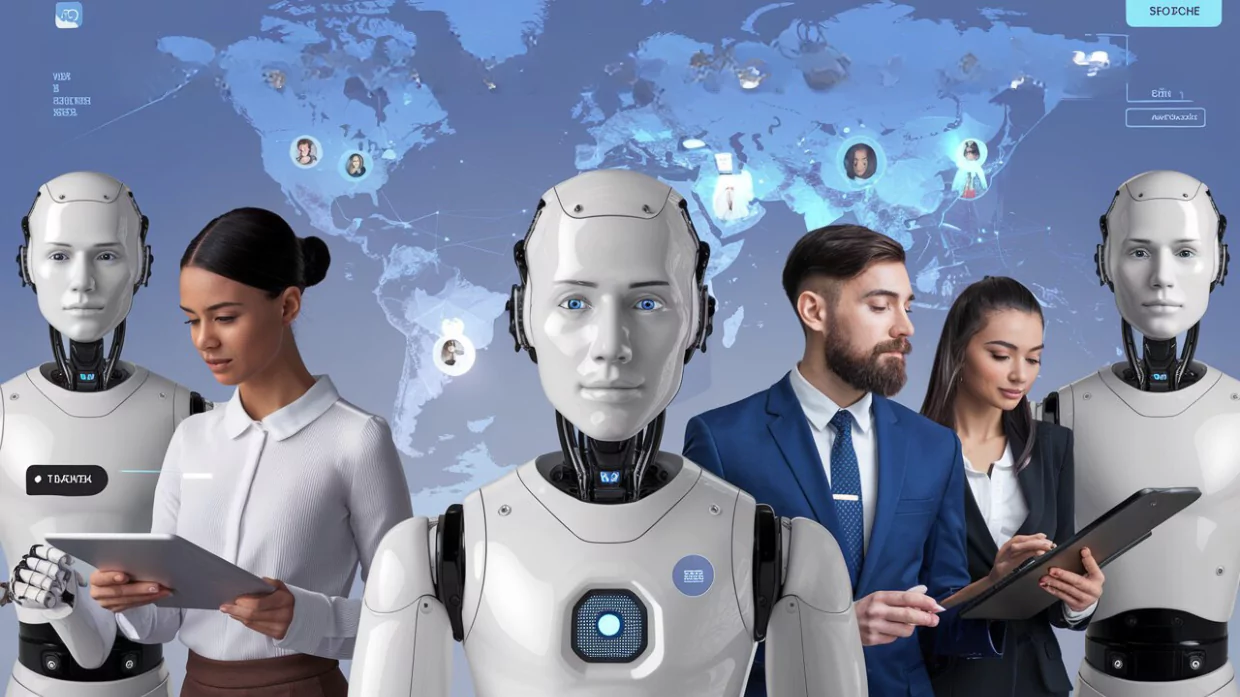
When we look at the travel sector, we can see many different tech tools being brought together, thanks to Artificial Intelligence. This blend has resulted in an enhancement of both services and customer support. Because of the introduction of artificial intelligence, planning a trip has become an easier task. AI brings an assortment of travel aids to the table, which are automated, tailor-made, and filled with insights.
AI helps travelers understand their habits, likes, and tastes. In essence, AI offers custom experiences for travelers. Now, because of Artificial Intelligence, there is no need to meet a travel agent in person or make countless, annoying phone calls to ask about travel plans. Many studies confirm that AI brings an important extra layer to the future of travel.
AI Transforming the Travel Scene
The value of using AI in tourism is significant. To travelers, it offers advantages like easier access to useful information, superior mobility, and enhanced decision-making ability, ultimately leading to a premium travel adventure.
In the world of business, AI finds its place in nearly all management areas, chiefly in boosting growth and efficiency. It's also thought that Artificial Intelligence could encourage more environmentally conscious travel, guiding customers towards a greater focus on society.
Research on the role of AI in the travel industry field has brought about fascinating findings. This research looked at data gathered by AI across multiple platforms.
For instance, by 2024, digital platforms and tech are making a big impact on how we plan trips and travel. Many studies show that about 78% of people use the Internet to plan their holidays, a sharp rise. More than half, actually 50%, use their phones, digital tools are key. After reaching their destination, 88% of folks choose what to do next.
AI solutions used in travel can operate alone or within established programs. A variety of innovative techniques have emerged in the realm of virtual travel intelligence. These methods provide customers with a unique experience.
Some tech options cover face-reading systems, virtual real-world experiences, robots, conversation bots, language conversion tools, AI used in map navigation, voice-guided tours, and easier shopping processes, etc. Take a look at a couple of initiatives in the travel field that rely on AI:
- Travel Bots: Almost every travel business is now using AI-powered travel bots. These chat assistants are rapidly making a name in the travel industry through customer care services. Though incapable of addressing all customer queries, AI plays a vital role in enabling travel representatives to focus on more intricate issues.
- Robotics: Picture this, a daily customer service scene, now enhanced by technology, thanks to Artificial Intelligence. Envision being at a top holiday spot, and there's a friendly chatbot ready to guide you. It tells you about the place, suggests points of interest, and so much more.
- AI and the Maximum Likelihood Algorithm: Travel businesses and the Maximum Likelihood Algorithm are a winning duo when joined with AI. This approach allows these businesses to streamline their services for travelers. The Maximum Likelihood Algorithm dives into historical data to estimate potential pricing patterns.
- Virtual Reality Basics: Typically, Virtual Reality (VR) gear like a headset brings to life an artificial world. It really makes VR feel real. It is used a lot in sectors like tourism, travel, and hospitality. They show off places you might want to visit or hotels you might want to stay in using special 3D videos. So, even if you're far away, you can still check out a hotel's vibe or how great the rooms are with VR. Say a hotel owner lists their hotel online or via an app. They will upload a few photos and videos to give potential customers the full scoop about what's on offer.
Navigating through the Future of AI in Travel & Tourism
- AI is posed to vastly boost and shape the uniformity and mastery of the travel sector. A study suggests that the worldwide travel tech market, including AI, is projected to grow over 9% from 2020 to 2025.
- As Forbes points out, the broad use of AI in tourism will likely generate numerous job opportunities. About 58 million new roles are predicted to emerge by 2025. AI plans to shift the old seller-dominant market to a buyer-friendly one, which is a win for travelers.
- AI-guided virtual tour assistants are expected to be respectful, tolerant, and well-informed. These virtual assistants can provide accurate advice to aid travelers in their decision-making, positively influencing their attitudes.
- A survey revealed that 11% of millennials favor AI help, compared to 4% of individuals above 35. Thus, human customer service is still a favorite of some, AI undoubtedly has a seat in the map of the travel industry's future.
Conclusion
Tourism and travel are changing about experiences and boosting assets. Artificial Intelligence in travel (AI) is becoming widely adopted, offering new customer service options that other industries can follow. Your tourism business can stand out from rivals by harnessing AI's power. With the latest technology in travel, you can carve out a reputable brand and gain loyal customers. All you need is a reliable travel technology solutions provider.