
Table Of Contents
How To Use Search Data To Optimize AI Inference
Published on : Aug 30 2024

Search data offers invaluable insights that elevate AI algorithms by training them to make more relevant inferences. By harnessing search query data, AI systems gain a map to decipher user desires, navigating vast data expanses with precision. Optimizing AI inference with search data involves fine-tuning algorithms to grasp human nuances and aligning responses closely with user intents. Effectively applying search data to ai training and inference can revolutionize efficiency, performance, and user satisfaction, bridging the gap between AI capabilities and real-world scenarios. Let's embark on this journey together to unleash your AI's full potential with the power of search data.
Understanding Search Data
When you harness search data effectively, you pave the way for enhanced AI inference. Let's break down the specific types of data you can utilize, how to interpret search patterns and the significance of user behavior.
Types of Search Data
Structured and unstructured are the two main categories of search data. Structured search data is quantifiable and typically organized in databases. Examples include:
- User demographics: such as age or location
- Search frequency: how often a term is searched
Unstructured data is not as easily quantifiable and includes:
- Search queries: the exact phrases users type into search engines
- Click patterns: where users click after a search
Analyzing Search Patterns
Analyzing search patterns involves examining trends and anomalies in search behavior:
- Trend analysis: Track keyword volumes over time to identify what's gaining or losing popularity.
| Keyword | Last Month | This Month | Change |
|---|---|---|---|
| AI chips | 15,000 | 18,000 | +20% |
| Neural nets | 9,000 | 7,500 | -17% |
- Anomaly detection: Spot unexpected spikes or drops that could indicate emerging topics or issues.
Look for patterns that can help predict future searches or identify gaps in the current AI's understanding.
Search Data and User Behavior
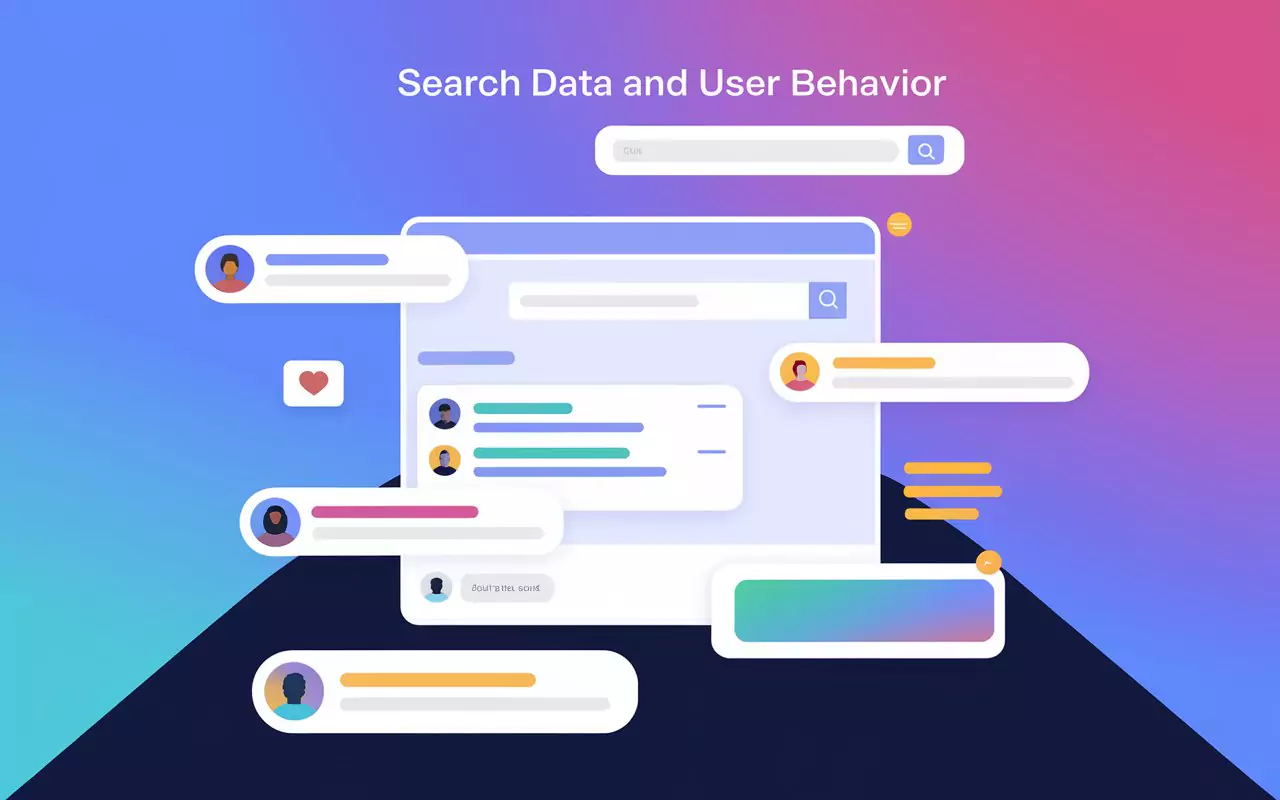
Understanding user behavior through search data means focusing on:
- Intent: Why is the user making this search? Are they looking to buy, learn, or find a specific website?
- Interaction: How do users interact with search results? Which results do they click, ignore, or bounce back from?
Analyzing user behavior gives insights into how to adjust AI to serve better, provide relevant content, and enhance user satisfaction.
Leveraging Search Data for AI Inference
Search data holds immense value for enhancing AI capabilities. By analyzing patterns and trends from search queries, you can significantly refine AI inference mechanisms.
Training Machine Learning Models
To train robust machine learning models, it's crucial to have a diverse set of data inputs. Search data provides a rich source of user queries and interactions that reflect real-world use cases and scenarios. You can employ this data to enhance the relevancy of your AI's responses:
- Diversity: Incorporates various user intents and contexts into your dataset.
- Volume: Provides ample examples for the model to learn from.
- Realism: Reflects actual user behavior, enabling more accurate model predictions.
Improving AI Decision-Making
AI decision-making thrives on quality data. Incorporate search data to help your AI discern nuances and make more informed decisions:
- Search History Analysis: Review user search logs to understand preferences.
- Query Patterns: Determine popular topics and adjust AI priorities accordingly.
Search Data in Predictive Modelling
Predictive modeling anticipates future events; search data serves as an early indicator for trends:
- Trend Analysis: Map search frequency changes to predict rising topics or areas of interest.
- User Engagement: Gauge how users might interact with future content or services.
Make the most of search data to propel your AI from merely functional to exceptionally insightful.
Best Practices and Strategies
Optimizing AI inference with search data is a delicate dance of ensuring quality, ethics, and adaptability. Let's dig into the strategies that help nurture this complex yet rewarding process.
Data Quality and Collection
The foundation of a robust AI model lies in the quality and diversity of its training data. You must prioritize gathering high-resolution data that accurately represents the problem space. For quality training data, you might consider utilizing the Brave Search API, which is known for providing a diversity of data crucial for well-rounded AI development. Clean, well-structured, and high-quality data will not only make your model more reliable but also enhance its predictive prowess.
Ethical Use of Search Data
When you collect search data, respect for privacy and consent should be at the forefront of your strategy. Always anonymize personal information and obtain data through transparent and fair methods. The ethical use of search data isn't just good practice; it's a cornerstone of trust between you and your users. Ensuring that the AI makes fair and unbiased inferences is equally important, which requires a conscious effort to avoid training on prejudiced datasets.
Continuous Learning and AI Evolution
You can't let your AI stagnate. Continuously feed it new data and allow it to learn from real-world usage and feedback. This not only keeps the model relevant but also sharpens its accuracy over time. Embrace an iterative process where your AI constantly evolves, ensuring it adapts to changing patterns in search data effectively. Remember, the goal is to stay ahead of the curve, and that calls for a commitment to ongoing improvement and learning.
Conclusion
Harnessing search data can revolutionize AI inference, enhancing efficiency, performance, and user satisfaction. By leveraging insights from user behavior and search patterns, AI algorithms can be fine-tuned to align closely with user intents. This journey towards optimizing AI with search data involves understanding various types of search data, analyzing user behavior, and implementing best practices for data quality, ethical use, and continuous learning. Let's unlock the full potential of AI together by embracing the power of search data.