
Table Of Contents
Best AI Tools for Finance in 2026
Published on : Apr 14 2025

In 2026, the financial sector is undergoing a fast and deep transformation, with AI at the forefront.
Finance personnel are no longer relying only on spreadsheets and manual controls, as highly intelligent algorithms are discovering concealed market trends, making month-end processes less stressful by automating them, and performing the kind of work that nobody wants to do anymore.
This manual presents thirty AI tools that are at the forefront of changing finance today. These platforms embrace investment analysis, portfolio management, risk assessment, compliance, accounting automation, forecasting, payments, fraud detection, and tax optimization.
Whether you’re a CFO optimizing operations, an analyst looking for insights, or a financial advisor giving personalized advice, these are the tools you need. Each tool was analyzed for integration, security, and real-world performance to empower you to navigate the AI finance territory confidently.
Best AI Tools for Finance
1. Arya.ai – AI for Financial Solutions
Arya.ai specializes in AI solutions for banking, insurance and financial services. It offers tools for fraud detection, risk assessment and automated claims processing. This enhances efficiency and decision-making in these industries.

Key Features
- End-to-end AI workflow automation
- Document processing with 99.5% accuracy
- Advanced risk modeling and credit scoring
- Regulatory compliance monitoring
- Anomaly detection for fraud prevention
Best for
Financial institutions looking to implement comprehensive AI solutions across multiple departments.
Pros
- Highly customizable to specific industry needs
- Enterprise-grade security protocols
- Scalable architecture for organizations of all sizes
- Extensive integration capabilities with existing systems
Cons
- Significant implementation time for full deployment
- Requires a dedicated team for maintenance and optimization
- Higher price point than targeted solutions
Pricing
Enterprise pricing based on organizational needs and scale. Implementation packages start at $75,000.
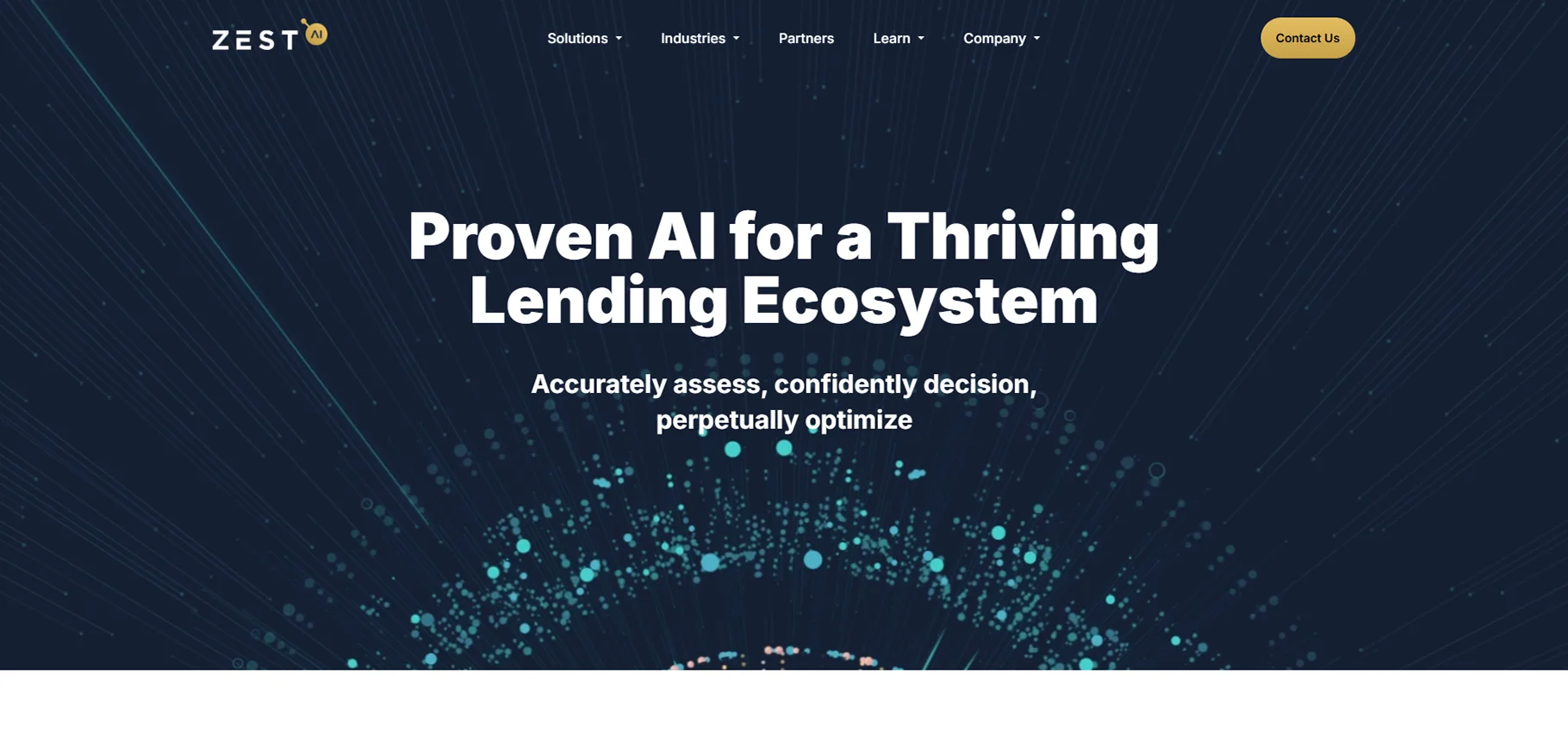
2. Zest AI – Proven AI for a Thriving Lending Ecosystem
Zest AI focuses on equitable lending and credit risk management. It uses machine learning to improve underwriting, reduce bias and analyze alternative data. This is for fairer and faster lending decisions.
 Key Features
- Explainable AI-powered credit scoring
- Automated underwriting processes
- Fair lending compliance tools
- Risk assessment for loan portfolios
- Customizable lending models
Best for
Banks, credit unions and lenders are looking to modernize their credit decision processes.
Pros
- Reduces bias in lending decisions
- Increases approval rates while maintaining risk profiles
- Transparent AI models for regulatory compliance
- Proven track record with major financial institutions
Cons
- Primarily focused on lending rather than broader financial services
- Requires substantial historical data for optimal performance
- Integration with legacy systems can be challenging
Pricing
Subscription model based on loan volume. Custom pricing available for enterprises.
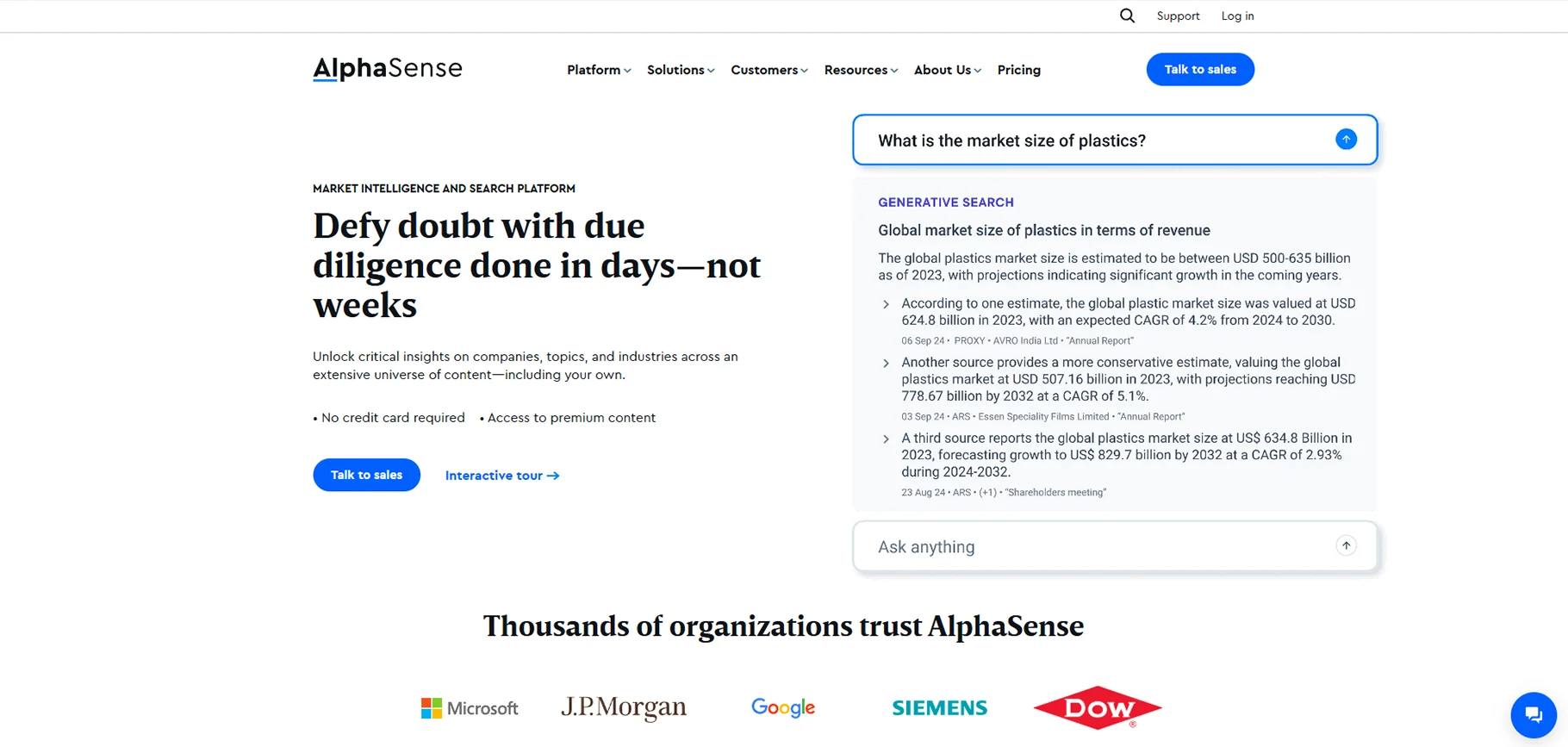
3. AlphaSense – AI for Investment Analysis
AlphaSense is a market intelligence platform. It combines AI search with access to premium business data. It helps users uncover insights, monitor trends and collaborate effectively across industries.
Key Features
- Natural language processing for financial document analysis
- Real-time market intelligence across global sources
- Sentiment analysis for earnings calls and news
- Automated tracking of industry trends
- Custom alerting for relevant financial events
Best for
Investment analysts, portfolio managers, and research teams seeking comprehensive market intelligence.
Pros
- Reduces research time by up to 70%
- Covers millions of documents from premium sources
- Powerful semantic search capabilities
- Mobile app for on-the-go analysis
Cons
- Steep learning curve for advanced features
- Premium content sources require additional fees
- Can be overwhelming for casual users
Pricing
Team plans start at $15,000 annually. Enterprise solutions are customized based on user count and content requirements.
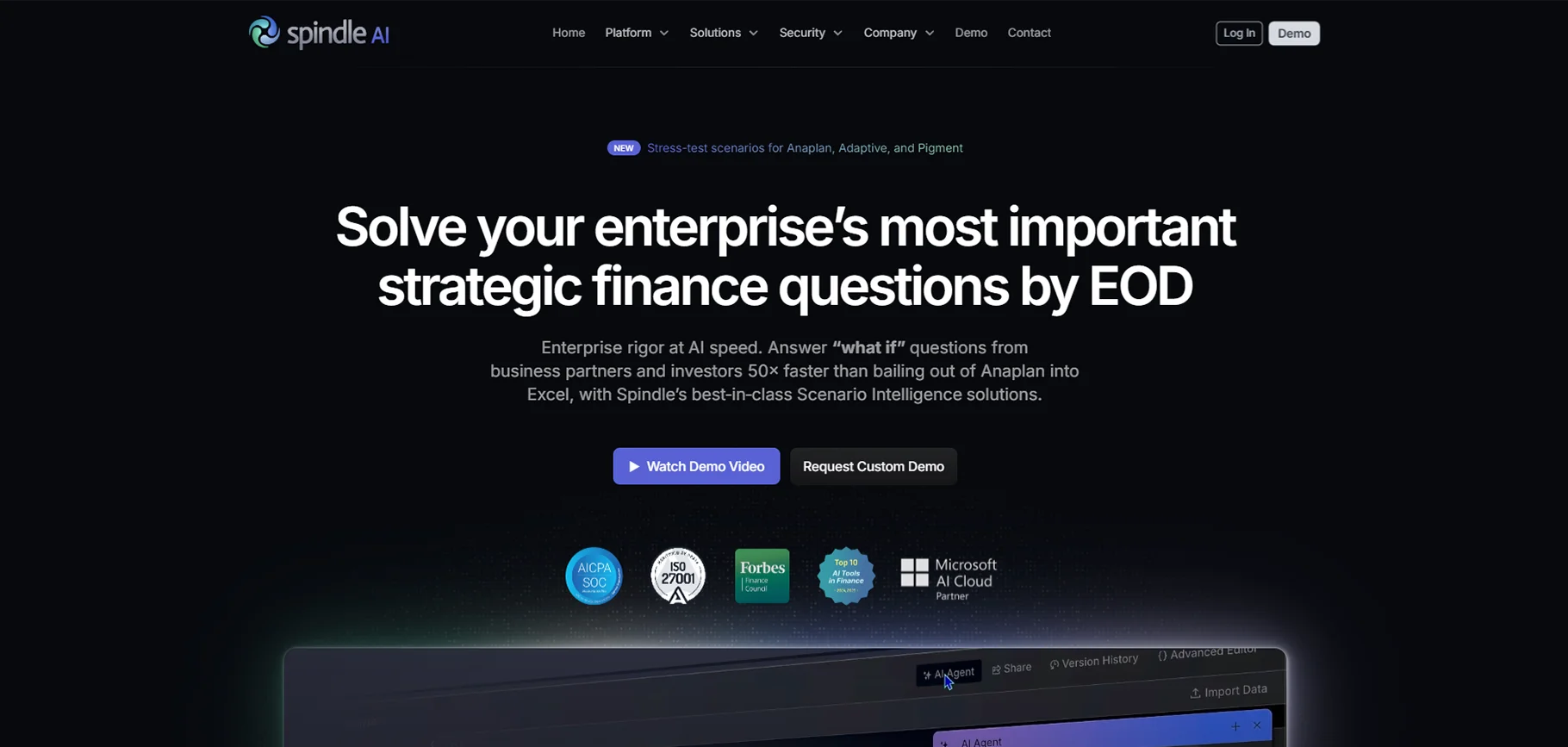
4. Spindle AI – AI for Financial Forecasting
Spindle AI provides scenario analytics for strategic finance by enabling businesses to model, optimize and compare financial scenarios. It accelerates decision-making with AI based insights and flexible analytics.
Key Features
- Advanced time series forecasting
- Scenario analysis and stress testing
- Driver-based financial modeling
- Automatic outlier detection
- Interactive forecast visualization
Best for
Financial planning and analysis teams requiring accurate, AI-driven forecasting.
Pros
- Improves forecast accuracy by 35-50%
- Incorporates external data sources automatically
- Continuous learning from forecast performance
- Transparent model building process
Cons
- Requires clean historical data for best results
- More complex than traditional forecasting tools
- Limited customization for specialized industries
Pricing
Subscription model starting at $2,500 per month. Enterprise pricing available for larger teams.
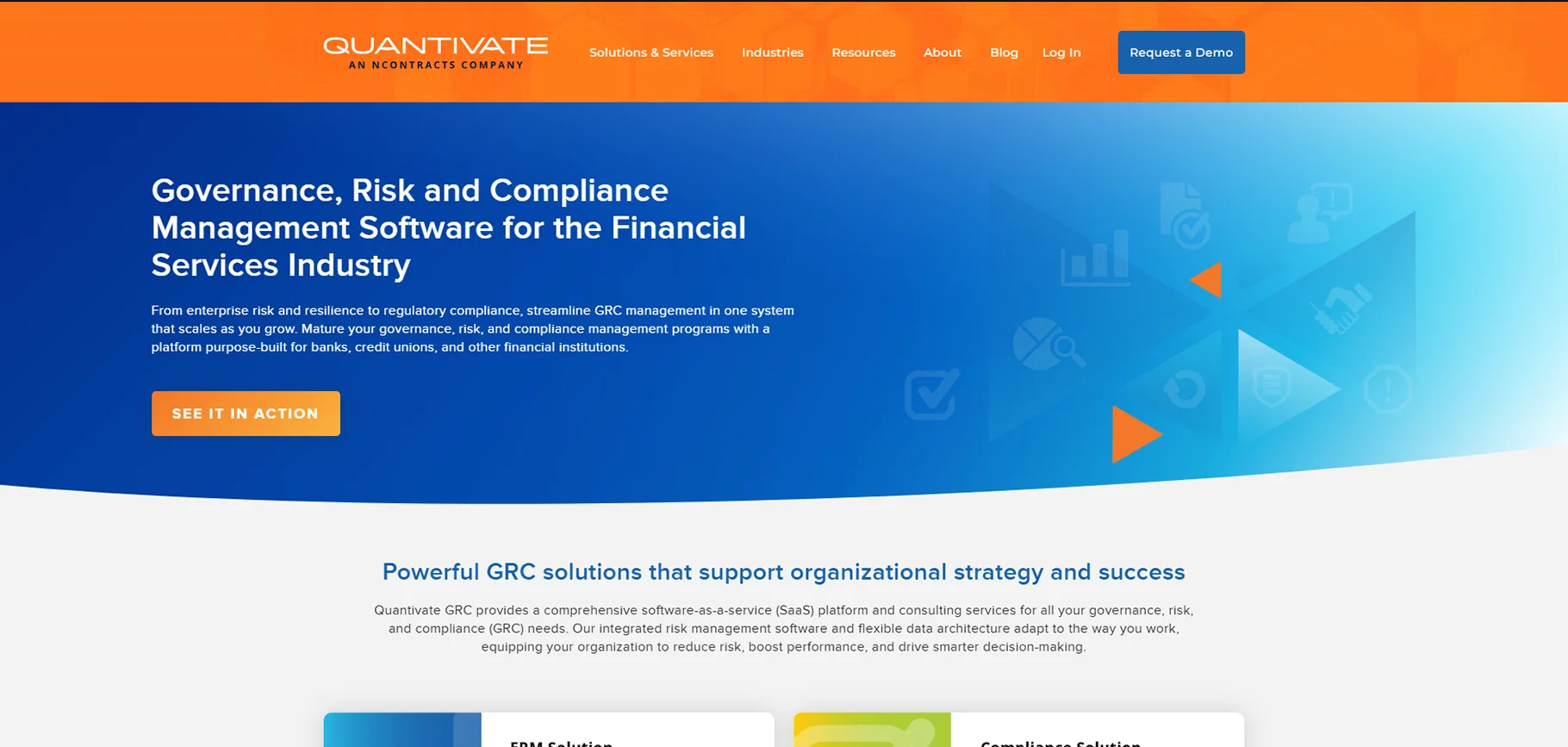
5. Quantivate – AI for Financial Risk Management
Quantivate offers governance, risk and compliance (GRC) software. It centralizes risk management, compliance tracking and policy oversight. This provides scalable solutions for organizations to simplify operations.
Key Features
- Integrated risk management platform
- Automated risk assessment and scoring
- Predictive analytics for emerging risks
- Compliance monitoring and reporting
- Risk scenario modeling
Best for
Risk management teams at financial institutions seeking comprehensive risk oversight.
Pros
- Holistic view of organization-wide risks
- Automated workflows for risk processes
- Customizable risk frameworks
- Strong audit trail and documentation
Cons
- Requires significant setup and configuration
- Not as specialized as single-purpose risk tools
- Can be complex for smaller organizations
Pricing
Modular pricing based on selected capabilities. Core platform starts at $30,000 annually.
6. Zapliance – AI for Cash Recovery
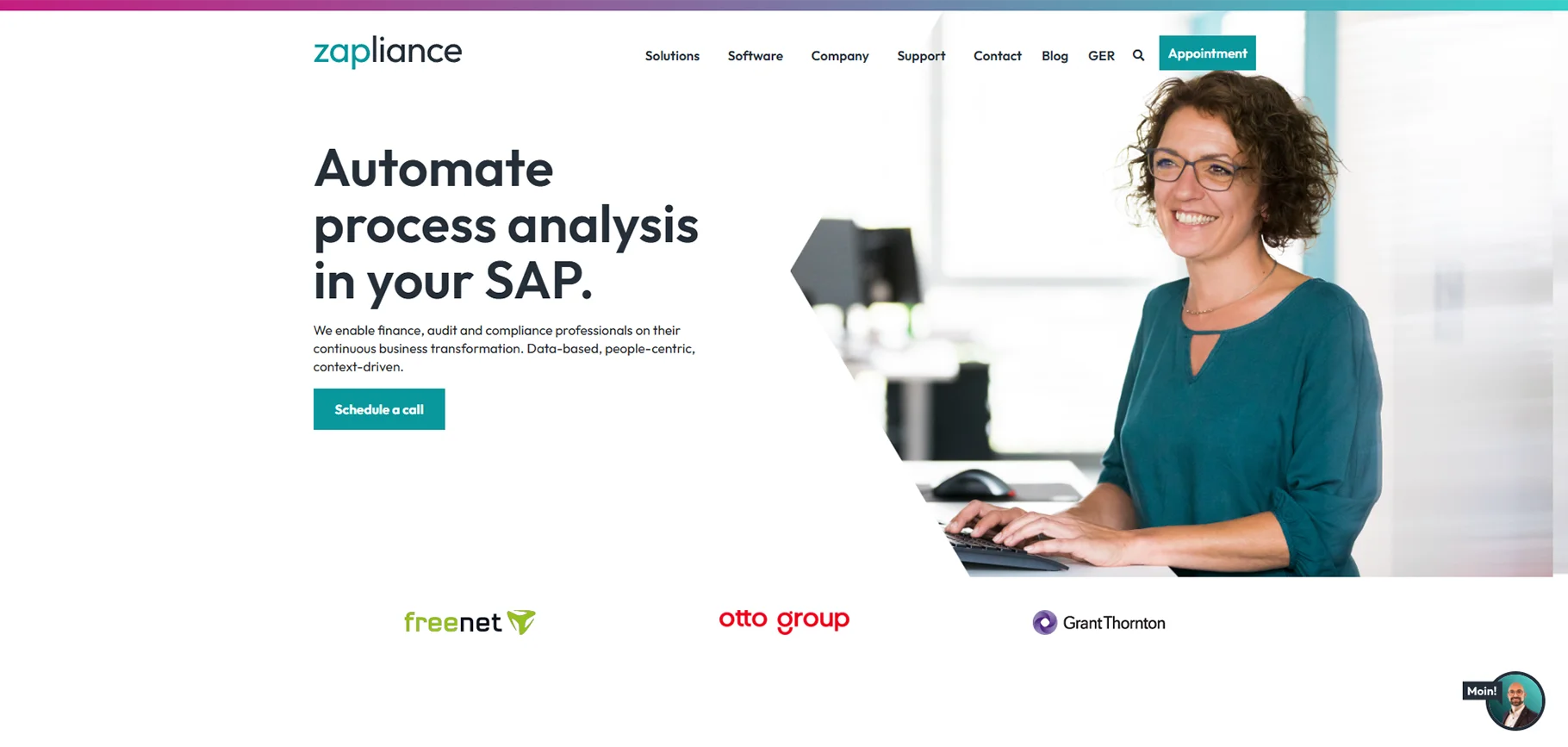
Zapliance automates process analysis for SAP systems by focusing on finance, audit and compliance. It identifies risks, optimizes processes and provides insights through tools like zapAudit and zapCash for efficient decision-making.
Key Features
- Automated payment reconciliation
- Duplicate payment detection
- Contract compliance auditing
- Vendor master data cleansing
- Recovery opportunity identification
Best for
Accounts payable teams looking to identify and recover cash leakage.
Pros
- Typically recovers 0.1-0.3% of annual spend
- Continuous monitoring rather than periodic audits
- Minimal IT resource requirements
- Quick implementation and ROI
Cons
- Limited to specific financial recovery use cases
- Requires access to sensitive payment data
- Less effective for organizations with mature AP processes
Pricing
Success-based fee structure with percentage of recovered funds. Minimum engagement size applies.
7. Tipalti – AI for Accounts Payable Automation
Tipalti streamlines accounts payable and global payments. It has features like invoice automation, tax compliance and multi-currency support. It simplifies financial workflows by ensuring secure, fast and accurate transactions across 196 countries.

Key Features
- End-to-end AP automation
- AI-powered invoice processing
- Global payment capabilities
- Tax compliance and reporting
- Supplier management portal
Best for
Mid-size to enterprise companies with complex accounts payable operations.
Pros
- Reduces AP workload by up to 80%
- Supports payments in 196 countries and 120 currencies
- Built-in fraud detection and prevention
- Seamless ERP integration
Cons
- Higher price point than basic AP solutions
- May include features unnecessary for smaller businesses
- Requires commitment to process changes
Pricing
Platform fee plus transaction-based pricing. Starts at $5,000 annually for basic packages.
8. Botkeeper – AI for Bookkeeping
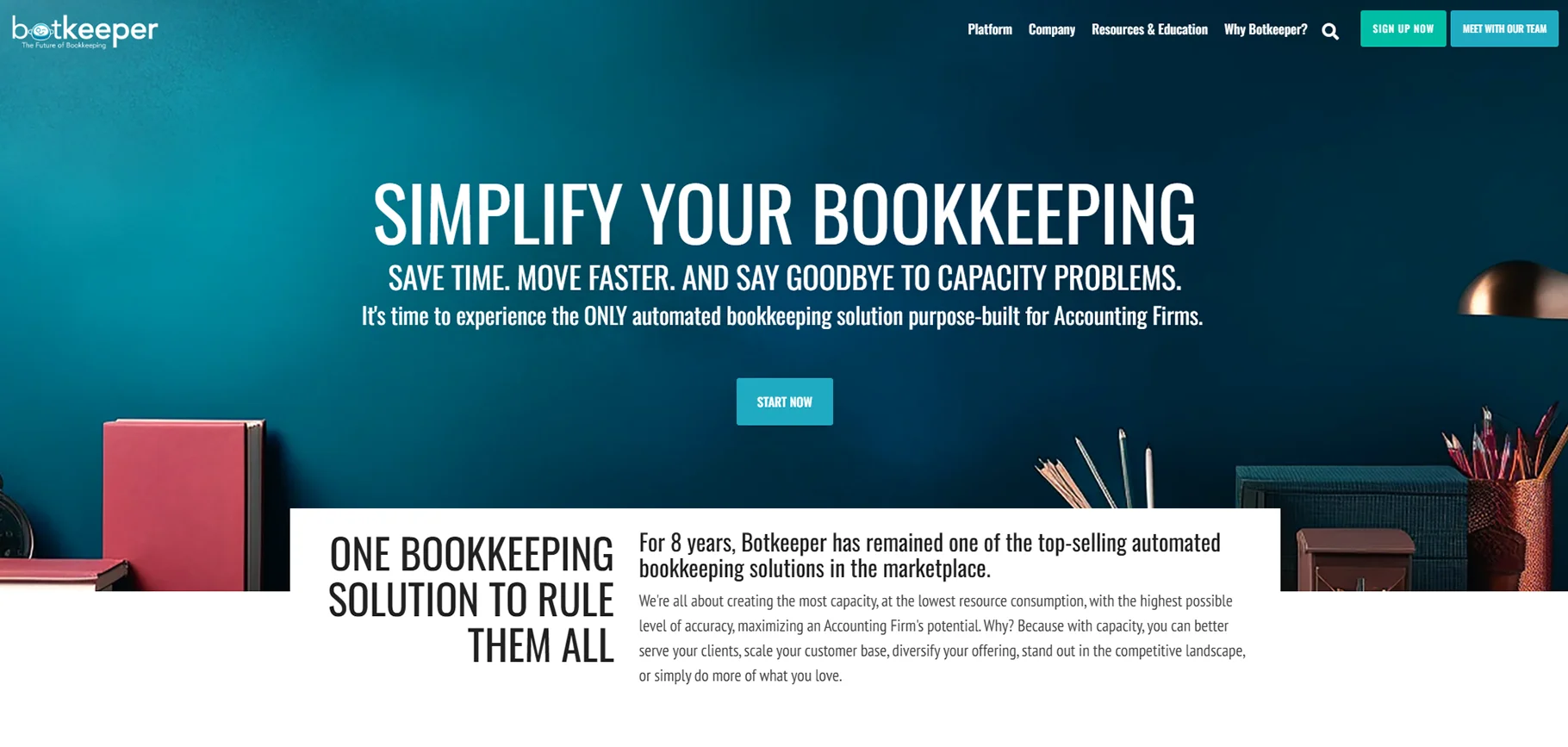
Botkeeper combines AI and human expertise to automate bookkeeping tasks. It handles transaction categorization, reconciliations and financial reporting by integrating seamlessly with accounting platforms like QuickBooks and Xero.
Key Features
- Automated transaction categorization
- Financial statement preparation
- Reconciliation and exception handling
- Client portal for document sharing
- Dashboard reporting and analytics
Best for
Accounting firms and finance departments seeking to automate routine bookkeeping tasks.
Pros
- Reduces bookkeeping time by up to 70%
- Scalable for seasonal volume fluctuations
- Human review process ensures accuracy
- Integrates with popular accounting software
Cons
- Not a complete replacement for skilled accountants
- Requires initial training period for optimal performance
- Best suited for standard bookkeeping cases
Pricing
Subscription model based on transaction volume. Starts at $1,500 monthly for small businesses.
9. Bluedot – AI for VAT Compliance
Bluedot uses AI-powered infectious disease intelligence to monitor global health threats. It provides real-time surveillance, risk assessments and forecasting to help organizations anticipate and respond to outbreaks effectively.

Key Features
- Automated VAT return preparation
- Cross-border VAT management
- VAT recovery optimization
- Compliance monitoring and alerting
- Digital audit trail maintenance
Best for
Multinational companies navigating complex VAT regulations across jurisdictions.
Pros
- Reduces compliance risk and penalties
- Optimizes VAT recovery opportunities
- Stays current with changing regulations
- Centralizes VAT management globally
Cons
- Primarily focused on VAT rather than broader tax compliance
- Requires integration with financial systems
- Complex setup for companies with many entities
Pricing
Annual subscription based on company size and jurisdictions. Starts at $15,000 for small multinational operations.
10. Formula Bot – AI for Excel Automation
Formula Bot simplifies data analysis. It is done by generating Excel formulas, SQL queries and visualizations from plain text instructions. It improves productivity by automating complex tasks and integrating with Google Sheets and Excel.

Key Features
- Formula generation from natural language
- Automated data cleaning and transformation
- Pattern recognition in financial datasets
- Dynamic report generation
- Excel model optimization
Best for
Financial analysts and Excel power users seeking to automate complex spreadsheet tasks.
Pros
- Reduces formula errors by 95%
- Saves hours on repetitive Excel tasks
- No coding knowledge required
- Works with existing Excel files
Cons
- Limited to Excel-based workflows
- Cannot fully replace advanced Excel skills
- Features overlap with newer BI tools
Pricing
Subscription model at $49 per month per user. Enterprise licensing available.
11. Kavout – AI-Driven Stock Prediction and Analysis
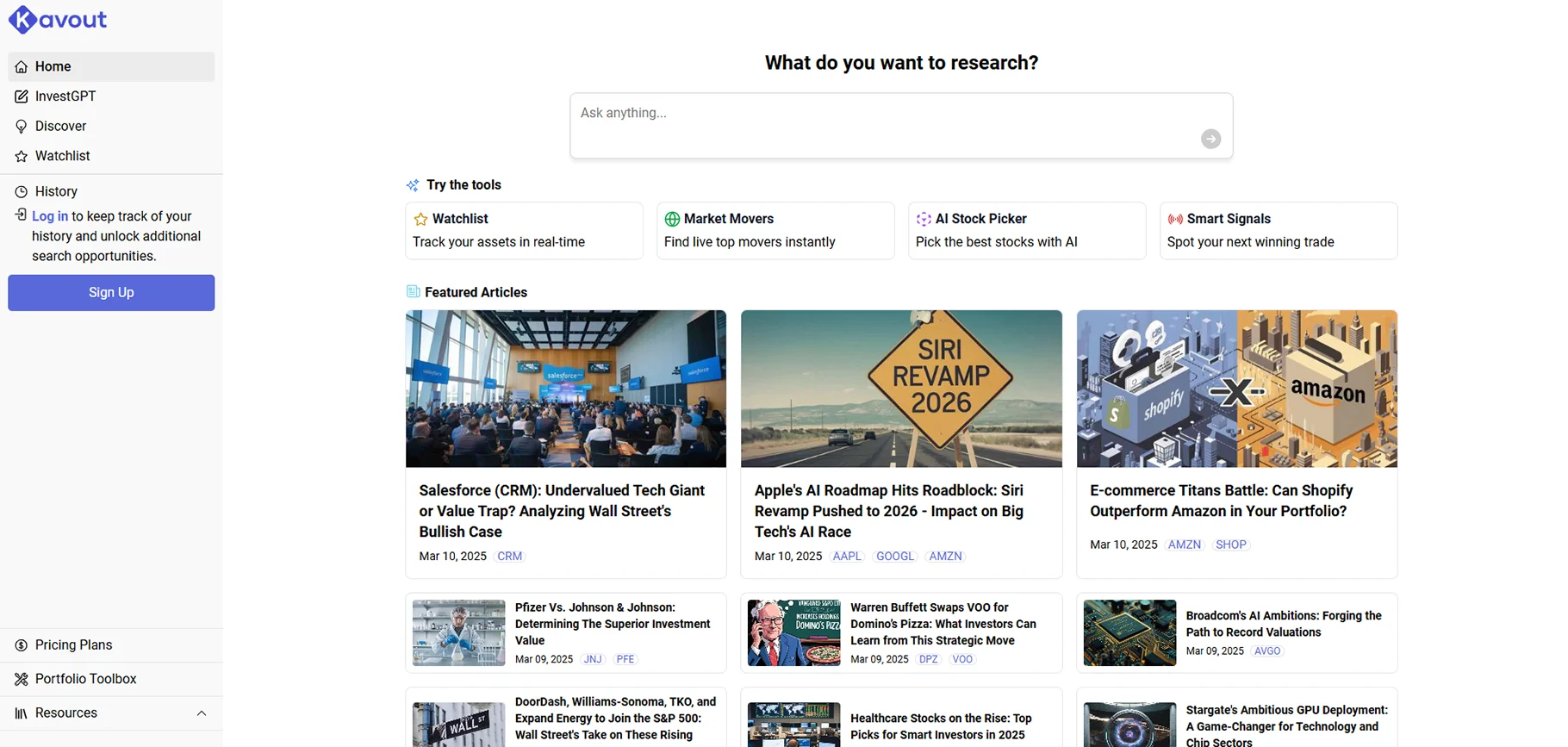
Kavout is an AI-based investment platform that uses machine learning to analyze financial data, identify trends and provide stock recommendations. It offers tools like InvestGPT, AI stock analysis and portfolio optimization. It is for smarter trading decisions.
Key Features
- Proprietary "K Score" for stock ranking
- Pattern recognition in market data
- Natural language processing for news impact
- Portfolio optimization algorithms
- Automated trading signals
Best for
Investment professionals seeking AI-powered stock analysis and portfolio insights.
Pros
- Processes vast amounts of market data
- Identifies patterns invisible to human analysts
- Removes emotional bias from investing
- Continuous learning and improvement
Cons
- No guarantee of investment performance
- Black box nature of some algorithms
- Requires professional interpretation of results
Pricing
Subscription tiers from $299 monthly for individual investors to custom enterprise solutions.
12. Kensho – Predictive Analytics and Market Analysis
Kensho specializes in AI financial analytics. It offers predictive insights, event impact analysis and natural language processing. It helps businesses extract and structure data, automate workflows and make informed decisions using advanced machine learning.

Key Features
- Natural language search for financial data
- Impact analysis of world events on markets
- Automated financial research
- Proprietary machine learning models
- Custom index creation and tracking
Best for
Financial institutions and investment teams require sophisticated market intelligence.
Pros
- Institutional-grade analytics
- Processes structured and unstructured data
- Reduces research time dramatically
- Identifies non-obvious market correlations
Cons
- Significant investment required
- Designed for sophisticated users
- Data quality dependencies
Pricing
Enterprise pricing model. Annual licenses typically start at $100,000+.
13. Numerai – AI-Driven Hedge Fund Predictions
Numerai is a data science competition platform where participants build machine learning models to predict stock market trends. It provides obfuscated financial datasets for model training and rewards users based on their predictions' accuracy.

Key Features
- Crowdsourced prediction models
- Cryptocurrency-based incentive structure
- Meta-model aggregation
- Anonymous data scientist participation
- Automated model evaluation
Best for
Quantitative analysts and data scientists looking to monetize their models.
Pros
- Access to institutional-grade datasets
- Incentivized accuracy through token rewards
- Collaborative intelligence approach
- No capital requirements to participate
Cons
- Complex structure for newcomers
- Cryptocurrency exposure required
- Highly competitive environment
Pricing
Free to participate. Rewards based on model performance.
14. Betterment – Automated Investing Platform
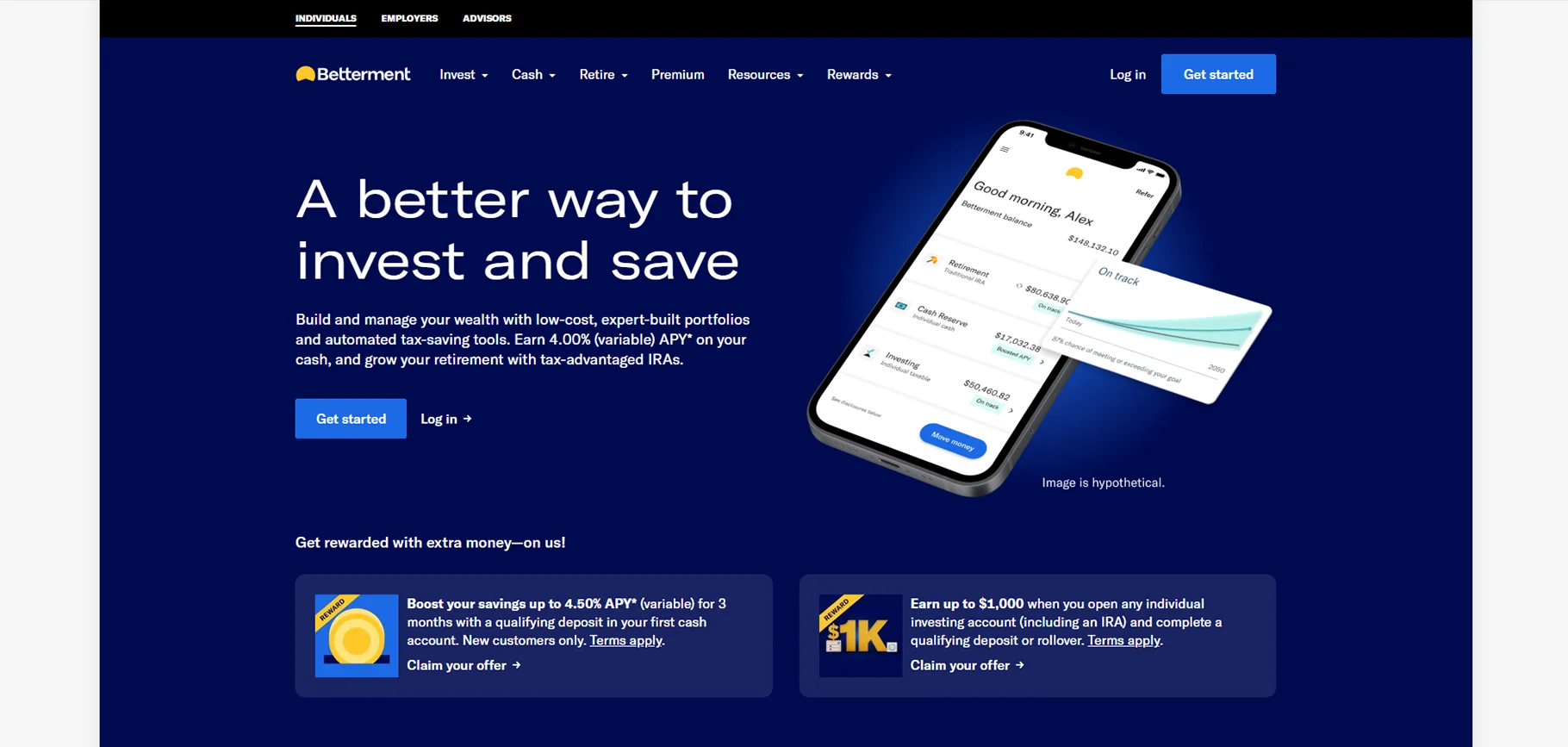
Betterment is a robo-advisor platform that simplifies investing with automated portfolio management, tax-loss harvesting and retirement planning. It offers personalized financial advice and tools. It is for building wealth and achieving long-term goals.
Key Features
- AI-driven portfolio management
- Automated tax-loss harvesting
- Goal-based investment strategies
- Retirement planning tools
- Cash management features
Best for
Individual investors seeking automated portfolio management with sophisticated features.
Pros
- Low management fees (0.25-0.40%)
- No minimum investment requirements
- Behavioral finance principles incorporated
- Automatic rebalancing and dividend reinvestment
Cons
- Limited customization compared to traditional advisors
- No direct access to human financial advisors at base tier
- Primarily focused on ETF-based portfolios
Pricing
0.25% annual fee for digital service. 0.40% for premium tier with human advisor access.
15. Ayasdi – AI-Powered Risk Management Tool
Ayasdi is a machine intelligence platform that uses topological data analysis. It is to uncover hidden patterns in complex datasets. It supports applications like anti-money laundering, clinical variation management and risk assessment for businesses.
Key Features
- Topological data analysis
- Automated stress testing
- Anti-money laundering detection
- Credit risk assessment
- Model risk management
Best for
Financial institutions requiring advanced risk analytics and regulatory compliance.
Pros
- Identifies hidden patterns in complex data
- Reduces false positives in compliance monitoring
- Provides explanations for AI decisions
- Handles massive datasets efficiently
Cons
- Significant implementation complexity
- Requires specialized knowledge to interpret results
- High initial investment
Pricing
Enterprise pricing based on use cases and data volume. Typically starts at $250,000 annually.
16. HighRadius – AI-Driven Accounts Receivable Automation
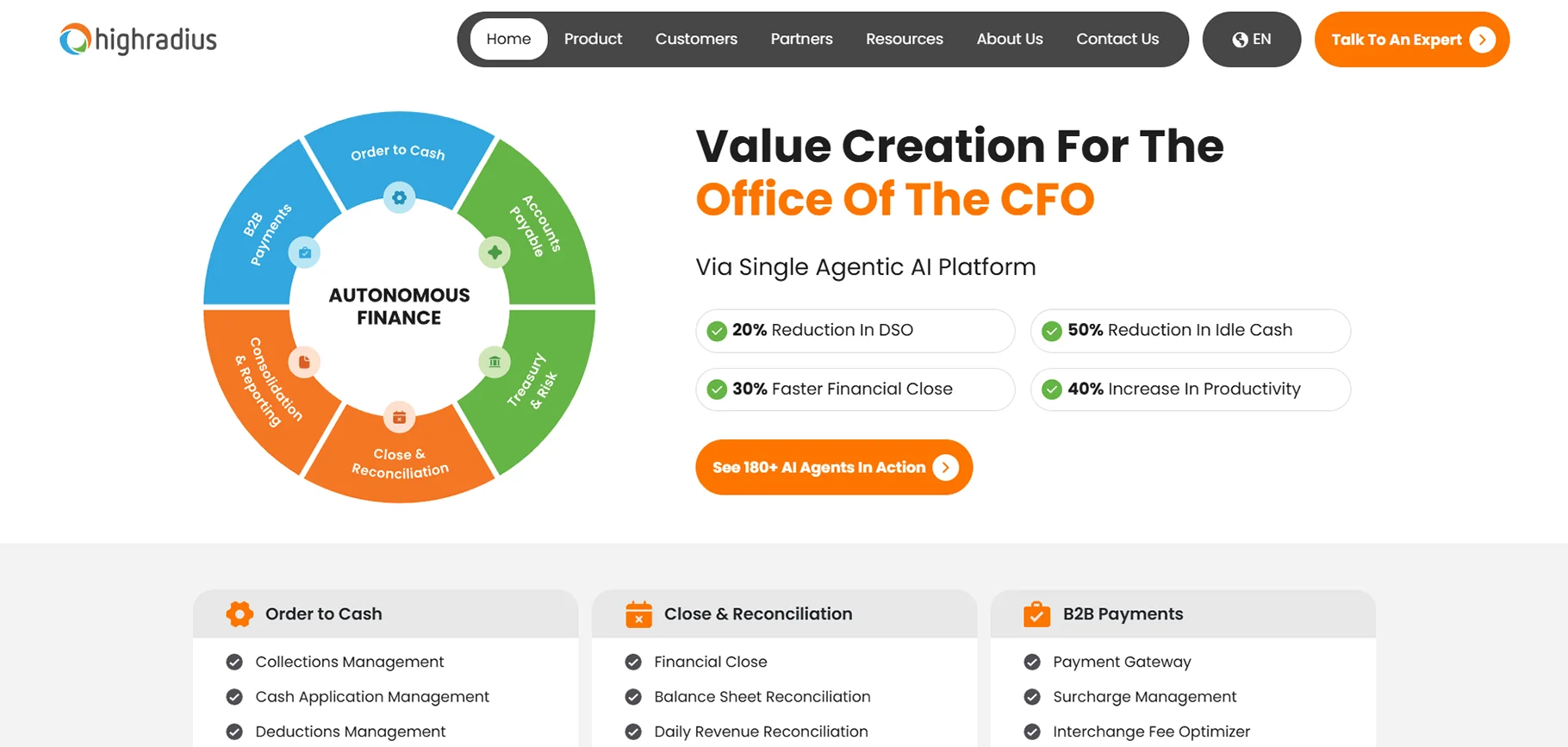
HighRadius offers AI solutions for finance operations. It includes accounts receivable, treasury and record-to-report. It automates processes like cash application, credit management and financial forecasting.
Key Features
- Automated cash application
- Predictive analytics for collections
- Electronic invoicing and payments
- Deductions and disputes management
- Credit risk assessment
Best for
Mid-size to large enterprises with complex accounts receivable processes.
Pros
- Reduces DSO by 5-10 days on average
- 80-90% straight-through processing for cash application
- Improves working capital management
- Integrates with major ERPs
Cons
- Significant implementation time
- Process changes required for optimal results
- Best suited for higher transaction volumes
Pricing
Modular pricing based on selected capabilities. Starts at $50,000 annually for core modules.
17. Xero – AI-Powered Accounting Software
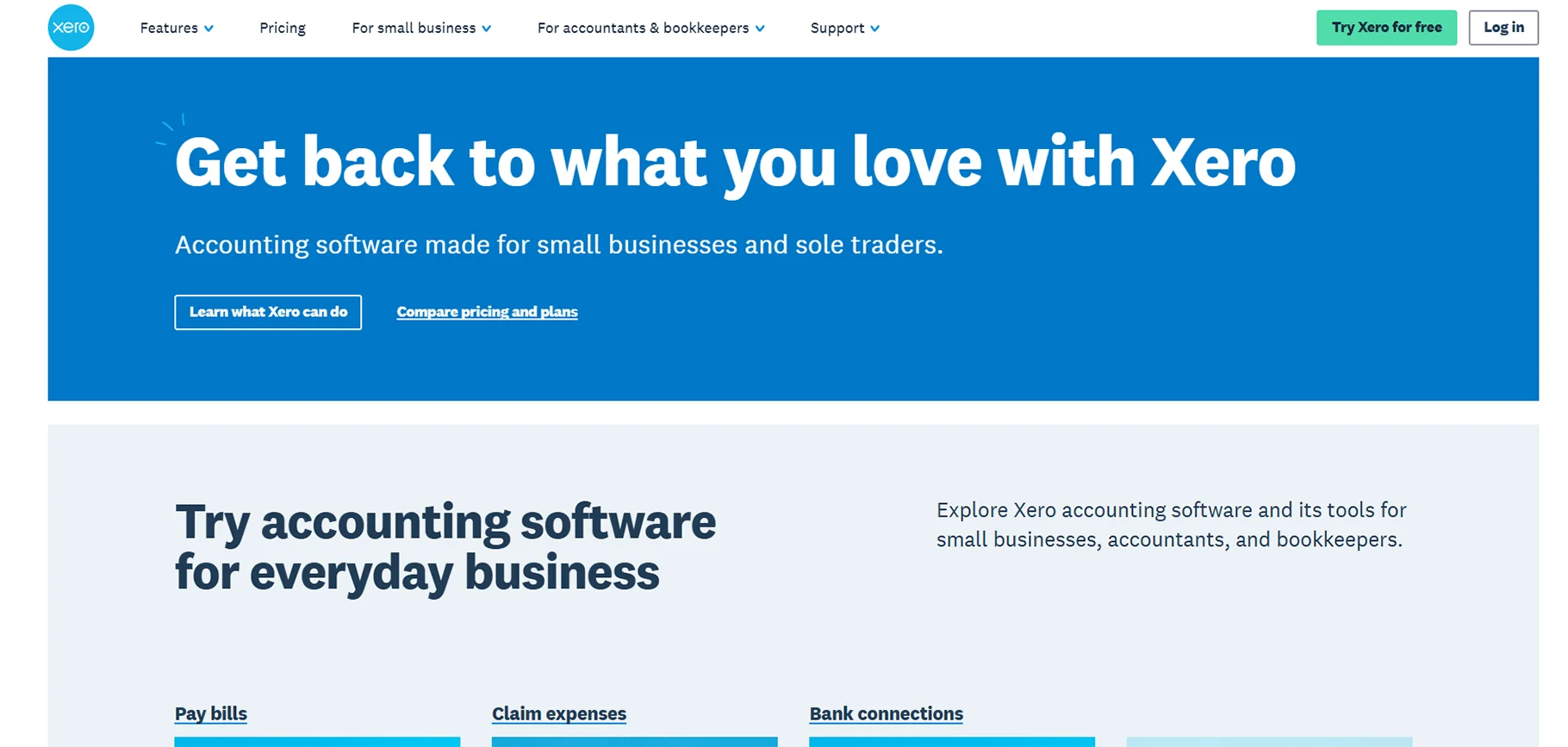
Xero is a cloud-based accounting software. It is designed for small businesses. It simplifies invoicing, expense tracking, payroll and bank reconciliation. This provides real-time financial insights and seamless collaboration with accountants.
Key Features
- Automated bank reconciliation
- AI-driven expense categorization
- Invoice processing and management
- Financial reporting and analytics
- Tax preparation assistance
Best for
Small to medium businesses seeking cloud-based accounting with AI capabilities.
Pros
- Affordable for small businesses
- User-friendly interface
- Extensive integration ecosystem
- Mobile app for on-the-go accounting
Cons
- Less customizable than enterprise solutions
- Limited advanced features for complex businesses
- AI capabilities still developing in some areas
Pricing
Subscription plans from $15 to $65 per month based on features and users.
18. SigFig – AI-Driven Portfolio Management
SigFig is a robo-advisor platform that simplifies investment management. It offers automated portfolio tracking, tax-efficient strategies and access to financial advisors. It makes investing accessible and efficient.

Key Features
- Automated portfolio rebalancing
- Tax-optimized investing strategies
- Retirement planning tools
- Fee analysis and optimization
- Investment performance tracking
Best for
Individual investors and financial advisors seeking algorithmic portfolio management.
Pros
- Low-cost automated investing
- Personalized portfolio recommendations
- Risk alignment with financial goals
- Integration with existing brokerage accounts
Cons
- Limited direct customization
- Best for long-term passive investors
- Less suited for active trading strategies
Pricing
0.25% annual fee with $10,000 minimum investment. Enterprise solutions available for advisors.
19. Tamr – AI-Driven Data Unification for Finance
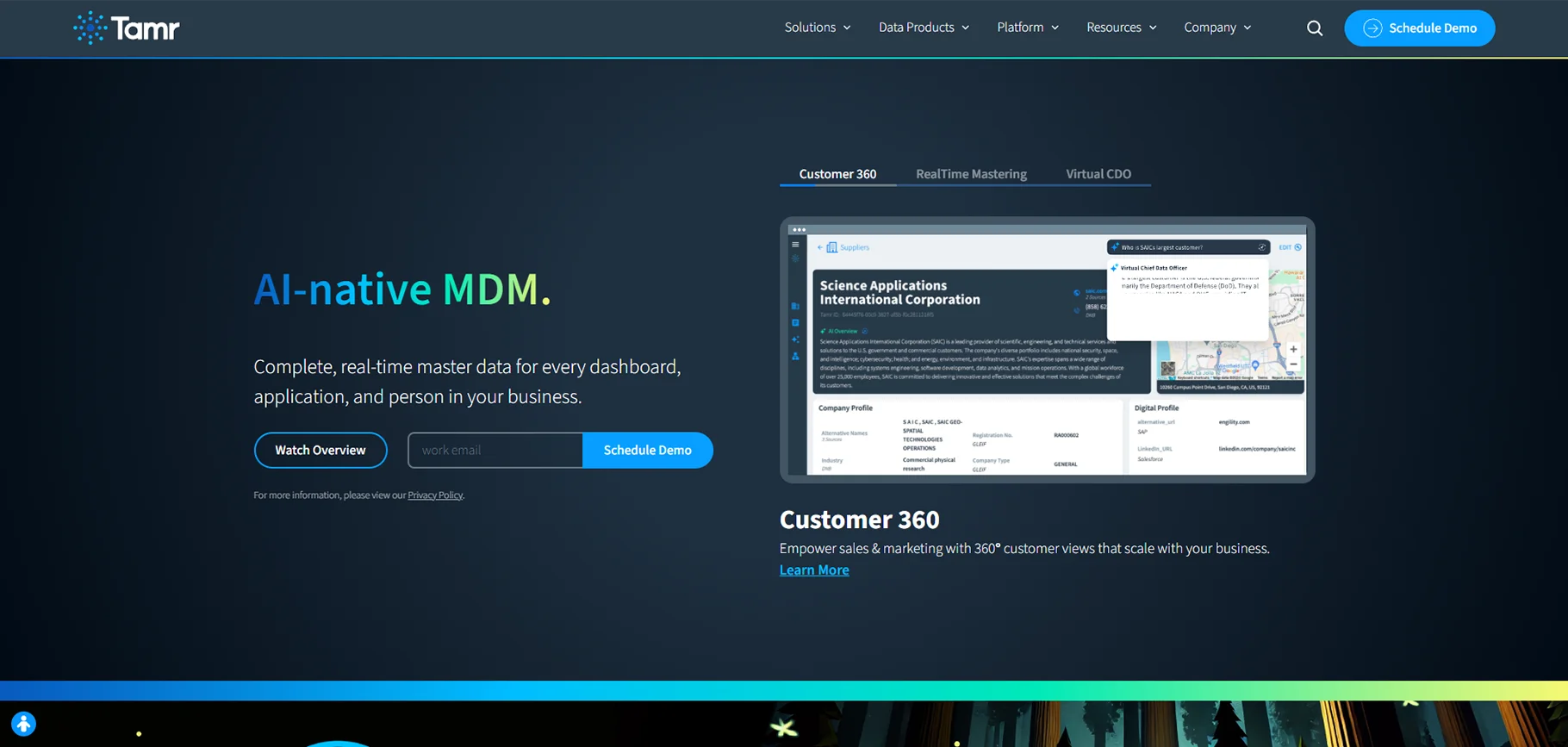
Tamr specializes in AI master data management (MDM). It uses machine learning for data unification, entity resolution and enrichment. It enables organizations to achieve accurate, scalable and trusted data insights.
Key Features
- Machine learning-based data mastering
- Entity resolution across financial systems
- Data quality monitoring and improvement
- Integration with existing data infrastructure
- Scalable data processing architecture
Best for
Financial institutions are dealing with disparate data sources and quality issues.
Pros
- Reduces data preparation time by 90%
- Improves data quality for downstream analytics
- Human-guided machine learning approach
- Handles structured and semi-structured data
Cons
- Significant implementation effort
- Requires ongoing attention to data governance
- Higher cost compared to traditional data tools
Pricing
Enterprise pricing based on data volume and complexity. Typically starts at $100,000 annually.
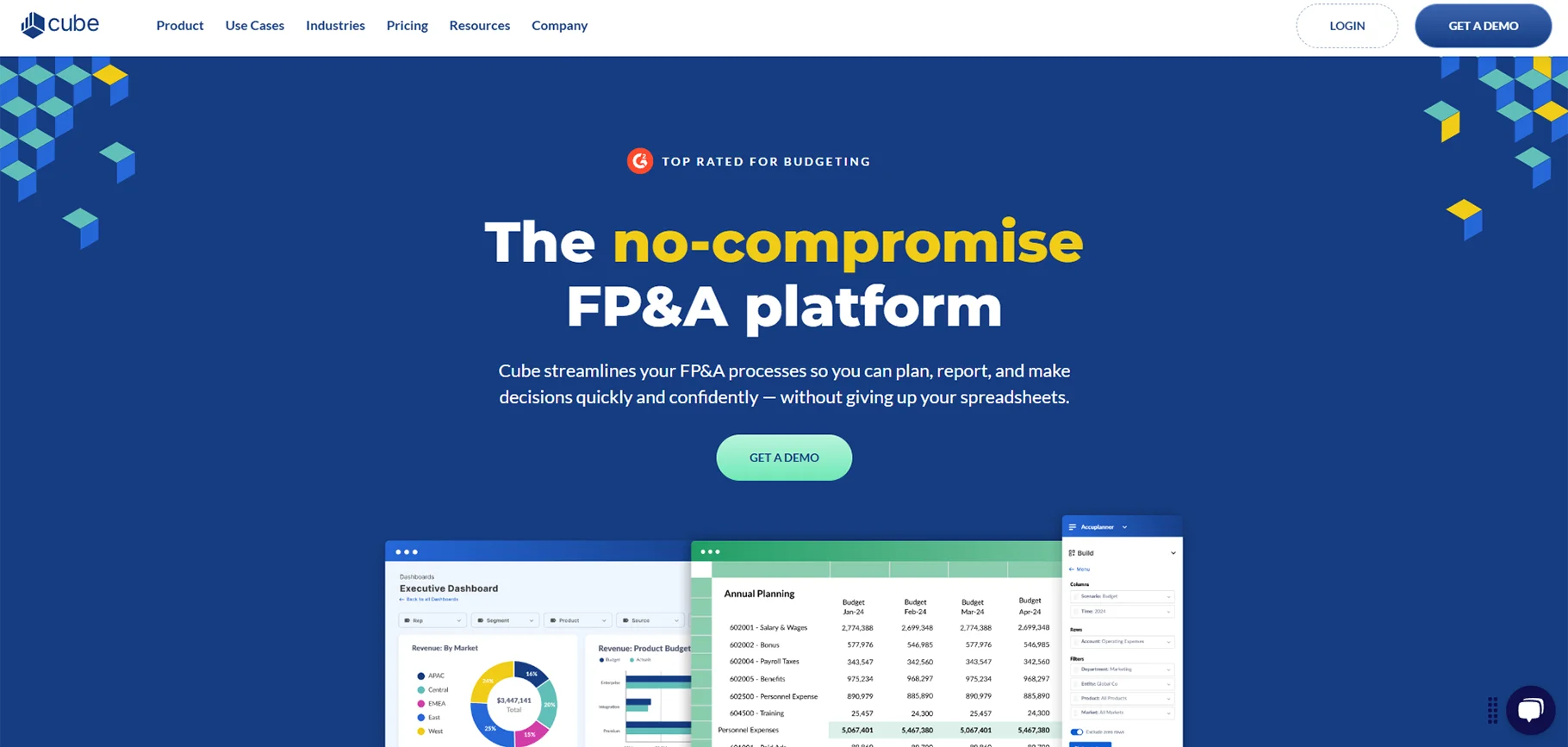
20. Cube – Best for Financial Planning and Analysis
Cube is a financial planning and analysis platform that integrates with spreadsheets and business tools. It provides real-time budgeting, forecasting and reporting. It helps teams to make data-driven decisions.
Key Features
- Multi-dimensional financial modeling
- Automated variance analysis
- Rolling forecasts and scenario planning
- Driver-based budgeting
- Excel integration with cloud capabilities
Best for
FP&A teams seeking to modernize their planning and analysis processes.
Pros
- Familiar Excel interface with enhanced capabilities
- Centralizes financial data from multiple sources
- Streamlines collaboration on planning
- Reduces manual data handling
Cons
- Primarily focused on planning rather than broader finance
- Learning curve for advanced features
- Best value for mid-size to large teams
Pricing
Subscription model starting at $850 per month for small teams. Enterprise pricing available.
21. Brooke.AI - Best for Accounting Automation
Brooke.AI is an intelligent digital voice assistant. It is designed for automotive dealerships. It handles inbound service calls, schedules appointments and improves customer experience by providing 24/7 support with human-like interactions.

Key Features
- Intelligent document processing
- Automated journal entry creation
- Reconciliation assistant
- Month-end close acceleration
- Continuous accounting enablement
Best for
Accounting departments looking to automate routine transactional accounting tasks.
Pros-
- Reduces manual data entry by 85%
- Improves accuracy in accounting processes
- Shortens month-end close cycles by 40%
- Adapts to existing accounting workflows
Cons-
- Requires initial training with company documents
- Best ROI for companies with high transaction volumes
- Some customization needed for unique accounting practices
Pricing
Subscription model based on transaction volume, starting at $2,000 monthly. Enterprise pricing available.
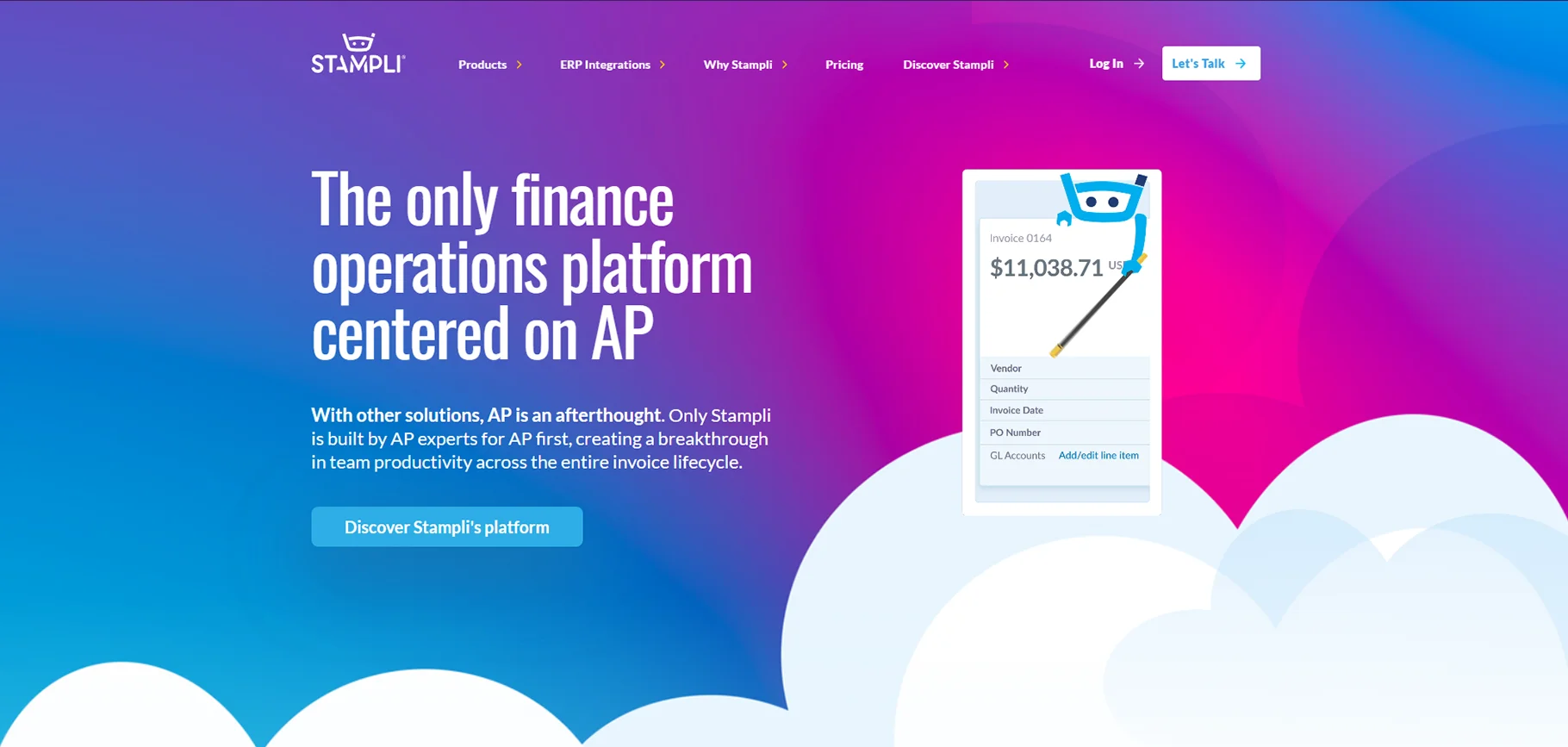
22. Stampli – Best for Invoice Management
Stampli is an AI based procure-to-pay platform. It simplifies accounts payable processes. It automates invoice approvals, enhances collaboration and integrates seamlessly with ERP systems for efficient financial operations.
Key Features
- AI-powered invoice coding and approval
- Duplicate invoice detection
- Vendor communication platform
- Payment scheduling and execution
- Audit trail and compliance documentation
Best for
Organizations seeking to streamline accounts payable workflows and vendor management.
Pros
- Reduces invoice processing time by 70%
- Centralizes vendor communications
- Adapts to company-specific approval processes
- Rich integration capabilities with ERPs
Cons
- Focused primarily on AP rather than broader finance
- Requires vendor adoption for maximum benefit
- Implementation complexity for large enterprises
Pricing
Transaction-based pricing model. Typical implementations range from $15,000-$50,000 annually depending on volume.
23. Trullion – Best for Lease Accounting and Compliance
Trullion offers AI accounting solutions for lease accounting, revenue recognition and audits. It automates data extraction, ensures compliance with standards like IFRS and provides real-time financial insights.
Key Features
- AI-powered lease extraction and analysis
- ASC 842/IFRS 16 compliance automation
- Audit-ready documentation
- Scenario modeling for lease decisions
- Centralized lease management
Best for
Companies with significant lease portfolios needing compliance with lease accounting standards.
Pros
- Reduces lease accounting workload by 80%
- Ensures regulatory compliance
- Simplifies auditor reviews
- Provides insights for lease optimization
Cons
- Specialized for lease accounting rather than general finance
- Requires initial setup and document processing
- Premium pricing compared to manual spreadsheet approaches
Pricing
Annual subscription based on number of leases managed. Starts at $20,000 for small portfolios.
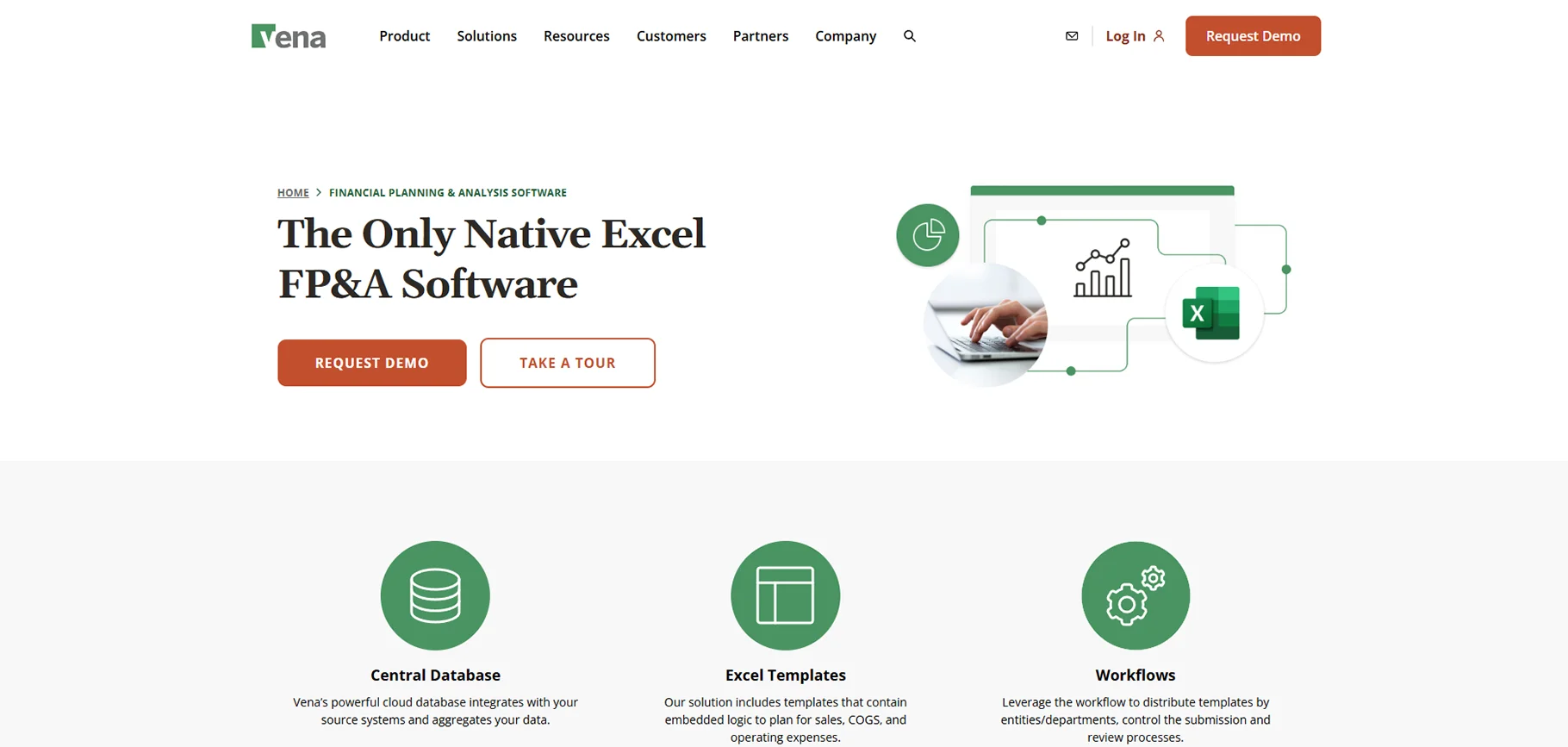
24. Vena Insights – Best for Budgeting and Financial Planning
Vena Insights combines real-time data access with advanced AI and Power BI integration. It allows self-service analytics, predictive modeling and customizable dashboards for smarter financial planning and decision-making.
Key Features
- AI-enhanced planning and forecasting
- Predictive analytics for business drivers
- Excel-based collaborative workflows
- Scenario modeling and what-if analysis
- Automated variance analysis
Best for
Finance teams seeking to transform budgeting and planning processes with AI capabilities.
Pros
- Familiar Excel interface with enhanced capabilities
- Reduces planning cycle times by 50-70%
- Enables driver-based forecasting
- Connects operational and financial planning
Cons
- Requires process adjustments for full benefits
- Initial setup complexity
- Most valuable for companies with collaborative planning
Pricing
Subscription model based on user count and modules. Mid-market implementations typically range from $50,000-$150,000 annually.
25. Workiva – Best for Compliance and Reporting
Workiva is a cloud-based platform. It is for integrated financial reporting, sustainability and governance. It connects data, unifies processes and ensures audit-ready compliance for transparent and efficient reporting.

Key Features
- Automated financial reporting
- Collaborative document management
- Audit trail and version control
- Integrated risk and control management
- SEC and regulatory filing automation
Best for
Public companies and regulated entities with complex reporting requirements.
Pros
- Streamlines reporting processes
- Reduces errors in financial statements
- Connects data from multiple sources
- Simplifies regulatory compliance
Cons
- Significant implementation effort
- Learning curve for new users
- Premium pricing structure
Pricing
Subscription model based on solutions implemented. Typical implementations range from $75,000-$200,000 annually.
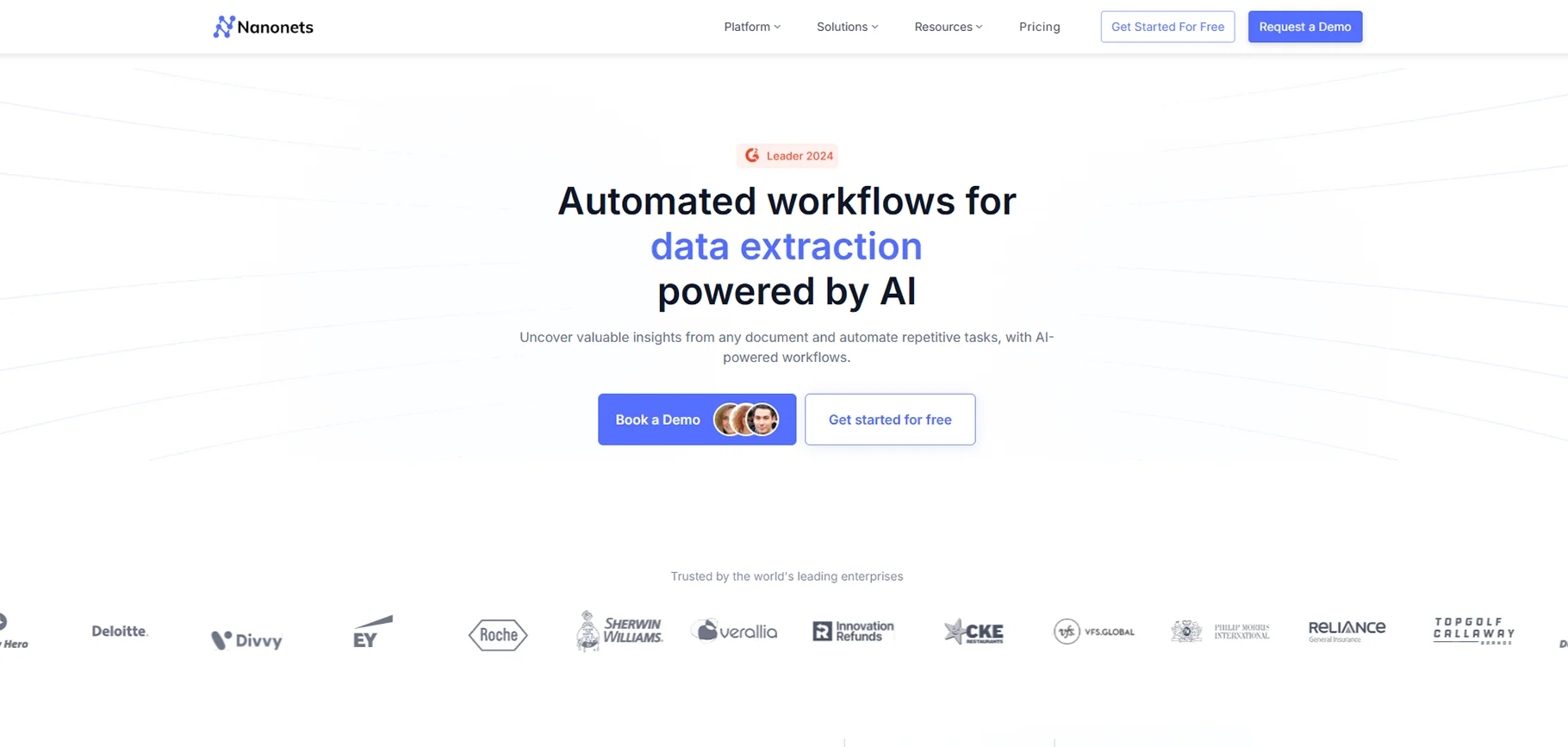
26. Nanonets – Best for Document Automation
Nanonets is an AI platform for document processing and workflow automation. It specializes in extracting data from unstructured documents. It automates tasks like invoice processing and integrating seamlessly with existing workflows.
Key Features
- OCR and intelligent document processing
- Automated data extraction
- Custom AI model training
- Workflow automation
- Integration with accounting systems
Best for
Finance teams dealing with high volumes of paper and digital documents.
Pros
- Reduces manual data entry by 90%
- Handles structured and unstructured documents
- Improves over time with machine learning
- Flexible API for custom integrations
Cons
- Requires initial model training for best results
- Some complex documents need human verification
- Best ROI for high-volume processing
Pricing
Volume-based pricing starting at $499 monthly. Enterprise solutions available with custom pricing.
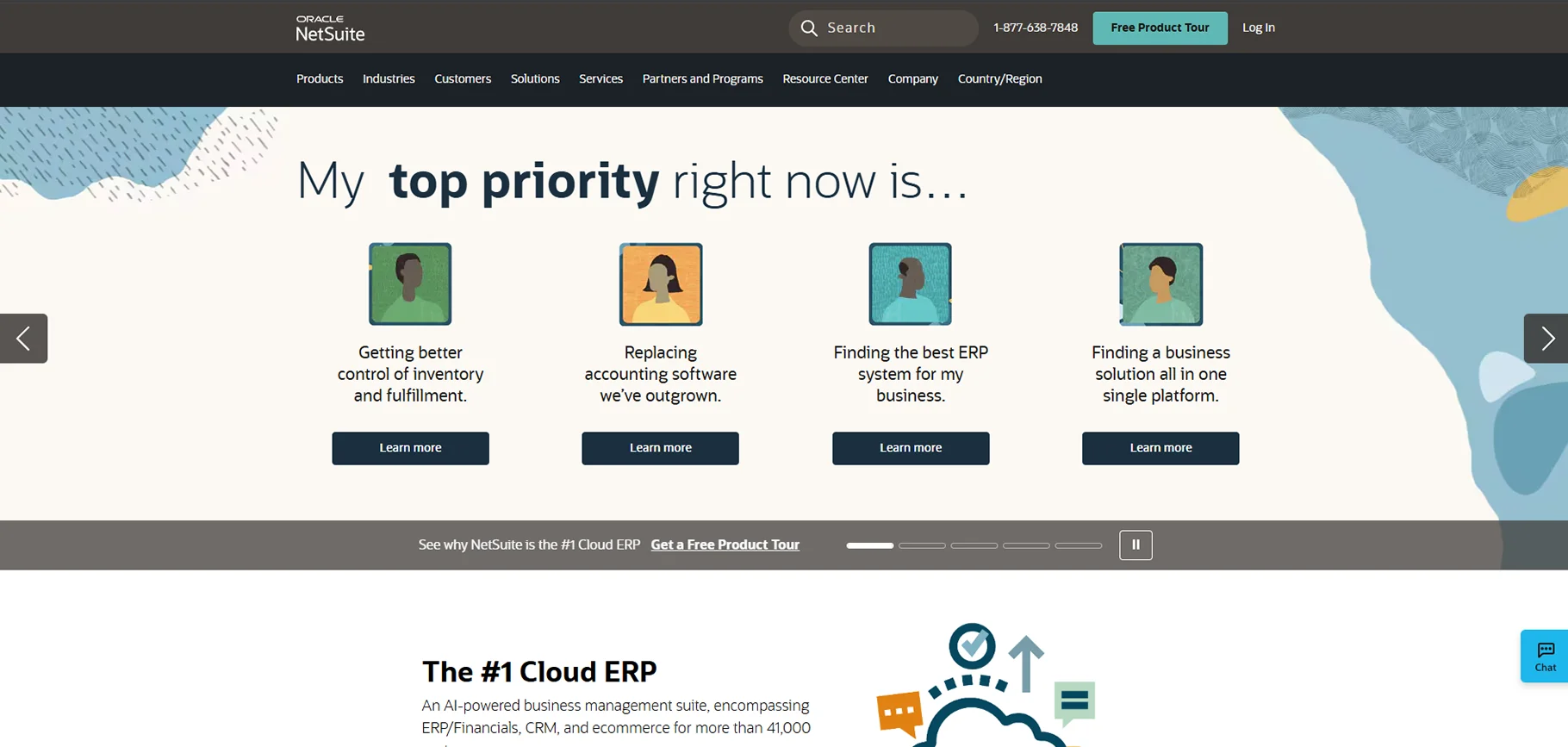
27. NetSuite – Best for Enterprise Financial Management
NetSuite is a cloud-based ERP system. It centralizes business operations. It includes finance, inventory and customer relationship management. It offers real-time data insights, automation and scalability for businesses of all sizes.
Key Features
- AI-powered financial operations
- Predictive analytics for business performance
- Automated reconciliation and close processes
- Intelligent auditing and compliance
- Unified financial data platform
Best for
Mid-size to large enterprises seeking comprehensive financial management with AI enhancements.
Pros
- End-to-end financial management capabilities
- Continuously improving AI features
- Strong ecosystem of integrations
- Scalable for growing companies
Cons
- Significant implementation cost and time
- Complex administration requirements
- Premium pricing compared to point solutions
Pricing
Module-based licensing with implementation services. Typical implementations start at $100,000+ annually.
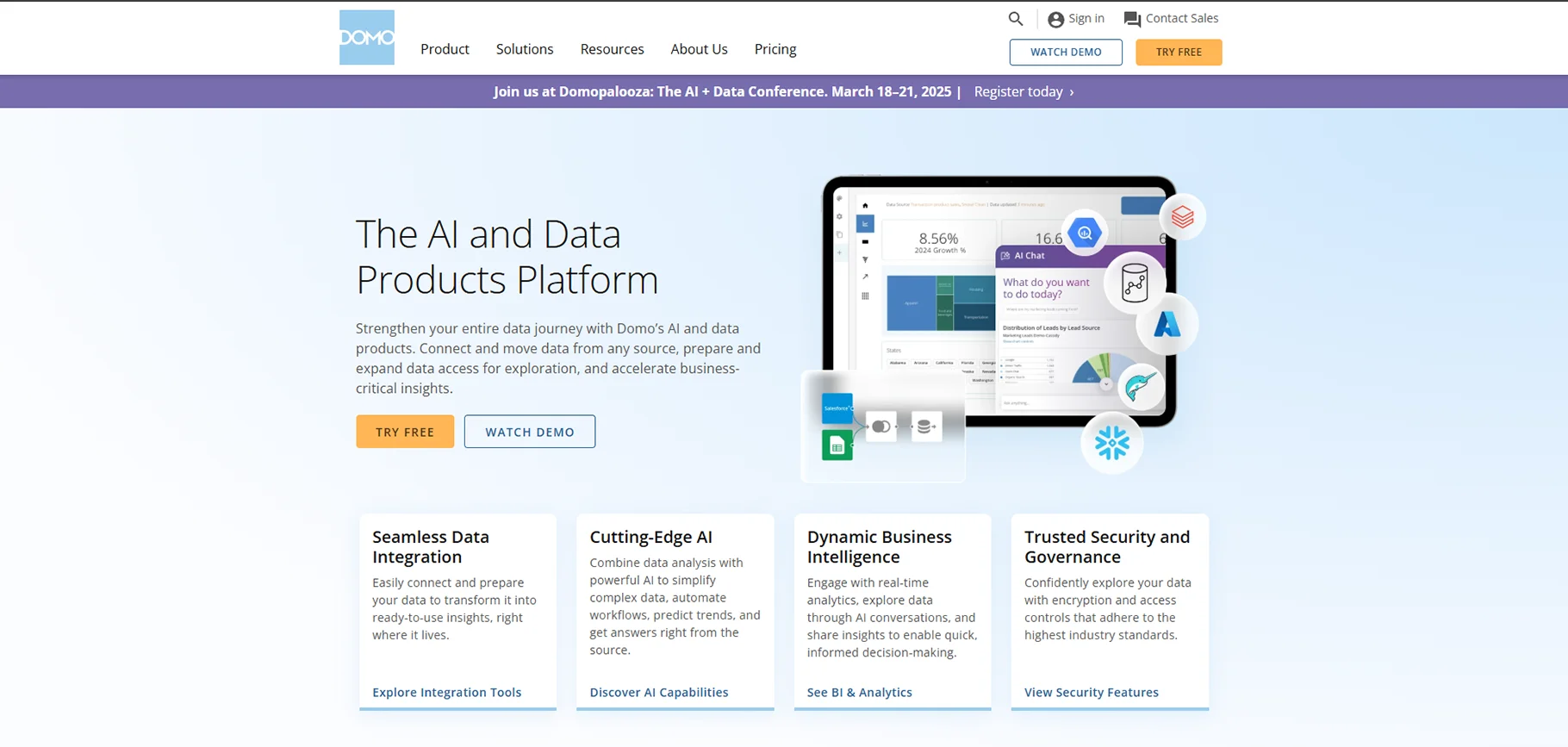
28. Domo – Best for Data Visualization and Financial Dashboards
Domo is a business intelligence platform that connects, visualizes and analyzes data from multiple sources. It features real-time dashboards, AI insights and tools for creating custom apps and workflows.
Key Features
- AI-powered data connectors
- Automated insight generation
- Real-time financial dashboards
- Predictive modeling and forecasting
- Mobile-first analytics access
Best for
Finance teams seeking to democratize data access and visualization capabilities.
Pros
- Simplifies complex financial data visualization
- Connects to hundreds of data sources
- User-friendly interface for non-technical users
- Enables data-driven decision making
Cons
- Primarily focused on visualization rather than processing
- Can become expensive with many users
- Some advanced features require technical expertise
Pricing
User-based subscription model. Typical implementations range from $30,000-$100,000 annually depending on user count.
29. TrendSpider – AI for Technical Analysis
TrendSpider is a trading software platform with automated technical analysis, multi-timeframe charting and backtesting tools. It helps traders identify patterns, test strategies and optimize trade timing with AI insights.

Key Features
- Automated chart pattern recognition
- Multi-timeframe analysis
- Strategy backtesting with AI components
- Market scanner with custom criteria
- Automated technical analysis
Best for
Investment professionals and traders looking to enhance technical analysis capabilities.
Pros
- Identifies patterns human analysts might miss
- Saves hours of manual chart analysis
- Supports multiple asset classes
- Continually improving pattern recognition
Cons
- Focuses on technical rather than fundamental analysis
- Learning curve for advanced features
- Best value for active traders
Pricing
Subscription tiers from $97 monthly for individual users to enterprise options for trading firms.
30. Durable – AI for Financial Planning
Durable is an AI website builder designed for small businesses. It creates professional websites in seconds. It includes tools like CRM, invoicing and SEO. This tool simplifies online presence management without coding expertise.

Key Features
- AI-driven financial modeling
- Client scenario planning
- Automated investment recommendations
- Tax optimization strategies
- Compliance documentation
Best for
Financial advisors seeking to enhance their planning capabilities with AI.
Pros
- Reduces financial plan creation time by 75%
- Creates personalized client strategies
- Incorporates complex tax considerations
- Maintains compliance with regulations
Cons
- Not a replacement for human financial advice
- Requires professional oversight
- Best suited for standard planning scenarios
Pricing
Advisor-focused pricing at $249 monthly per user. Enterprise options available for larger firms.
Why AI Tools are Essential for Finance Professionals in 2026
The financial landscape is more complex than ever. Increasing regulatory requirements, global market volatility, and data volumes that exceed human processing capabilities have made AI tools indispensable for finance professionals. Here's why these tools have become essential-
1. Automate Repetitive Tasks
Finance departments typically spend 80% of their time on transactional activities and only 20% on analysis and strategy. AI reverses this ratio by automating routine tasks-
- Data entry and document processing
- Transaction categorization and reconciliation
- Report generation and distribution
- Compliance checks and documentation
This automation doesn't eliminate finance roles—it elevates them. Teams can focus on strategic activities that add more value to the organization.
2. Improve Accuracy
Human error in financial processes can be costly. A single misplaced decimal or incorrect classification can lead to significant issues-
- Financial restatements
- Compliance penalties
- Incorrect business decisions
- Damage to organizational credibility
AI tools dramatically reduce these errors through consistent processing rules, pattern recognition, and continuous learning from exceptions. Many solutions now achieve 99.5%+ accuracy in tasks like document processing—far exceeding typical human performance.
3. Enhance Decision-Making
Beyond automation, AI tools provide insights that would be impossible to generate manually-
- Identifying subtle patterns across thousands of transactions
- Predicting cash flow needs with greater precision
- Uncovering fraud indicators that human reviewers might miss
- Optimizing capital allocation based on multivariable analysis
These capabilities transform finance from a backward-looking function into a strategic advisor for the business.
4. Increase Efficiency
The financial close process provides a perfect example of efficiency gains from AI adoption. Traditional monthly closes might take 10-15 days, with teams working long hours to reconcile accounts, validate entries, and prepare statements.
AI-enhanced processes can reduce this to 3-5 days while improving quality. Companies implementing these tools report-
- 60-80% reduction in manual processing time
- 40-50% faster financial close cycles
- 30-40% lower cost of financial operations
- 70-90% decrease in compliance-related issues
These efficiency gains translate directly to bottom-line improvements and competitive advantage.
Conclusion
AI in finance isn't just an experiment anymore. It's mainstream. In 2026, these tools are must-haves. They drive efficiency. They improve accuracy. They enable strategic thinking.
Success isn't about chasing shiny new tech. It's about finding tools that solve your actual problems. Think about your company size. Consider your complexity. Look at your existing systems. Evaluate your team's skills. Then choose.
AI works best alongside humans, not instead of them. Great results come from partnerships. AI brings processing power. Humans contribute judgment. Humans add creativity. Humans provide ethical oversight.
Pick the right tools. Integrate them thoughtfully. Watch the transformation happen. Your finance team can evolve. They can move beyond transaction processing. They can become strategic partners. They can create real value for everyone.
FAQs
1. Will AI replace finance professionals?
No. AI is transforming finance roles rather than eliminating them. Routine tasks are being automated, allowing finance professionals to focus on higher-value activities like analysis, strategy, and stakeholder communication. The most valuable finance professionals in 2025 combine domain expertise with the ability to leverage AI tools effectively.
2. How long does it take to implement financial AI tools?
Implementation timelines vary significantly based on the tool's complexity and scope. Simple document automation might be operational within weeks, while comprehensive ERP-integrated solutions can take 6-12 months for full deployment. Most vendors now offer accelerated implementation methodologies with pre-built connectors to common financial systems.
3. What the typical ROI for financial AI tools?
Organizations typically see ROI within 6-18 months for most financial AI implementations. Processing-heavy functions like accounts payable often achieve the fastest payback, while strategic tools for planning and analysis may take longer to demonstrate full value. Beyond direct cost savings, consider productivity gains, error reduction, and improved decision-making when calculating ROI.
4. Do financial AI tools require specialized technical expertise?
The technical barrier has been significantly reduced in modern financial AI tools. Most solutions now offer user-friendly interfaces designed for finance professionals rather than data scientists. That said, organizations typically benefit from having some team members with deeper technical understanding to optimize configurations and interpret results.
5. How do financial AI tools handle sensitive data?
Reputable financial AI vendors have robust security frameworks, including encryption, access controls, and compliance certifications (SOC 2, GDPR, etc.). Many offer deployment options that keep sensitive data within your security perimeter. Always conduct thorough security reviews before implementing any financial AI solution handling sensitive information.