
Table Of Contents
Best AI Tools for E-commerce | Improve Productivity, Creativity, and Sales
Published on : Aug 21 2025

The e-commerce landscape has changed rapidly through the introduction of artificial intelligence technologies. As online businesses contend with more competition and higher consumer expectations, it is apparent that AI tools have become indispensable tools to help streamline internal processes, enhance the customer experience, and generate sales. From automating customer service capabilities to making product suggestions more relevant and effective, AI is shaking up many of the traditional operations found in e-commerce to better compete in a crowded digital space.
Today's consumers expect personalized and tailored shopping experiences, immediate customer support, and seamless experiences across all channels and touchpoints. Existing methods for satisfying expectations may not only be manual-dependent, but also often lead to dramatic consequences if not handled specifically. AI tools can displace traditional methods of solving problems that can include automating completion of more complex processes, scanning and analyzing massive amounts of information, and serving the user significant insights, the necessary information, in a significantly shorter time frame, and without the possibility of error.
Quick Summary
The following article features 20 advanced tools that are purpose-built to improve e-commerce. The tools fit into several categories, including customer support automation, content creation and writing, design and visual, search optimization, personalisation, and marketing automation. Each tool serves a different set of requirements and can help you solve unique challenges you face as a retailer, no matter your e-commerce scale.
The tools featured have been evaluated as the best-of-the-best tools as of year 2025 based on functionality, user experience, number of user reviews, number of features, and actual results. No matter your goal, whether you are looking to increase efficiency in customer service, create product descriptions, optimize a website for SEO, or increase conversion rates with personalized recommendations, the article mentions all the key insights that you'll need to make confident technology investments.
Advantages of Utilizing Artificial Intelligence in E-commerce
Integrating artificial intelligence into e-commerce processes provides significant benefits to a variety of areas within most businesses.
1. Higher Productivity
This represents the most immediate benefit, as AI can automate routine tasking such as inventory controls, inquiries from customers, and content. By eliminating mundane tasks, humans can better invest time into strategic processes and creative problem-solving.
2. Better Customer Experience
This acts as another crucial benefit; AI provides the ability to develop personalization engines that analyze customer behavior, purchase history, and preference data to provide tailored product recommendations and relevance of content. The result is increased customer satisfaction and brand loyalty.
3. Insightful Decision Making
Business decisions based on empirical data, rather than gut feelings are made attainable through the application of AI tools, allowing businesses to analyze excessive and ever-changing amounts of customer and market data to drive actionable insights. The data can be used to determine pricing strategies, optimize inventory levels, develop effective marketing campaigns and drive product development initiatives.
4. Cost Savings
Saving money happens both by virtue of decreased processes and efficiency. AI tools will reduce the overall need for large teams of people in customer service departments, creating a waste reduction machine in marketing efforts by allowing for better targeting, and finding efficiencies in processes that reduce overhead.
5. Scalability
Is exponentially enhanced by the implementation of AI. Unlike human capabilities, AI tools can process large amounts of customer communications and content simplified, so the scaling is not necessarily proportional to the increase in conversions.
AI Tools for Online Stores
1. ChatGPT
ChatGPT is an intelligent conversational AI that empowers customer service teams by providing human-like responses to customer inquiries allowing e-commerce businesses to keep customers happy with 24/7 support while minimizing operating costs.

Example use case: ChatGPT is an example of how customer service is transformed because it can deliver intelligent, valuable responses to customer inquiries across any omni-channel relationship. The tool can answer frequently asked questions on products, orders, shipping, and returns while keeping the flow of conversation and context that is expected from customer service agents.
Who it's best for: Companies looking to speed up response time helping customers resolve incidents quickly will want to leverage a conversational AI product like ChatGPT where thousands of customer inquiries can be resolved instantly, any time of the day. companies can gain resilience during peak periods of demand while managing customer expectations with answers available outside of your work hours.
Key features: Natural language processing, multi-language orientation, integration with legacy helpdesk software and processes, access to customer history, ChegtGPT manages smart escalations with human agents when things get difficult.
2. Jasper AI
Jasper AI is an all-in-content creation platform that creates high-quality marketing copy, product descriptions, and blog content, while ensuring brand voice consistency across all written materials.
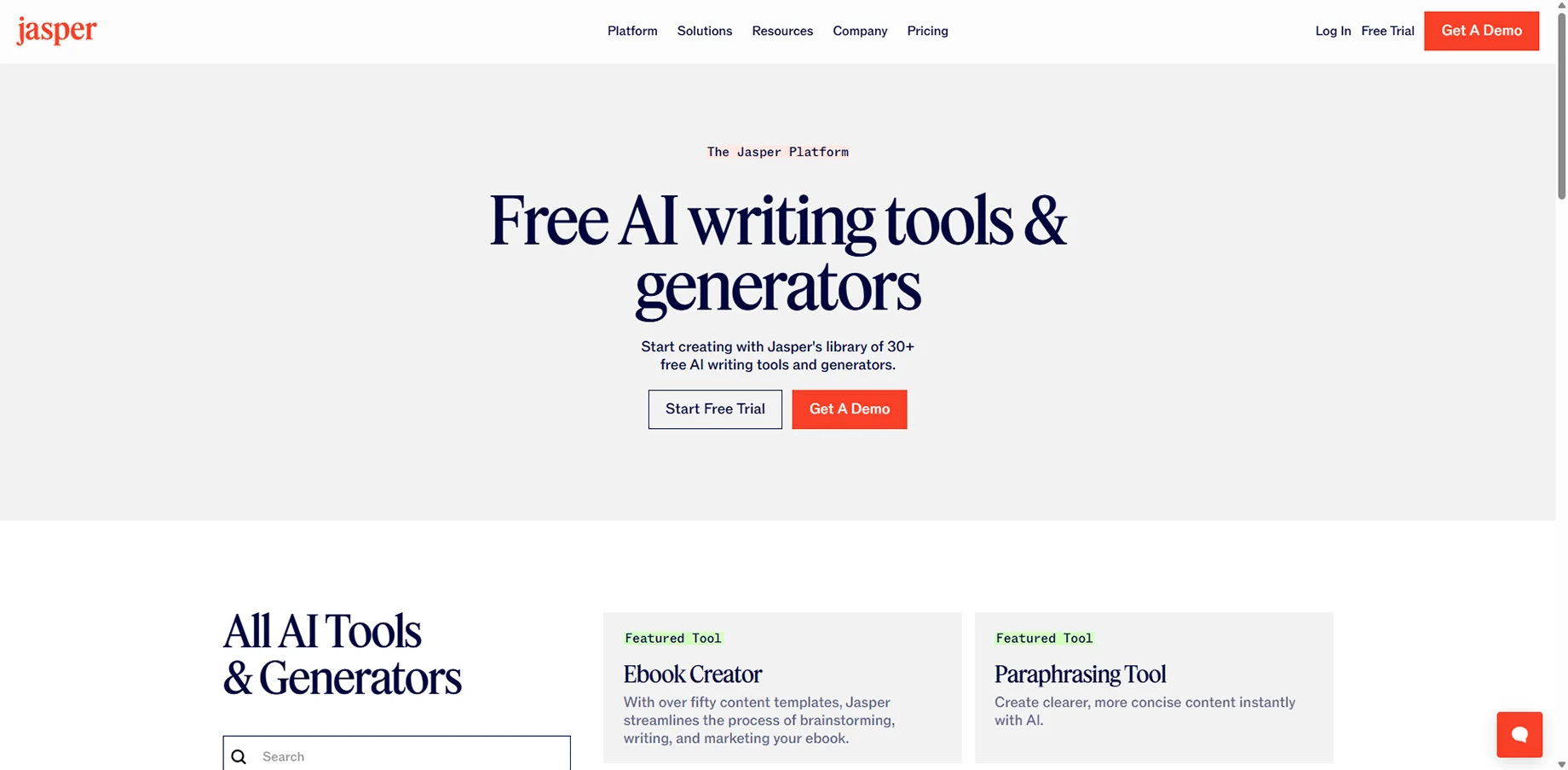
Use case: Jasper AI offers e-commerce businesses a highly efficient way to create written content by generating product descriptions, blog posts, email campaigns, and social media posts. The platform recognizes your brand voice and ensures it remains constant across all content touchpoints in an automated way.
Best for: Marketing teams and content creators that rely on producing high-quality, compelling content at-scale, while managing brand consistency and SEO optimization.
Key features: Template library for various types of content, brand voice customization, SEO optimization recommendations, linking and collaboration features to support team workflows, and integration with popular marketing platforms.
3. Midjourney AI
Midjourney AI is an advanced image generation tool with the ability to create breathtaking product images in addition to marketing graphics based on a simple text description. Your professional photography shoot is no longer required, which means you have more time and money to focus on getting your products out the door.
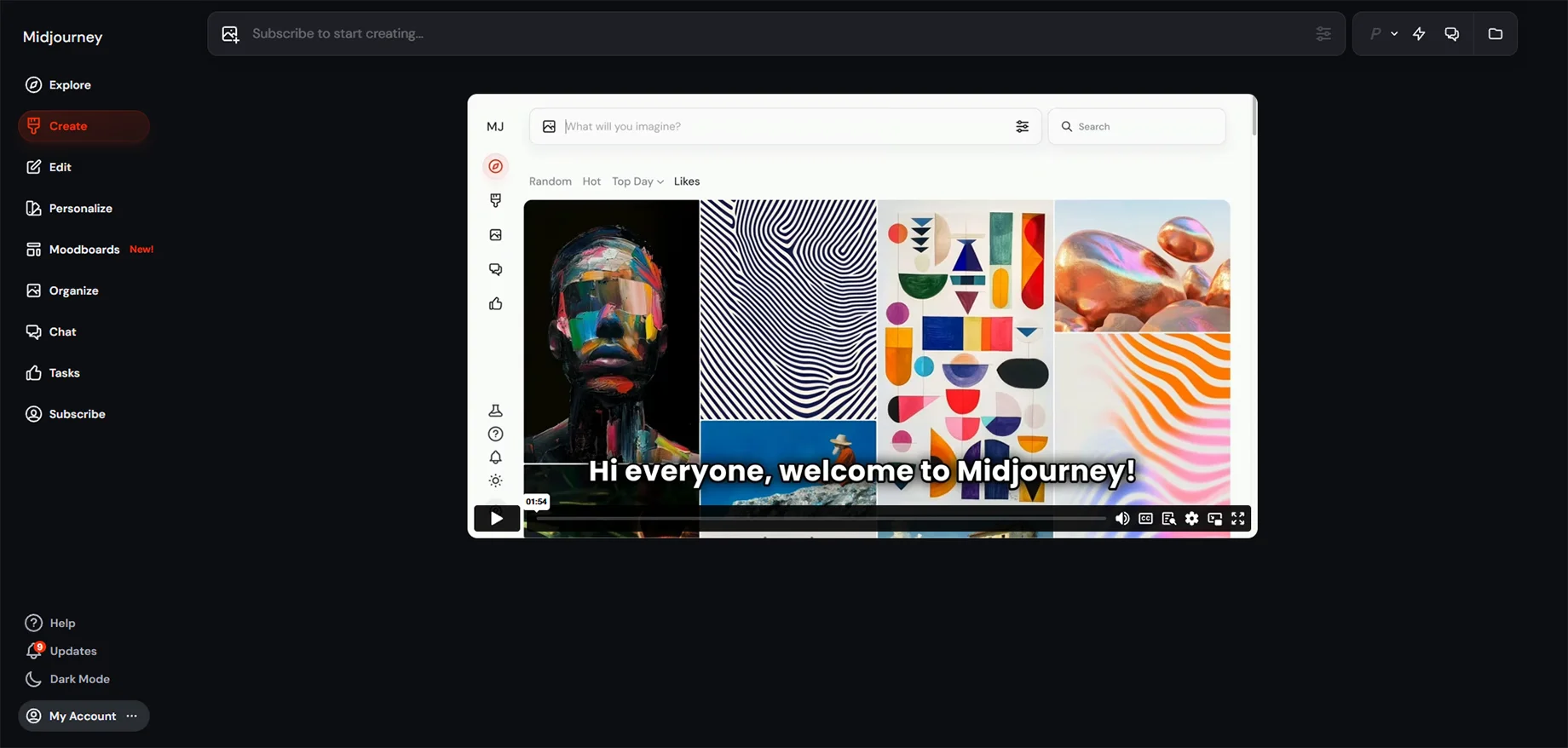
Use case: Midjourney AI generates incredible product visuals, lifestyle imagery, and marketing graphics – providing excellent visuals for product presentations, and marketing. Midjourney AI turns text descriptions into images, and offers rapid image generation capabilities for visual content.
Best for: Businesses that need high-quality, professional-quality product photography and marketing visuals but do not want to use traditional product photography as it is time consuming and highly expensive.
Key features: Text-to-image generation, customization options on the style, high-resolution, ability to iterate, and commercial use rights for output images.
4. Surfer SEO
Surfer SEO is an intelligent SEO software that analyzes search rank factors, competitive content and provides data driven recommendations for how to improve organic search visibility and content performance.
Use case: Surfer SEO analyzes search engine ranking factors and competitive content to provide data-driven recommendations for improving organic search visibility. They help optimize product pages, category descriptions, and blog content for better search performance.
Best for: E-commerce companies trying to improve organic search traffic and visibility on target keywords while reducing paid advertising costs.
Key features: Content optimization recommendations and keyword research tool, competitor analysis, SERP analysis, content planning help, and integration with the most popular CMS systems.
5. Vizit AI
Vizit AI is a visual intelligence platform that forecasts how customers will react to visuals as a way for businesses to use the better-performing visuals in the areas of most conversion leverage.
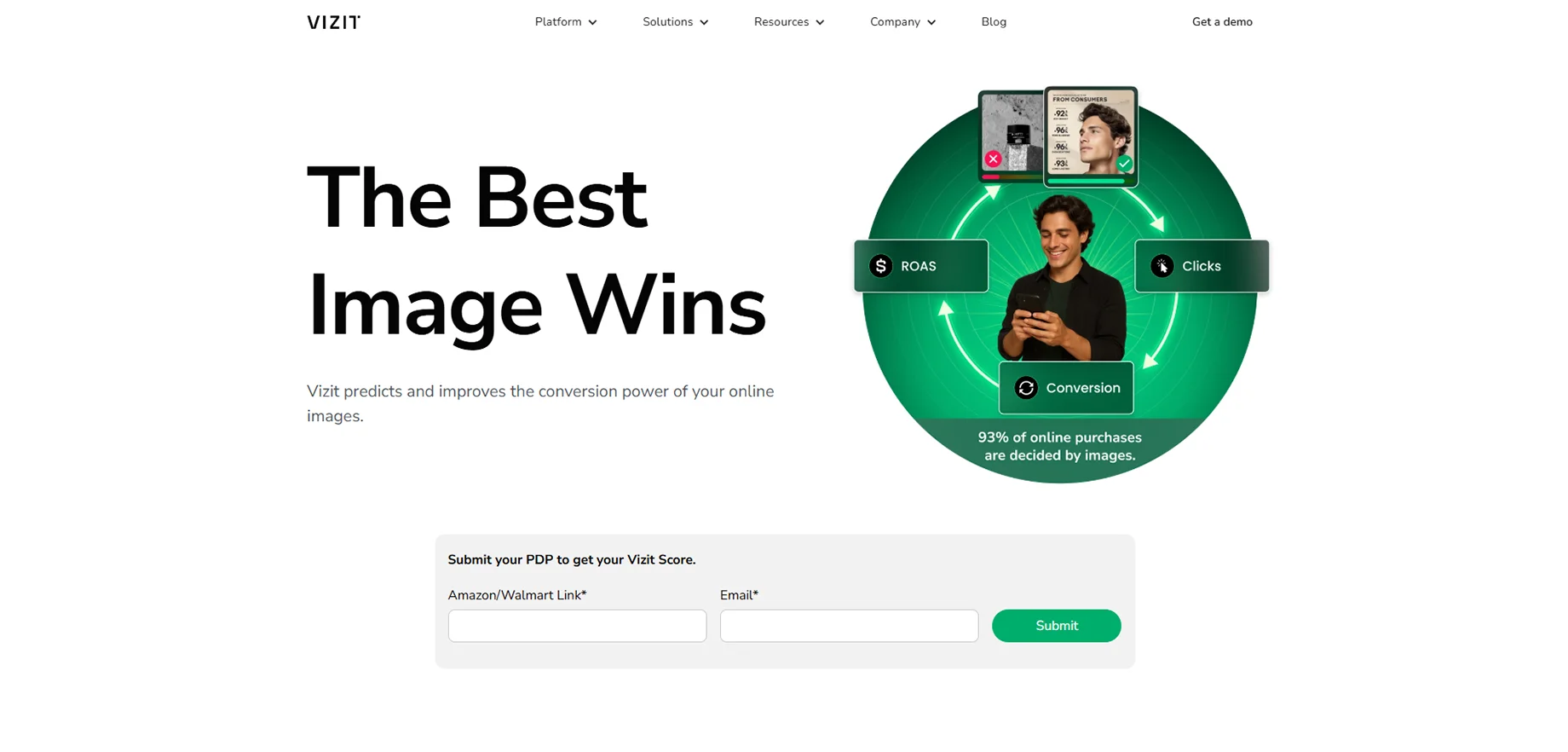
Use case: Vizit is capable of analyzing visual content in a way that predicts customer engagement to optimize the selection of visuals for customer engagement. It considers factors such as color, composition, emotional response, etc. It recommends visuals based on the highest predicted engagement and conversion performance.
Best suited for: Huge visual catalogs, teams that need to optimize imagery performance across websites, advertising, and social media
Key features: visual performance prediction, A/B testing, analysis of emotional graphics, color psychology, and integrations with major advertising networks and e-commerce platforms.
6. Rebuy AI
Rebuy AI is a powerful personalization engine that drives average order value by utilizing intelligent product recommendations based on customer behavior and real-time shopping patterns.
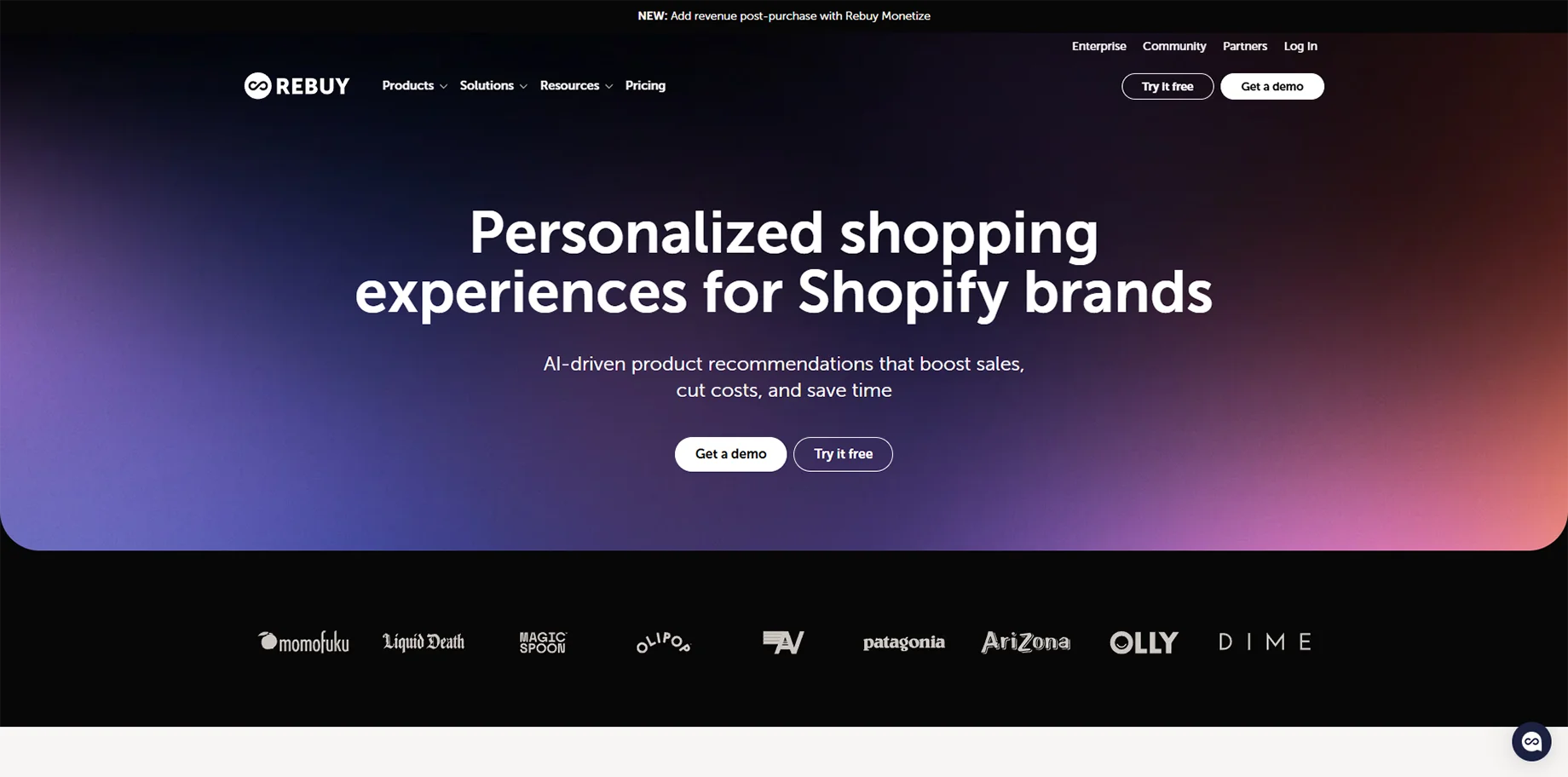
Use case: Rebuy AI improves average order value with intelligent product recommendations based on customer behavior, purchase history, and real-time browsing patterns. Rebuy AI is able to create customer-unique and personalized shopping experiences that drive additional sales as a direct result.
Best for: E-commerce stores interested in maximizing revenue per customer through high-value product recommendations and personalized shopping experience.
Key features: Dynamic product recommendations, cart abandonment recovery, post-purchase upselling, customer segmentation tools, and a comprehensive analytics dashboard to track key metrics.
7. Shopify AI
Shopify Magic is the native AI assistant in Shopify that helps merchants with content creation, editing images, and store management tasks right in the e-commerce platform.
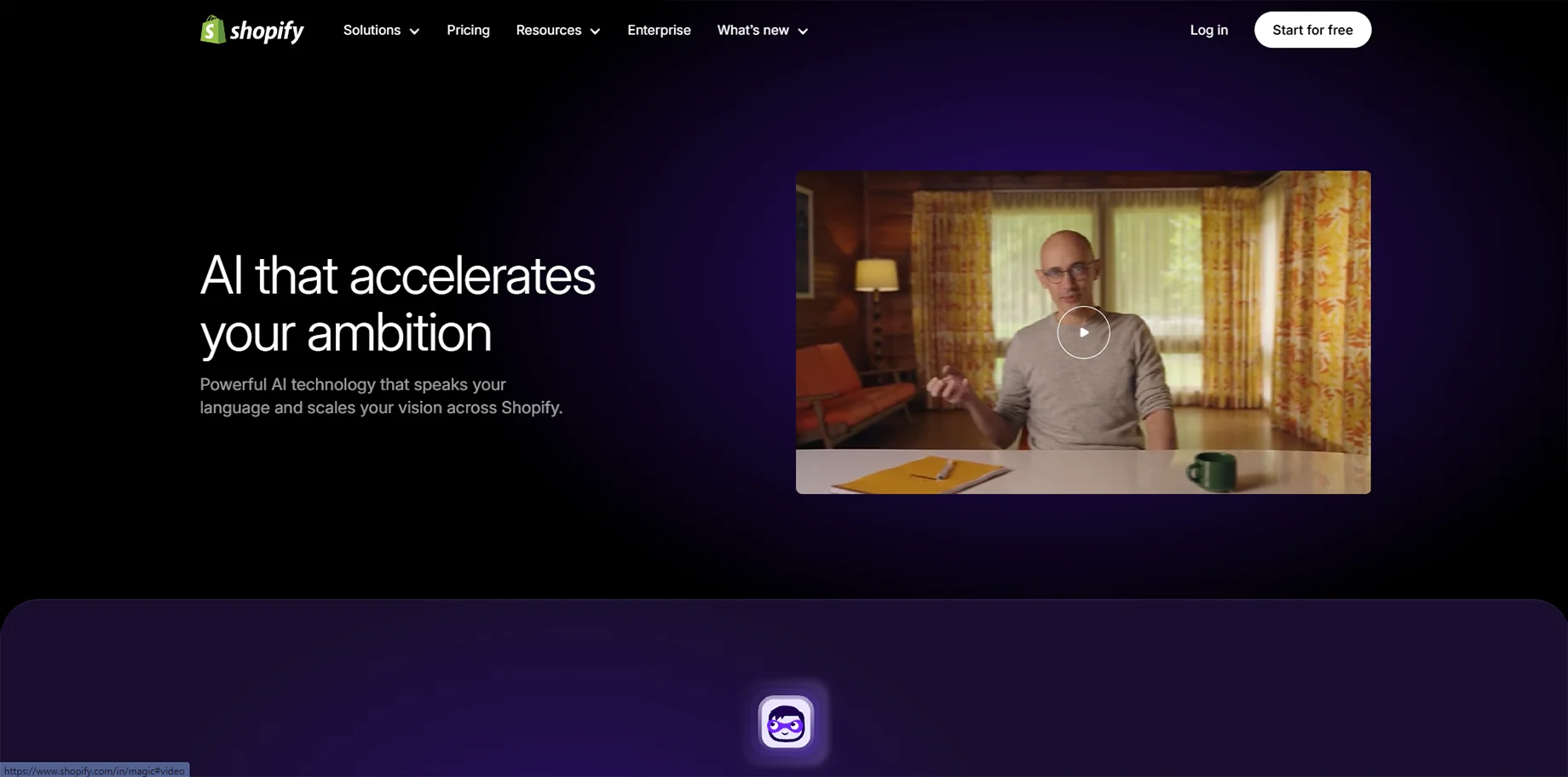
Use case: Shopify Magic takes advantage of AI technology built directly into the Shopify platform to assist merchants with product description writing, image editing, and offer automated customer service responses.
Best for: Shopify store owners that want the ability to use AI technology, built in, without having to set up extensive third-party integrations.
Key features: The ability to generate product descriptions, edit images with background removal, response automation to customer service inquiries, assist with inventory management, and random first party platform integrations.
8. Drift
Drift is a conversational marketing platform that utilizes AI chatbots to qualify leads, schedule meetings, and lead prospects through a personalized sales conversation.
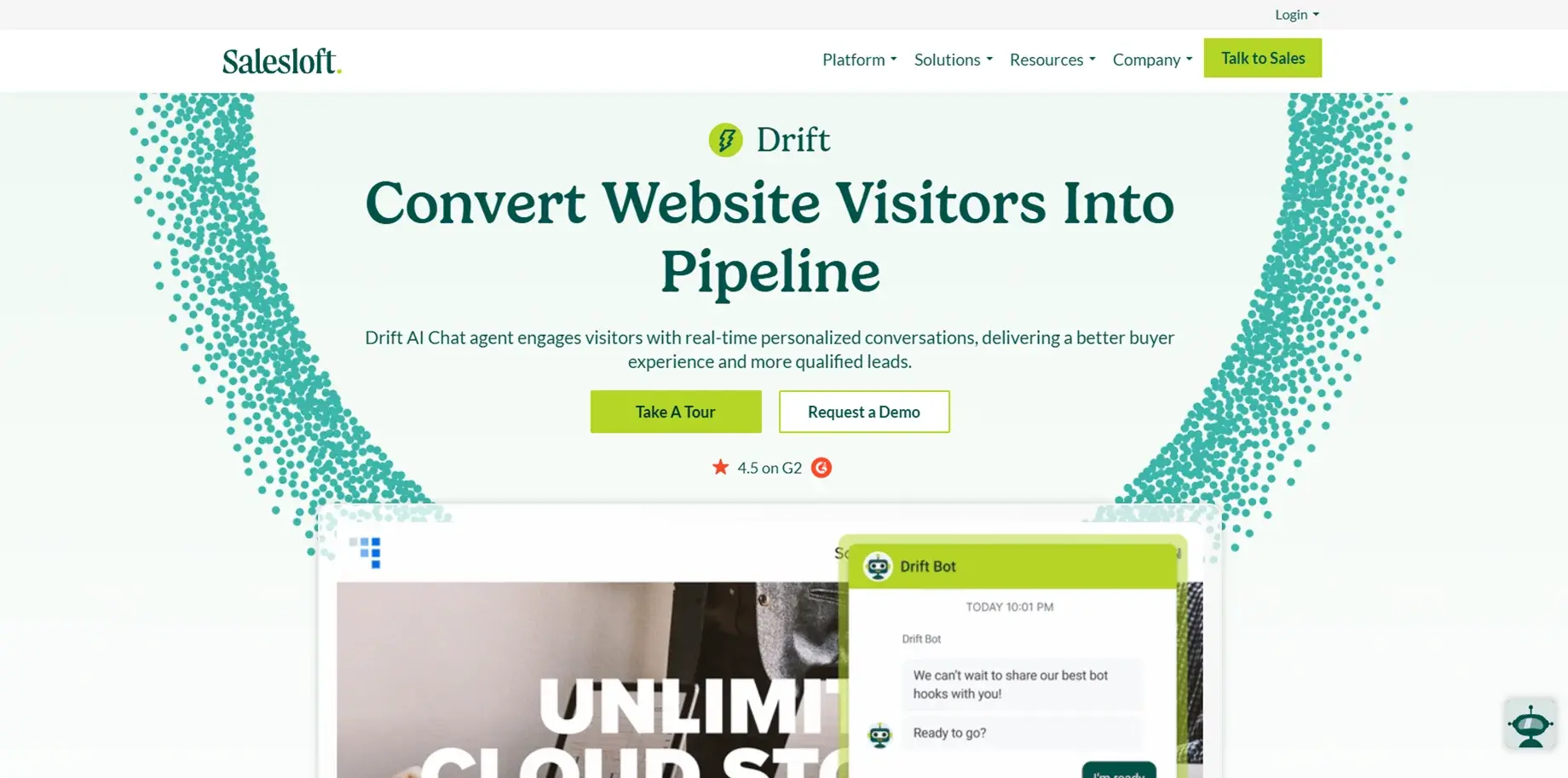
Use Case: Drift offers conversational marketing and sales automation powered by AI chatbots and live chat. The platform qualifies leads, schedules meetings, and helps customers through the sales cycle.
Best for: B2B e-commerce companies and high-consideration purchases where personalized sales conversations are essential in driving conversion.
Key features: Conversational AI chatbots, lead qualification automation, meetings scheduling integration, sales pipeline management, and conversation-level analytics.
09. Clerk.io
Clerk.io is a personalization platform that offers intelligent product recommendations, intelligent search, and email marketing automation all based on individual consumer preferences.
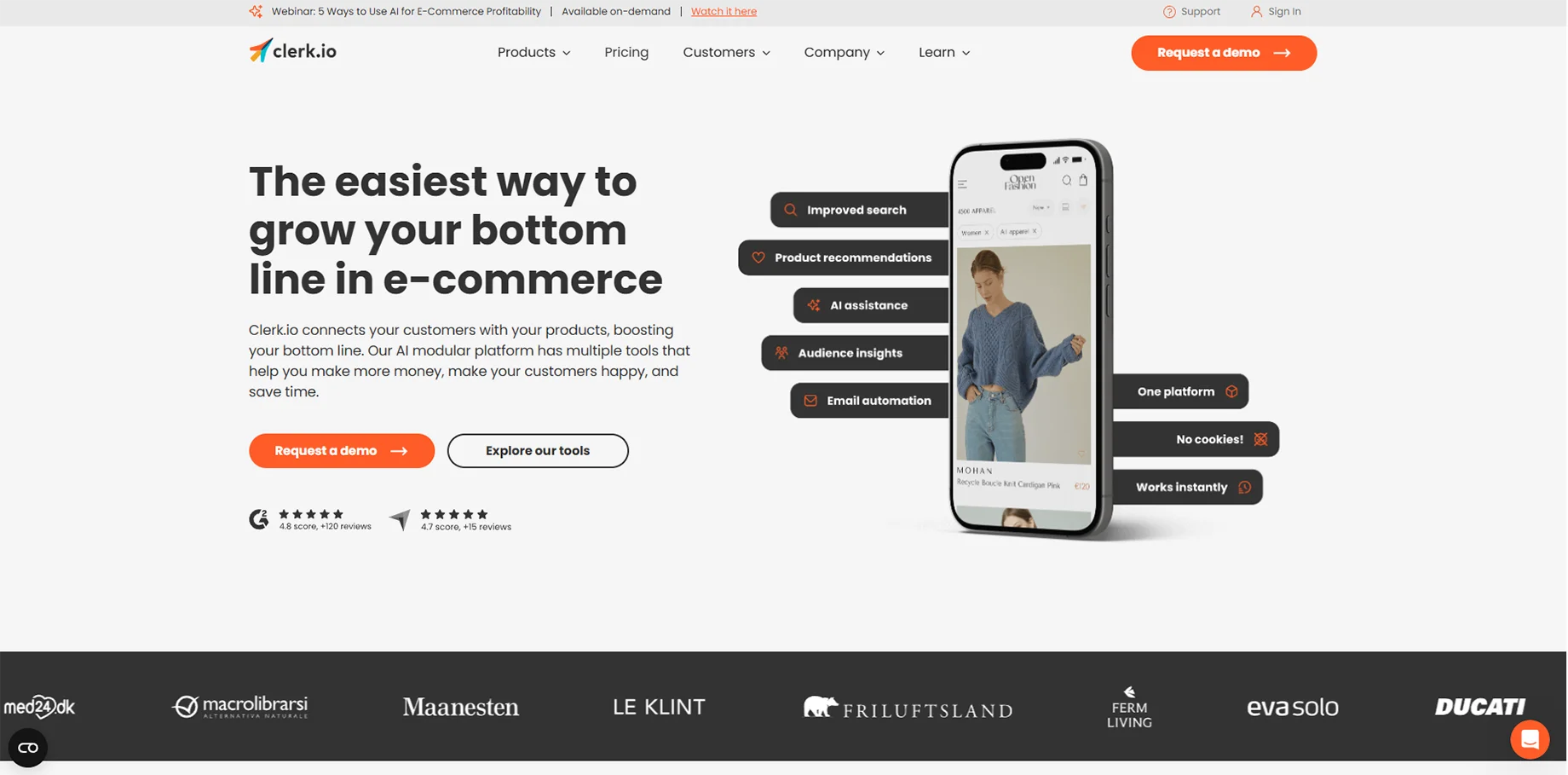
Use case: Clerk.io is an all-in-one personalization platform with product recommendations, intelligent search and email marketing automation all based on individual customer behaviour and preferences.
Best for: E-commerce companies looking for a single personalization solution that works across website, email, and mobile touchpoints.
Key features: Real-time personalization engine, intelligent search, automated email campaigns, customer segmentation, and cross-platform synchronization.
10. LivePerson
LivePerson is an enterprise conversational artificial intelligence platform with the ability to manage customer communication across multiple channels with advanced automation and human agent handoff options.
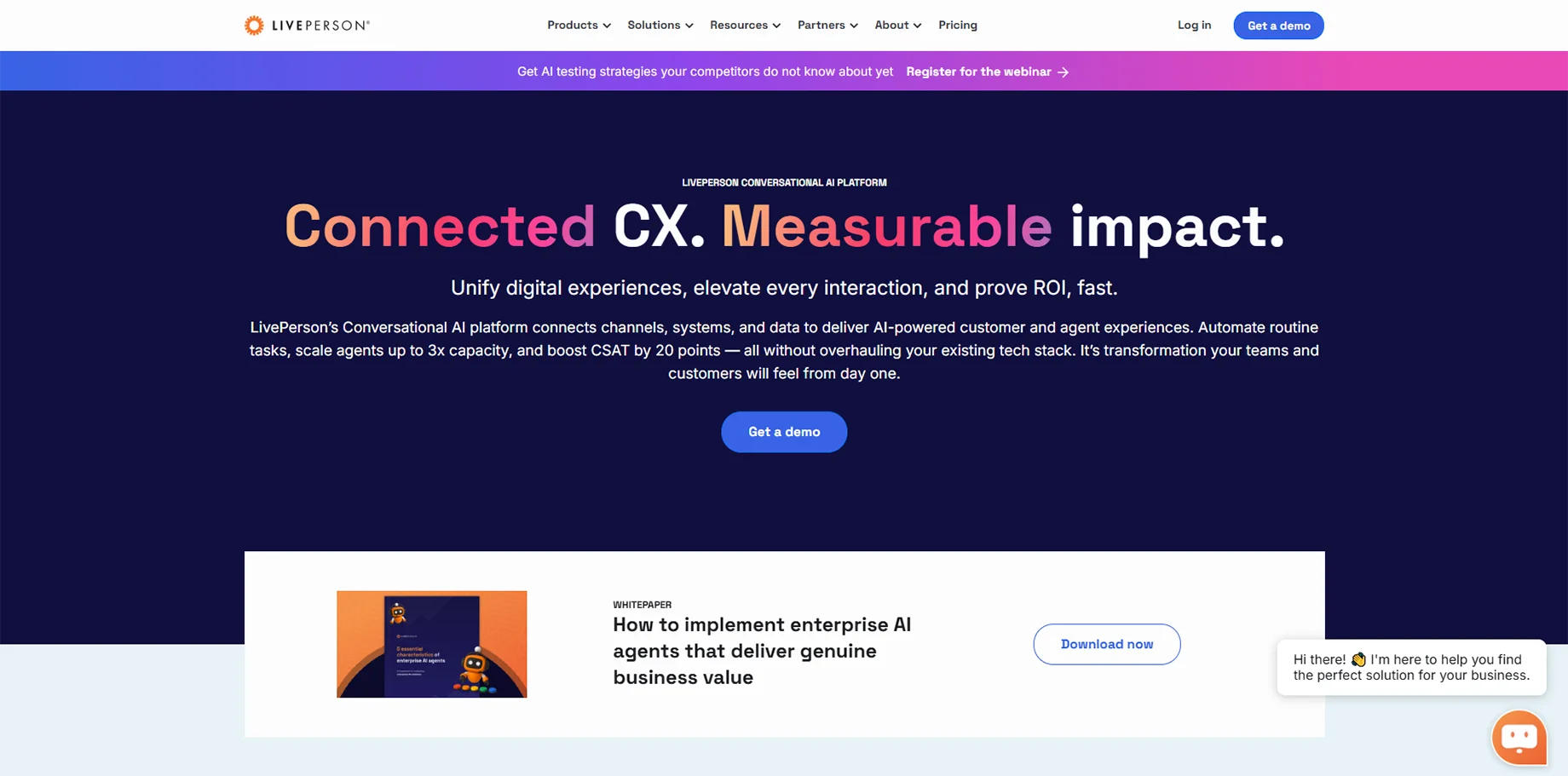
Use case: LivePerson provides enterprise-level conversational AI that manages customer service, sales support, and engagement across multiple customer-facing processes on web, mobile, and messaging channels.
Best for: Large e-commerce businesses that require larger-scale customer communication solutions with advanced automation and human agent handoff.
Key features: Omnichannel messaging, intent recognition and automated routing, real-time sentiment analysis, and detailed reporting dashboards.
Also read this article : The Impact of AI and Automation on E-commerce Logistics
11. Persado
Persado is an AI-powered marketing language optimization platform that produces messaging with emotional resonance to enhance customer engagement and conversion rates across all customer touchpoints.
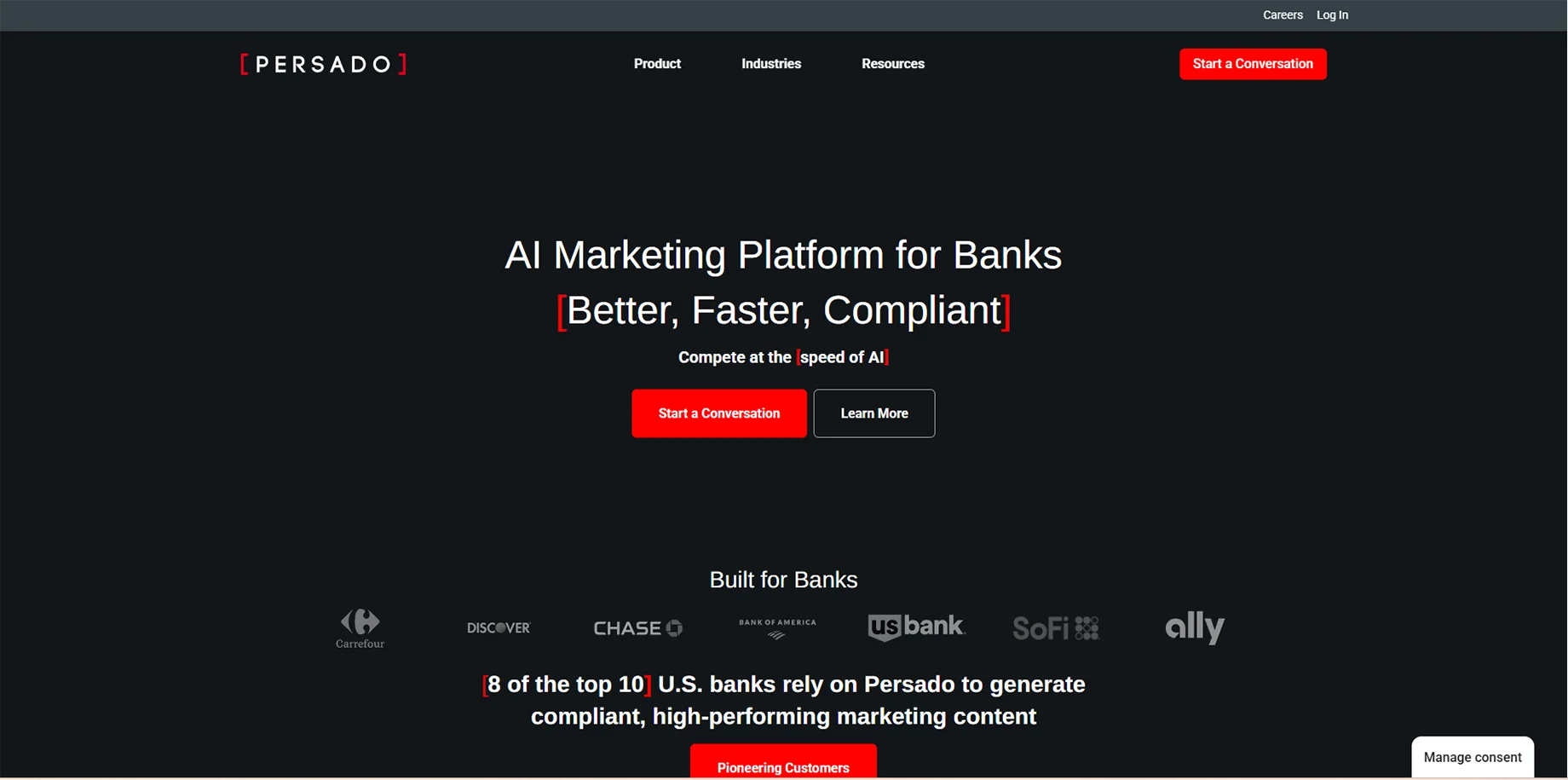
Use case: Persado employs AI to optimize marketing language and messaging for all customer touchpoints and ultimately develop messaging that yields greater engagement and conversion rates.
Best for: Enterprise brands focused on enhancing the emotional impact and effectiveness of their marketing communication.
Key features: Emotional language optimization, message testing and refinement, cross-channel consistency, performance prediction, and emotional impact analytics.
12. Optimizely
Optimizely is a complete experimentation and personalization platform that provides businesses with the power of AI to optimize their digital experience through ongoing testing, experimentation, and data analytics-driven insights.
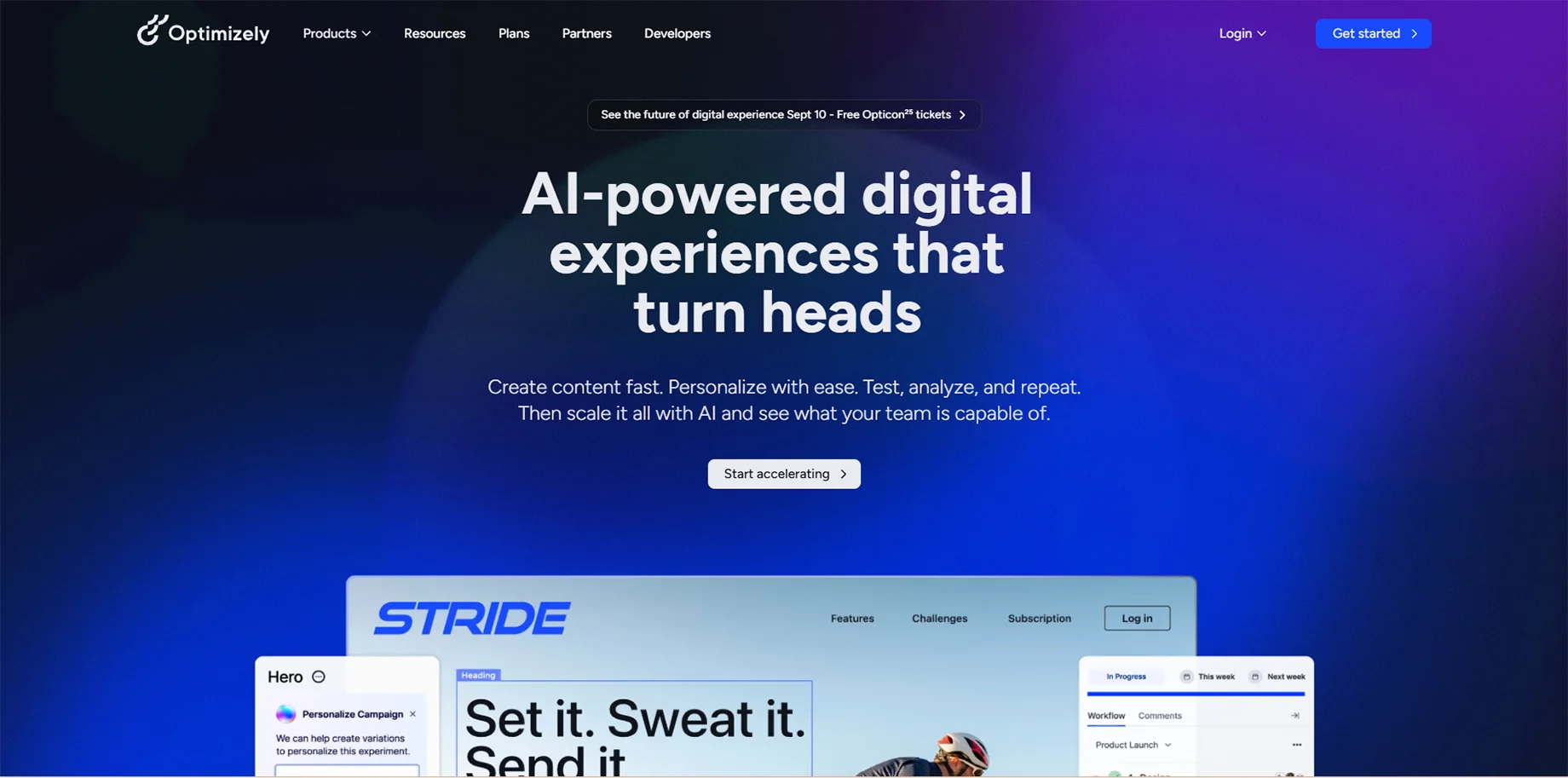
Use cases: Optimizely uses AI to help e-commerce businesses to experiment with and personalize website experience, product pages, and conversion funnels to optimize conversion performance.
Best for: Organizations that value data analytics and ongoing testing and optimization of their digital experiences.
Key features: Automation of A/B testing, multivariate testing, personalization engines, calculating statistical significance, and reporting on experiments.
13. ViSenze
ViSenze is a visual search and product discovery platform that allows customers to search using images rather than text, increasing product findability and the overall shopping experience.
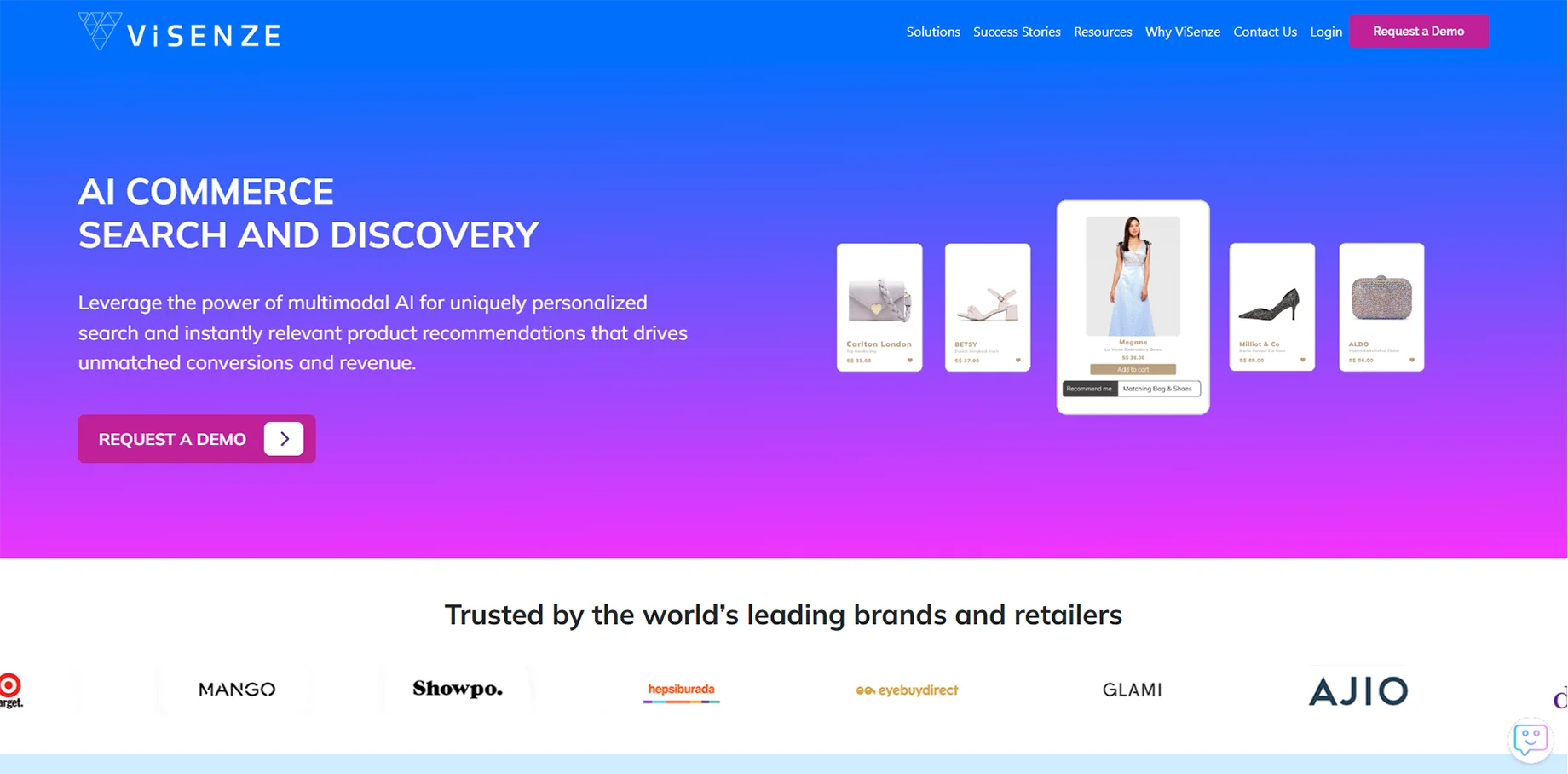
Use case: ViSenze provides visual search and product discovery solutions to allow customers to search using images rather than text, increasing product findability and overall user experience.
Best for: Fashion, furniture, and lifestyle brands with visually-driven products where an image-based search enhances the shopping experience.
Key functionalities: visual search technology, image recognition algorithms, similar product recommendations, visual browsing interfaces, and mobile first.
14. PhotoRoom
PhotoRoom is an AI tool specialized for e-commerce image editing that provides pro product photography capabilities such as background removal and image enhancement.
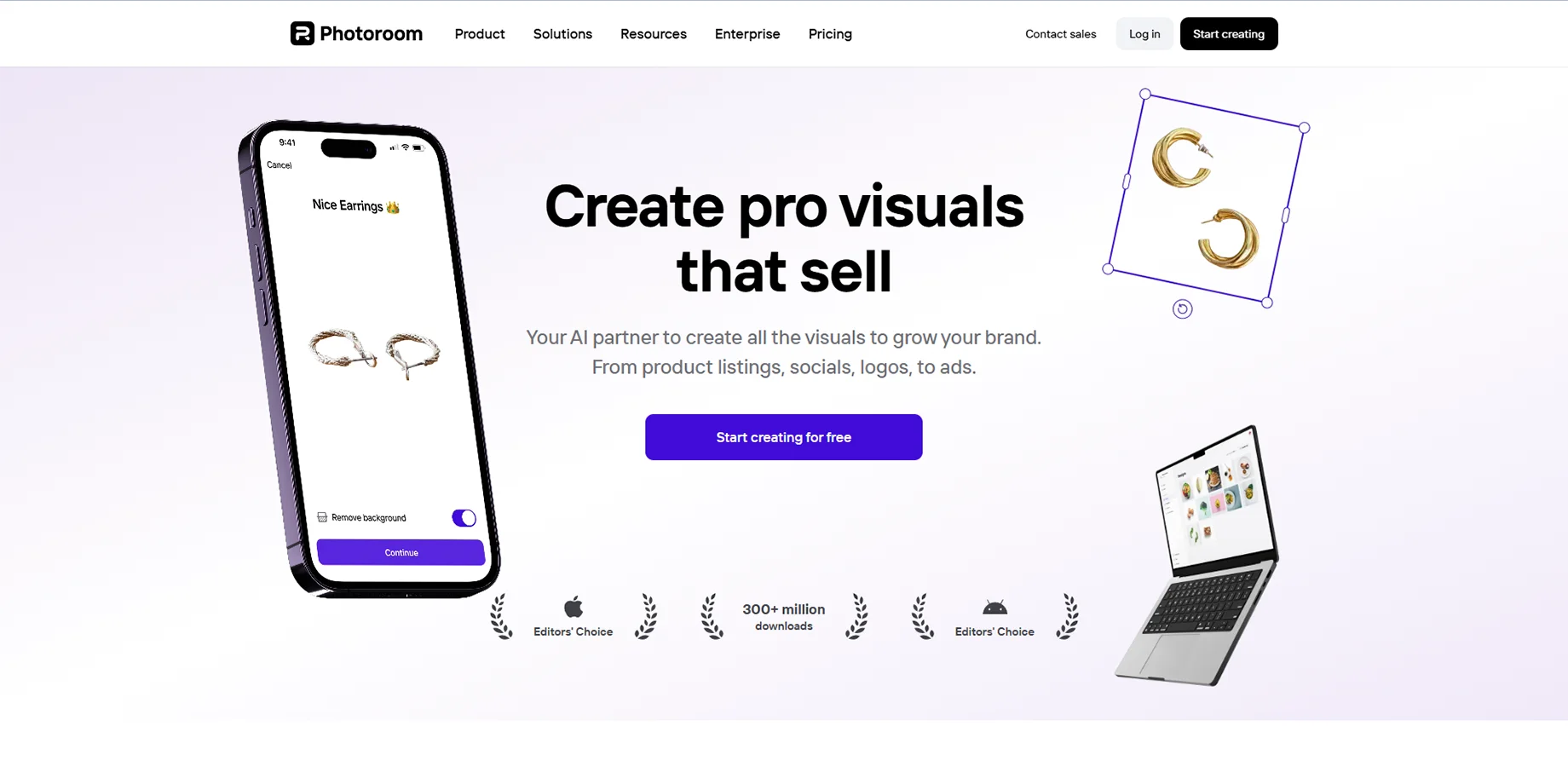
Use case: PhotoRoom offers AI powered image editing capabilities tailored to e-commerce including background removal, image enhancement, and product photography enhancement.
Best for: Online retailers requiring professional-looking product images that do not have expensive photography gear or skills to edit.
Key features: Automatic background removal, image enhancement filters, batch processing, availability templates and export options for all platforms.
15. Looka
Looka is an AI-based design platform that automates the process of creating professional brand identities, logos, and marketing materials by utilizing intelligent design algorithms and brand preference models.
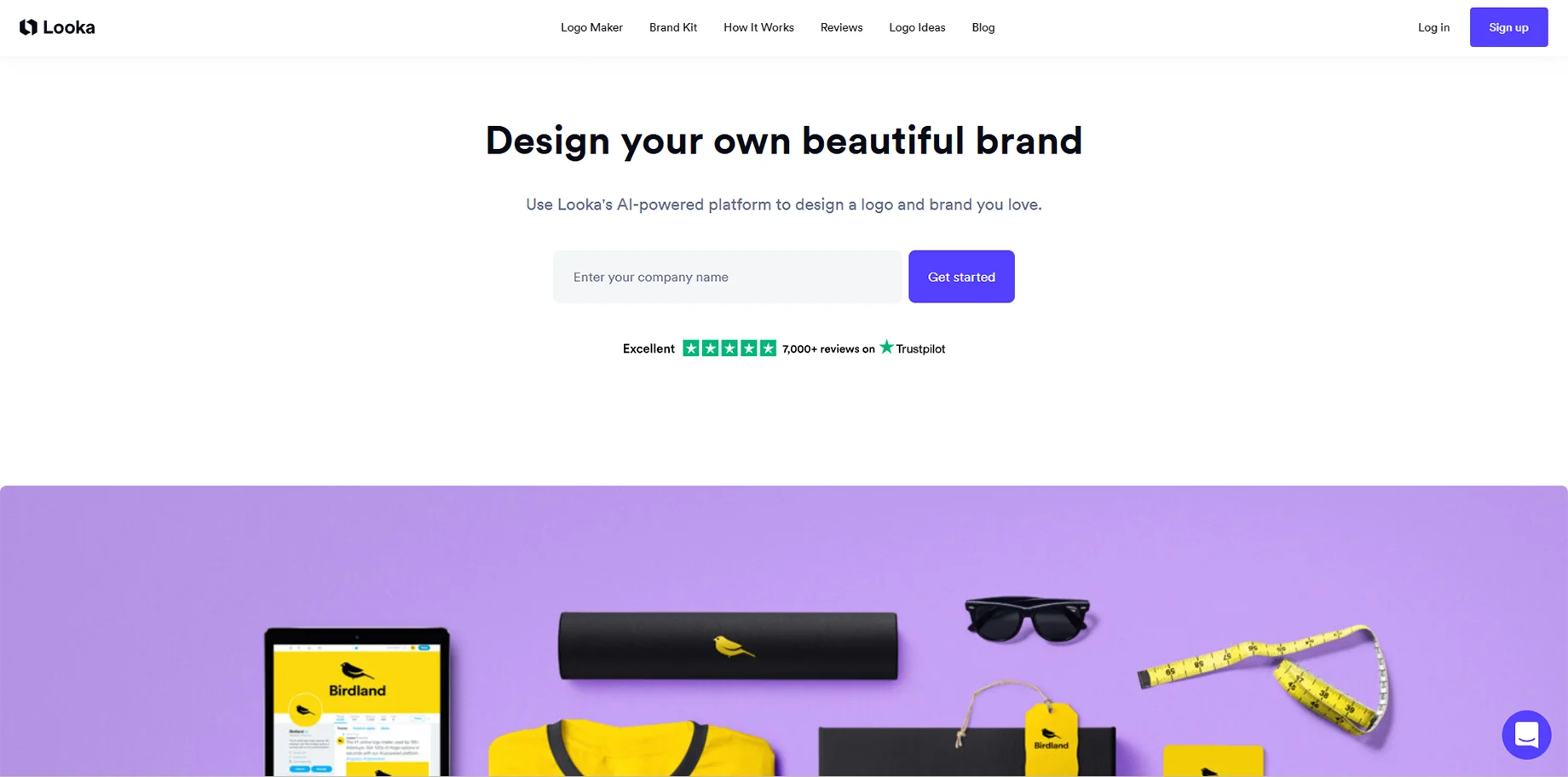
Use case: Looka is an AI-powered design platform that generates brand identities, logos and marketing materials with design algorithms that understand brand preferences and relevant industry standards.
Best suited for: New e-commerce brands and established brands that want to refresh their visual identity with professional design elements.
Key features: AI logo generation, brand kit creation, marketing material templates, color palette suggestions, and full brand guidelines development.
16. Gorgias
Gorgias is a customer support platform for managing multi-channel communication by merging customer support tickets across channels while integrating AI-powered automation to manage ticket creation and quick response options.
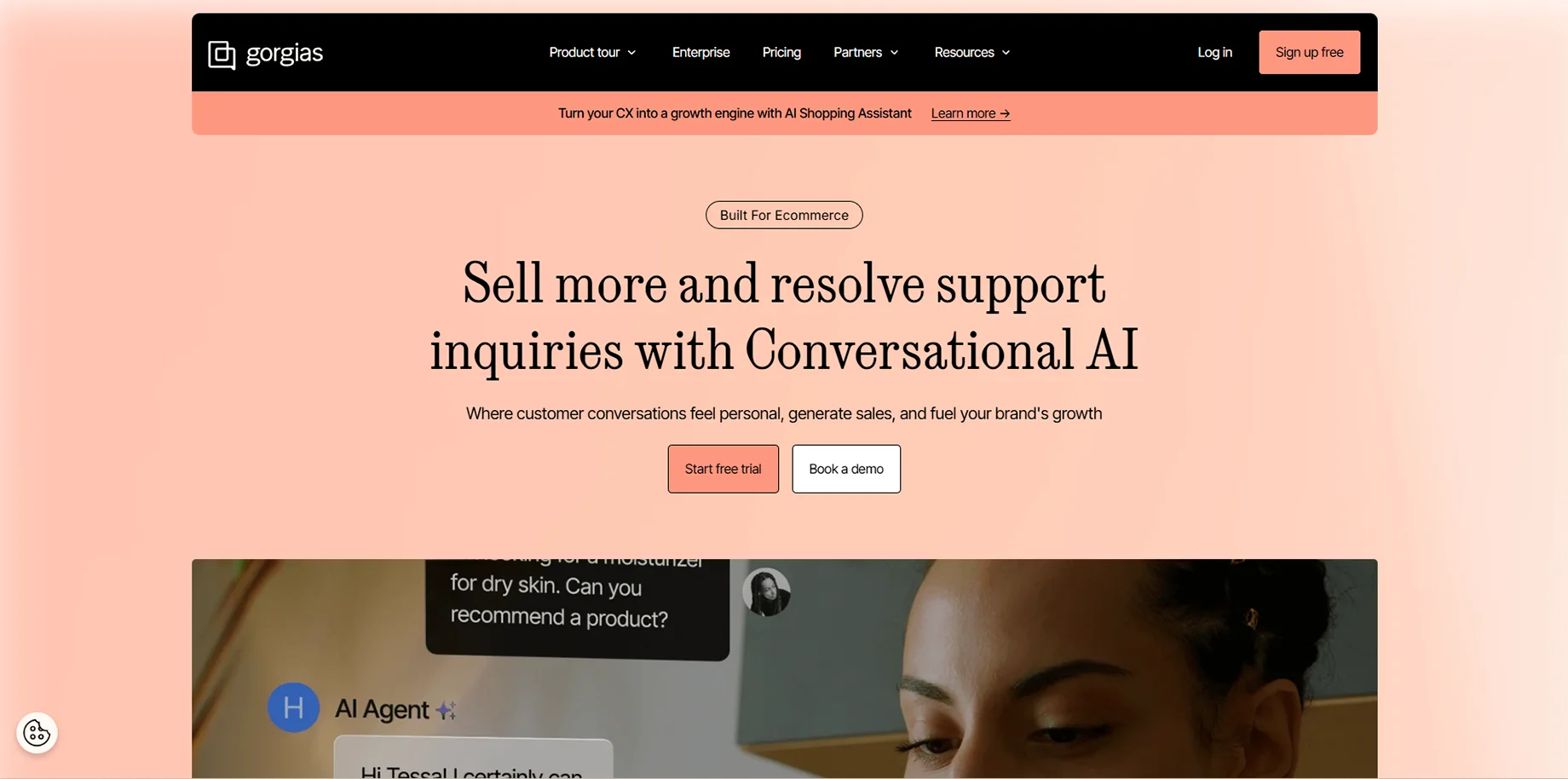
Use case: Gorgias blends ticket management from multiple channels and AI-powered automation for common inquiries, while intelligent routing directs complex issues to the correct agent.
Best for: E-commerce companies managing customer support through multiple channels who require ticket management and automation for responses to inquiries.
Key features: Support hub for inbox management, suggested automated responses, macro building, performance analytics, and integrates with major e-commerce platforms.
17. ManyChat
ManyChat is a social media automation platform that builds intelligent chatbots to engage customers through conversational marketing sequences in Facebook Messenger and Instagram.

Use case: ManyChat is an automated messaging sequence builder for social media, mainly for Facebook Messenger and Instagram. ManyChat helps businesses engage customers through conversational marketing.
Best for: Businesses leveraging social media for engagement and sales purposes and want to automate conversations while maintaining some level of personalization.
Key features: Chatbot builder user interface, automated sequence creator, audience segmentation, broadcasting messaging, and conversations analytics.
18. Synthesia
Synthesia is an AI video generation platform that enables professional video content that depicts realistic virtual presenters, without the need for a full video production crew.
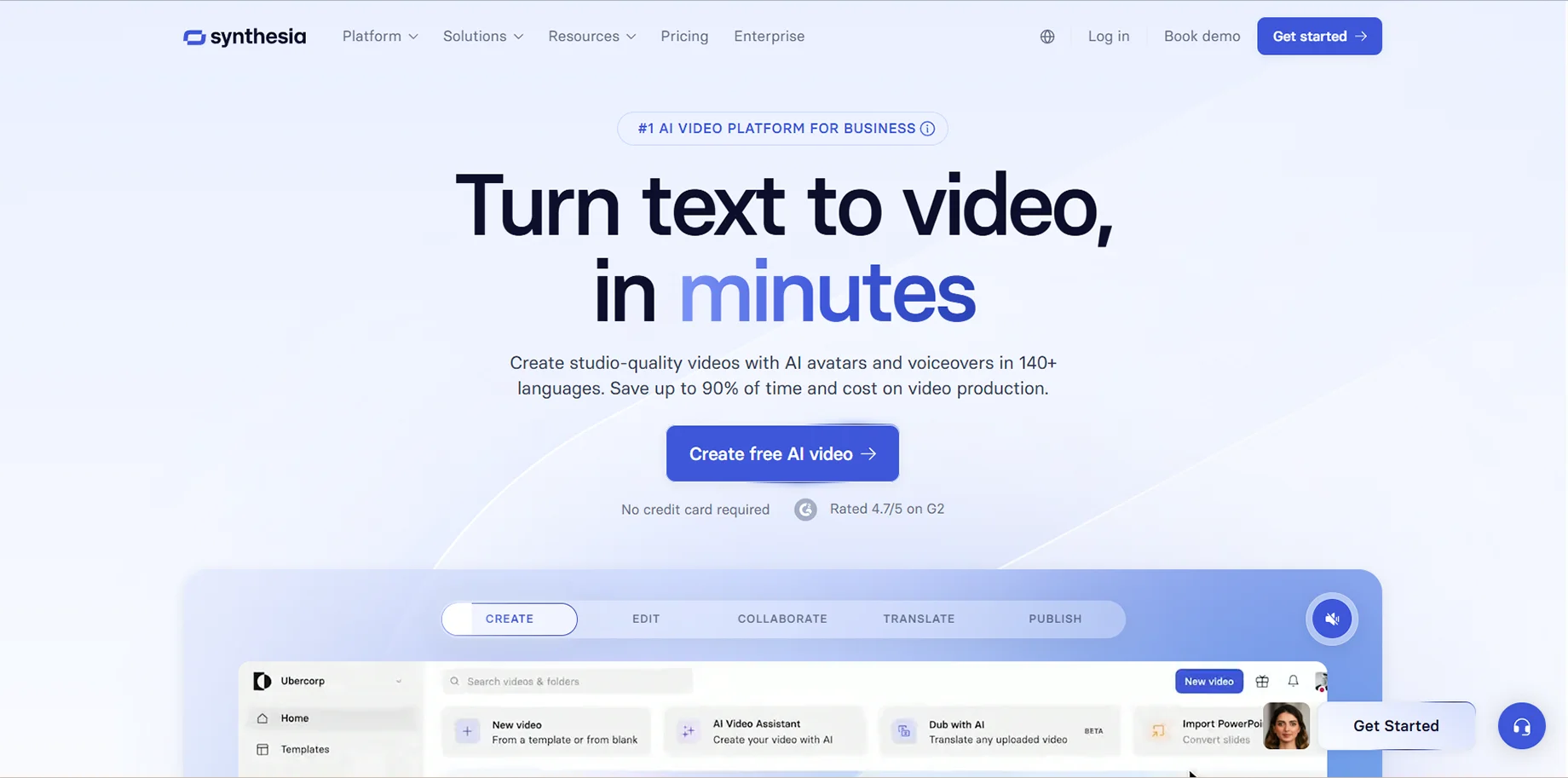
Use case: Synthesia uses AI-powered content with realistic virtual presenters so that businesses can easily create product demos, tutorials, and marketing videos.
Best for: E-commerce brands needing video content for product education, marketing campaigns, and new customer onboarding without traditional video production costs.
Key features: AI avatar creation, multi-language, custom branding, and speech to video functionality producing high quality output suitable for real business use.
19. Notion AI
Notion AI is a smart workspace assistant that improves productivity with AI-powered content creation, data analysis, and project management tools specific to Notion.
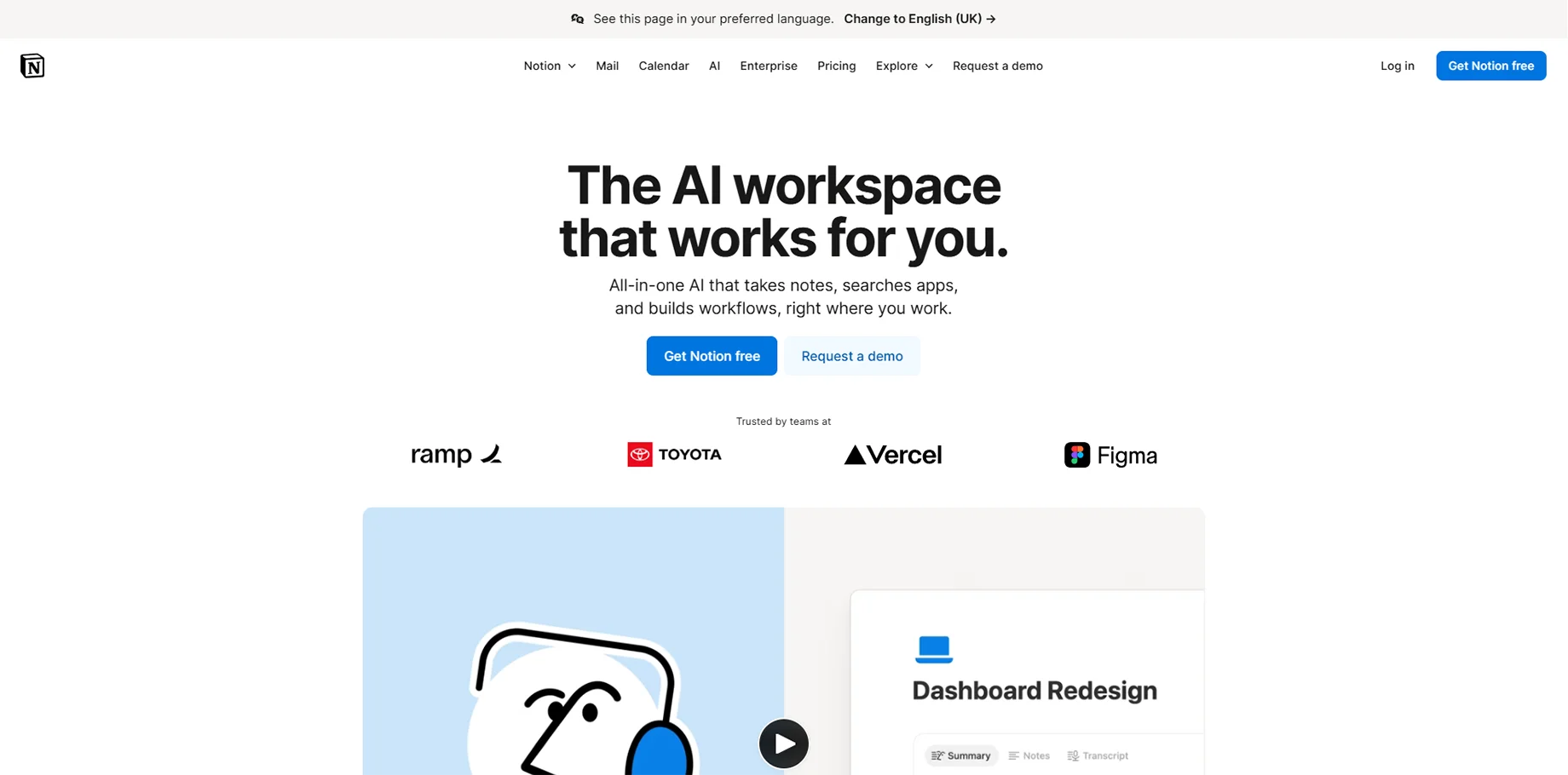
Use case: Notion AI improves productivity and organization of e-commerce teams with smart content creation, data analysis, and project management in the Notion workspace.
Best for: Teams using Notion for project management and documentation who want to make their content creation and data processing workflows more efficient.
Key features: Content generation support, data analysis tools, templates, workflow automation, and integration with existing Notion databases and pages.
20. Mojo
Mojo is a mobile first design platform to create engaging and optimized social media content and stories for platforms such as Instagram and Snapchat, enabling businesses to build a strong and consistent presence on social media.

Use case: Mojo is designed to create engaging social media content and stories optimized for mobile platforms, which is invaluable for e-commerce brands who want to maintain a consistent and compelling social media presence.
Best for: Small to medium sized e-commerce businesses that handle their own social media marketing and want all of the tools to develop their content efficiently.
Key features: Library of social media templates, ability to add animations, brand personalisation, scheduling calendar, and optimally designed mobile tools.
Conclusion
The adoption of AI-based tools into e-commerce activities marks a foundational pivot in the way business can practice efficiency, personalization and data-driven-ness within their operations. These 20 AI-based options demonstrate the volume of options that online retailers have in advancing toward future advantages by adopting technology.
To be successful in implementation requires the consideration of the specific business needs, current technological infrastructure, and long- term strategic goals of the business. Using the tools that solve immediate challenges while developing the capability for future growth and scalability should prove to be the best strategy.
As AI technology continues to evolve, those who adopt early will have ready access to future advancements and possibilities and, remain the pace-setters in their various industries. It will always be critical to employ the right tooling that supports the business objectives that provide a real sound return on investment, which may show through improved efficiency, enhanced customer experience, and generated income.
FAQs
1. How much do AI tools for e-commerce generally cost?
Pricing varies significantly based on both the complexity of the tool and the size of your business. You can find basic but useful tools starting at $20-50/month, and enterprise solutions can range from $500-5000+/month. You will find a great deal of pricing options; typically, you will pay based on usage or features provided, based on a tiered pricing system.
2. Do I need to be technical-savvy/personable to leverage these AI tools?
Most modern AI tools are built for business users who do not have extensive technical knowledge or background. Some advanced implementations may involve some technical knowledge and/or support that would be needed, as well as technical support related to any integrations.
3. How long does it take to see results from implementing an AI tool?
For AI tools that are basic and simple, like chatbots or content-generating tools, they provide results instantly. For AI tools that are complex because they are doing personalization or performing analytics, you would expect to see significant value to your business within 30-90 days.
4. Do small e-commerce businesses have advantages to using AI tools?
Yes! Many AI tools have scalable pricing and features that are designed for small businesses, allowing access to capabilities that only large enterprises have previously had.
5. What considerations do I have to keep in mind when selecting AI tools for my e-commerce business?
Focus on your specific business objectives, budget limitations, connection with existing technology, capacity of your team, and growth goals. You'll want to begin with tools that can provide you a resolution to your greatest pain points with processes that are easy to measure ROIs on.