
ResearchGPT is a new project that aims to create a powerful and versatile natural language generation system for academic research. The project is based on the GPT-3 model, which is one of the most advanced language models in the world. ResearchGPT intends to use GPT-3 as a starting point and fine-tune it on a large corpus of research papers from various domains and disciplines. The goal is to enable researchers to generate high-quality and plagiarism-free texts for various purposes, such as literature reviews, abstracts, introductions, conclusions, summaries, and even full papers.
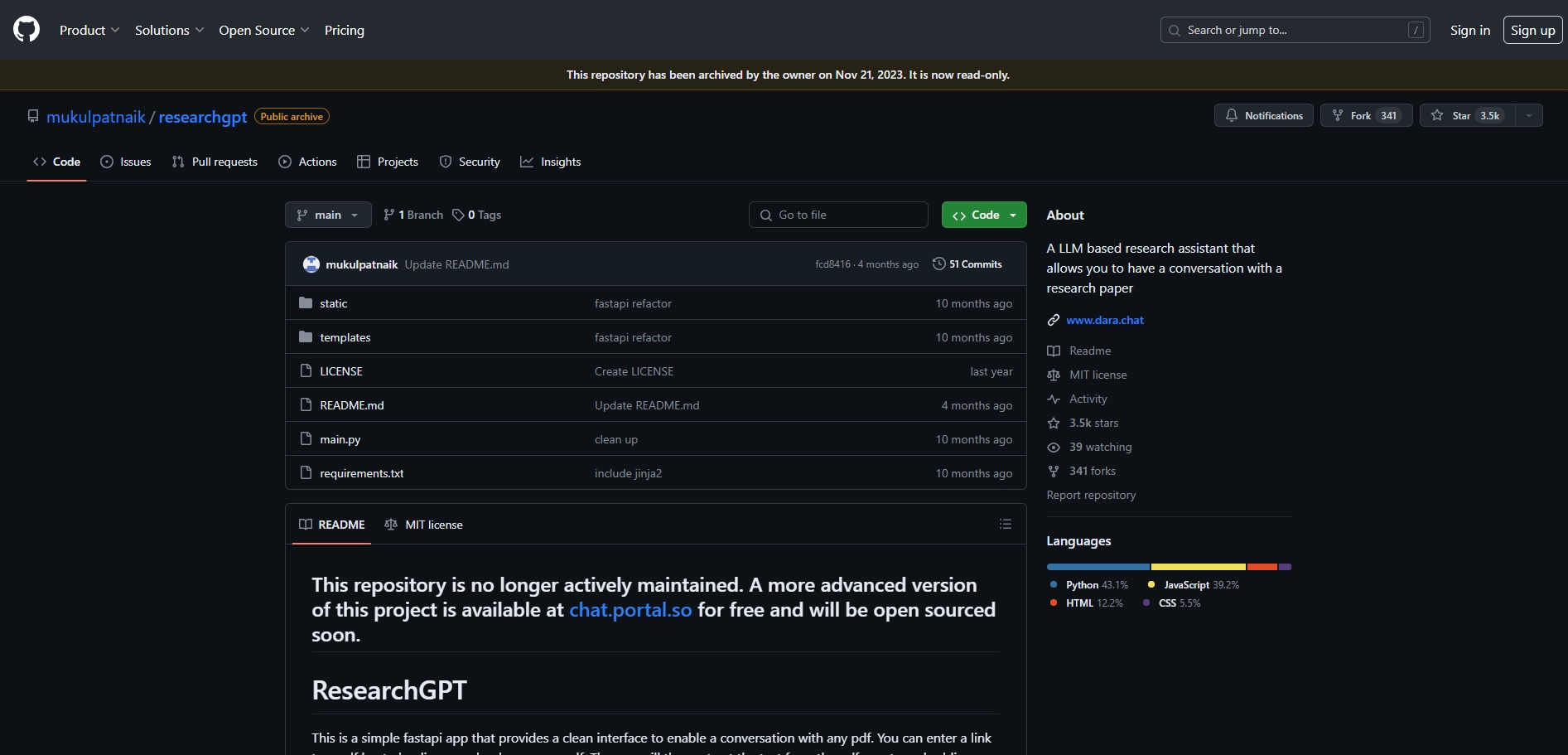
ResearchGPT is still in its early stages of development and has not been released to the public yet. However, the project has already attracted a lot of attention and interest from the research community and beyond. Some of the potential benefits and applications of ResearchGPT are:
- It can help researchers save time and effort by generating texts that are relevant, coherent, and well-structured.
- It can help researchers improve their writing skills and creativity by providing feedback, suggestions, and alternatives.
- It can help researchers explore new ideas and perspectives by generating texts that are novel, diverse, and original.
- It can help researchers communicate their findings and contributions more effectively by generating texts that are clear, concise, and persuasive.
- It can help researchers collaborate and learn from each other by generating texts that are compatible, consistent, and respectful.
ResearchGPT is not intended to replace human researchers or their creativity. Rather, it is meant to be a useful tool and a friendly assistant that can enhance and support the research process. ResearchGPT is also not intended to promote or encourage plagiarism or unethical behavior. Rather, it is meant to be a reliable source of information and inspiration that can help researchers avoid plagiarism and adhere to ethical standards. ResearchGPT will always acknowledge its sources and provide proper citations and references for its generated texts.
ResearchGPT is an ambitious and exciting project that has the potential to revolutionize the field of academic research. The project is still under development and needs more testing and evaluation before it can be released to the public. However, the project team is confident that ResearchGPT will soon be ready to make a positive impact on the research community and beyond.
Key Platforms
Core Service Areas:

High-Quality Text Generation
Plagiarism-Free Content
Domain-Specific Training
Versatile Writing Styles
User-Friendly Interface
Efficient Research Support
Pros
- It could accelerate scientific discovery by providing researchers with quick and easy access to relevant literature and data.
- It could democratize knowledge by making it more accessible and affordable for anyone who wants to learn or explore new domains.
- It could inspire creativity and innovation by generating novel and diverse perspectives and hypotheses.
Cons
- It could undermine academic integrity and quality by enabling plagiarism and fabrication of sources and results.
- It could pose ethical and social risks by generating misleading or harmful information that could influence public opinion or policy decisions.
- It could create a dependency and a loss of critical thinking skills by reducing the need and motivation for human research and analysis.
Frequently Asked Questions About ResearchGPT
01
What is ResearchGPT and how does it work?
ResearchGPT is a natural language generation system designed to assist academic researchers by generating high-quality, plagiarism-free texts. It is based on the GPT-3 model and fine-tuned on a large corpus of research papers across various disciplines, enabling it to produce literature reviews, abstracts, introductions, conclusions, summaries, and full papers.
02
What types of texts can ResearchGPT generate?
ResearchGPT can generate a variety of academic texts, including literature reviews, abstracts, introductions, conclusions, summaries, and even complete research papers, tailored to the specific requirements of researchers.
03
Is the content generated by ResearchGPT original and plagiarism-free?
Yes, ResearchGPT is designed to produce original content that is plagiarism-free. It generates text based on learned patterns from the research corpus, ensuring that the outputs are unique and tailored to user inputs.
04
What are the requirements to use ResearchGPT?
To use ResearchGPT, you need access to the code available on GitHub, a suitable environment for running the model (such as Python with specific libraries), and familiarity with natural language processing concepts. Additionally, an API key for GPT-3 may be required to access the model.
05
Can I fine-tune ResearchGPT for my specific research area?
Yes, ResearchGPT can be further fine-tuned on a specific corpus relevant to your research area. This allows you to customize the model's outputs to better align with your specific needs and the nuances of your field.
Promote ResearchGPT
Get ResearchGPT in front of thousands of buyers actively searching for AI tools. Feature your listing on the homepage and category pages, or add the verified badge to your site.
Copy Embed Code

Share on

Related AI Tools
Explore related AI tools for diverse applications and enhanced productivity
Unlock the best AI Tools for you!
Login or Approve this tool to continue exploring features and analytics.